After 40 years, KMHD is still expanding the definition of jazz

Add Axios as your preferred source to
see more of our stories on Google.
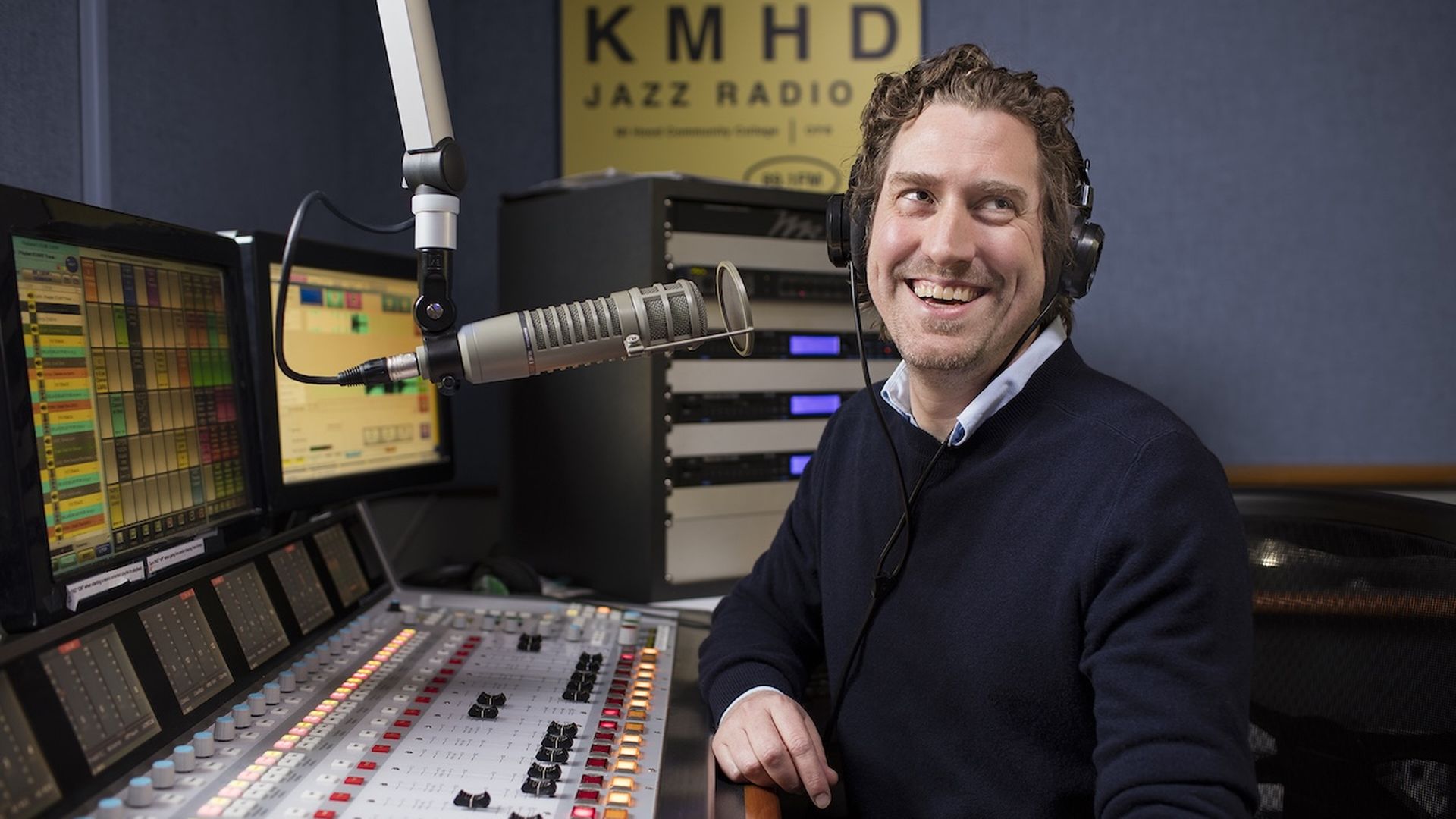
Matt Fleeger has been KMHD's program director since 2009. Photo: Courtesy of KMHD
In the 40 years since it hit airwaves in Portland, KMHD has transformed from a scrappy, community college-run radio station to a jazz music powerhouse committed to expanding and exploring the definition of the genre.
Why it matters: KMHD plays a key role in how the city accesses a vital part of its cultural identity, but it's not all just classic jazz. The station dedicates hours to soul, R&B, funk, hip hop, fusion and global sounds, like cumbia.
Flashback: KMHD was founded in the fall of 1984 at Mt. Hood Community College and operated on a volunteer basis there for the next 25 years.
- In 2009, Oregon Public Broadcasting (OPB) took over operations. That's when the station introduced its "jazz without boundaries" concept coined by program director Matt Fleeger.
What they're saying: "Jazz really gave birth to every popular music on the planet," Fleeger told Axios. "It's so wide open and it's changed and morphed so many times throughout its 100-plus year history."
State of play: What sets KMHD apart from other jazz stations is its willingness to step outside the "legacy model," as Fleeger calls it.
- Once KMHD decided to examine other genres, the station saw a shift in its audience.
- "I call what we do an intergenerational boogie," Fleeger said. "People in their 60s and 70s still listen to jazz in large quantities, but what we didn't have before was a younger audience that was as engaged as it is now."
- Plus: Its revolving cast of hosts and DJs is also a big draw. They introduce listeners to local up-and-coming artists and big stars who may be playing in town.
Zoom in: In the last 15 years, KMHD has risen in regional ratings and rankings. Prior to the programming change, the station sat near the bottom of the list, now it's near the upper quarter.
What's next: KMHD is embracing digital. It recently rolled out several social media pages (like Instagram and YouTube) to show listeners what day-to-day operations look like — "very much like a sitcom," Fleeger said.
- Staff take part in silly skits and showcase rare albums that have not been digitized from the station's giant record collection.
The bottom line: Fleeger anticipates that over the next four decades, KMHD will have to compete for eyes (and ears) on its content, but he's not too worried.
- "The thing that's going to continue to make a radio station stand apart from streaming services is the human touch," he said, adding that thoughtful curation and recommendations from people listeners trust will remain in demand.