Advocates raise concerns over proposed Columbia River power line

Add Axios as your preferred source to
see more of our stories on Google.
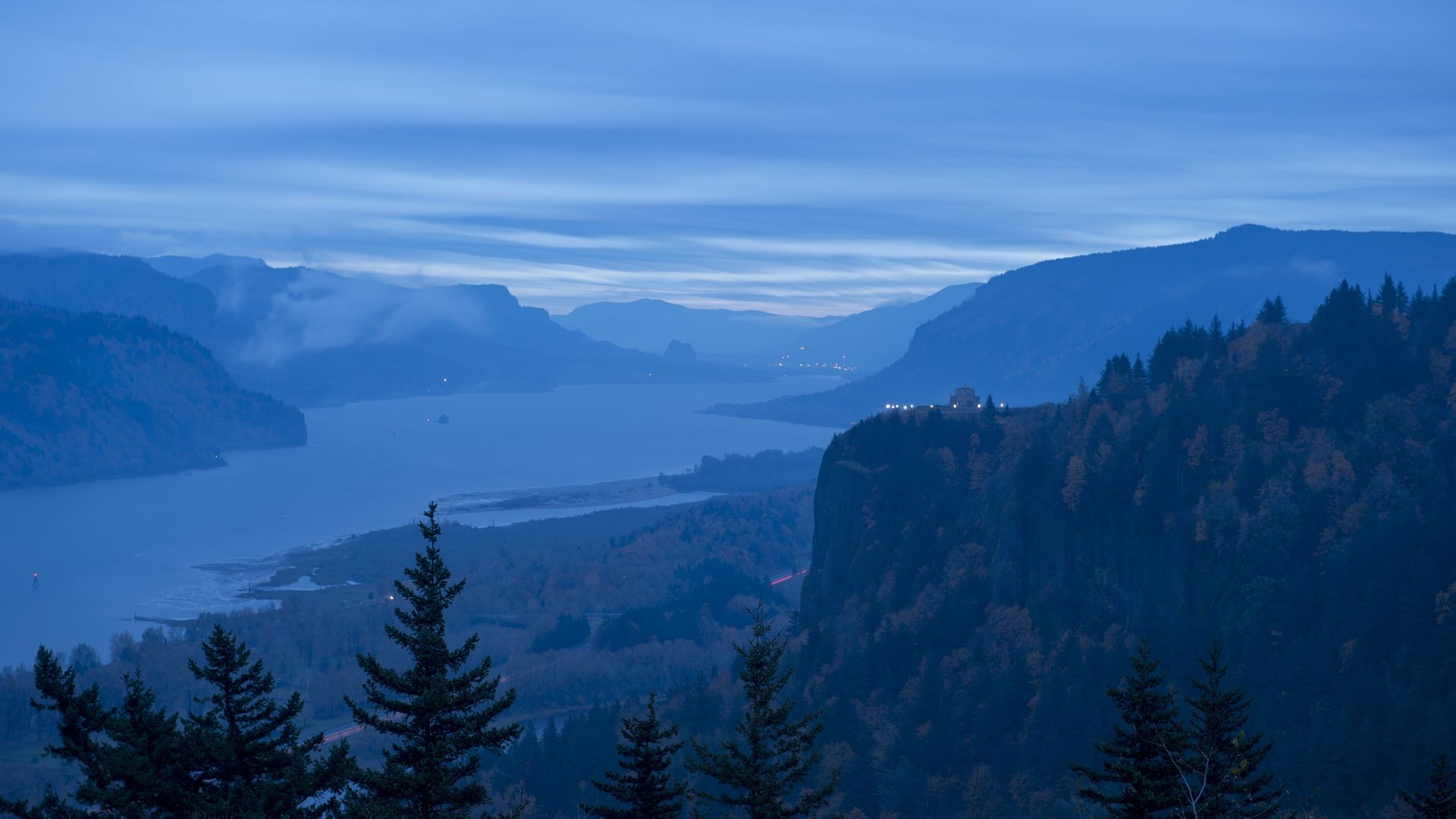
A proposal to lay an electrical transmission line on the riverbed of the Columbia is facing criticism from environmental advocates. Photo: Wolfgang Kaehler/LightRocket via Getty Images
Environmental advocates and tribes are raising concerns over a proposal to bury an electric transmission line under the Columbia River from the east end of the Gorge to Portland.
Why it matters: The project would be the first transmission line buried beneath the Columbia River and could expand the region's ability to move renewable power west if approved.
How it works: The nearly $2 billion Cascade Renewable Transmission System would move 1,100 megawatts of power — enough to power up to a million homes — from The Dalles to a substation in the Northwest Portland neighborhood of Harborton.
- To do so, PowerBridge, the Connecticut-based company behind the project, has proposed using a device called a hydroplow to dig a 2-foot-wide trench using water jets along roughly 80 miles of riverbed.
- A 12-inch cable bundle would then be buried 10 to 15 feet below the river, capable of delivering electricity from large-scale renewable energy projects in eastern Oregon to power-hungry population centers like Portland.
The big picture: Oregon and Washington are trying to add transmission capacity as demand grows and states move to eliminate carbon emissions from power generation.
Yes, but: A group of environmental advocates — including Columbia Riverkeeper, Friends of the Columbia River Gorge and the Columbia River Inter-Tribal Fish Commission — said last week that the project poses serious risks to water quality, endangered fish, tribal treaty rights and cultural resources.
- They worry that sediment stirred up by the digging could contain harmful toxins, that heat from the line could affect an already-warming river and what would happen when the line reaches the end of its estimated 40-year lifespan.
The other side: Chris Hocker, permitting lead for PowerBridge on the project, told Axios the company has "conducted and will continue to conduct extensive scientific studies to demonstrate that the impacts will be largely temporary and minimal."
- And he pointed to two similar projects in New York and New Jersey, which have operated for 17 years with no reported adverse environmental impacts.
What they're saying: The unknowns are still too great to move forward, said Teryn Yazdani, a staff attorney for Columbia Riverkeeper, who called the project "a novel experiment."
- "There is a lack of information about the direct cumulative impacts of what it means to dredge about 100 miles of the Columbia River for long term health consequences," Yazdani said in a webinar on the project last week.
What's next: The project has pending permit applications with Oregon, Washington and the U.S. Army Corps of Engineers.
- It will also still need to undergo environmental review and conduct public comment periods before construction can begin, which could be as early as 2028.