Feds approve Gorge energy project opposed by tribes

Add Axios as your preferred source to
see more of our stories on Google.
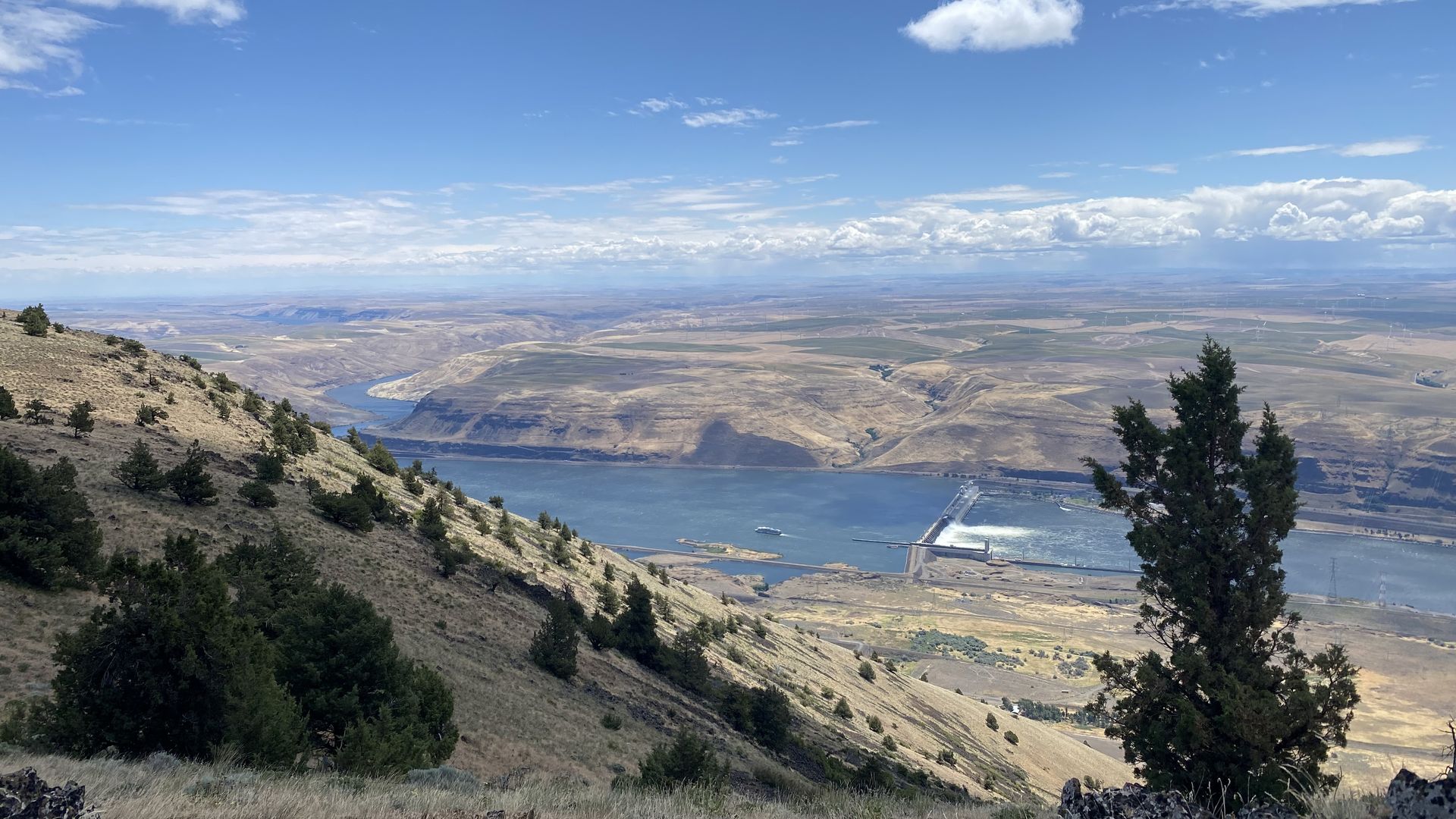
The view from Juniper Point, known as Pushpum in the Yakama language, where developers hope to build an energy storage project. Photo: Kale Williams/Axios
Federal regulators on Thursday approved a new energy storage project in the eastern Gorge that was years in the making and continues to face local resistance.
Why it matters: Energy storage is key to moving away from fossil fuels, but area tribes argue no climate benefit justifies damage to culturally and spiritually significant land.
How it works: The Goldendale Energy Storage Project will operate on privately owned land east of Biggs Junction on the Washington side of the Columbia River.
- It will consist of two 60-acre reservoirs — one next to the river on the site of a former aluminum smelter, the other 2,000 feet up on a ridgetop.
- A tunnel through the hillside connects the two reservoirs with a turbine in the middle.
- When excess energy is produced from wind and solar projects, it's used to pump water into the upper reservoir.
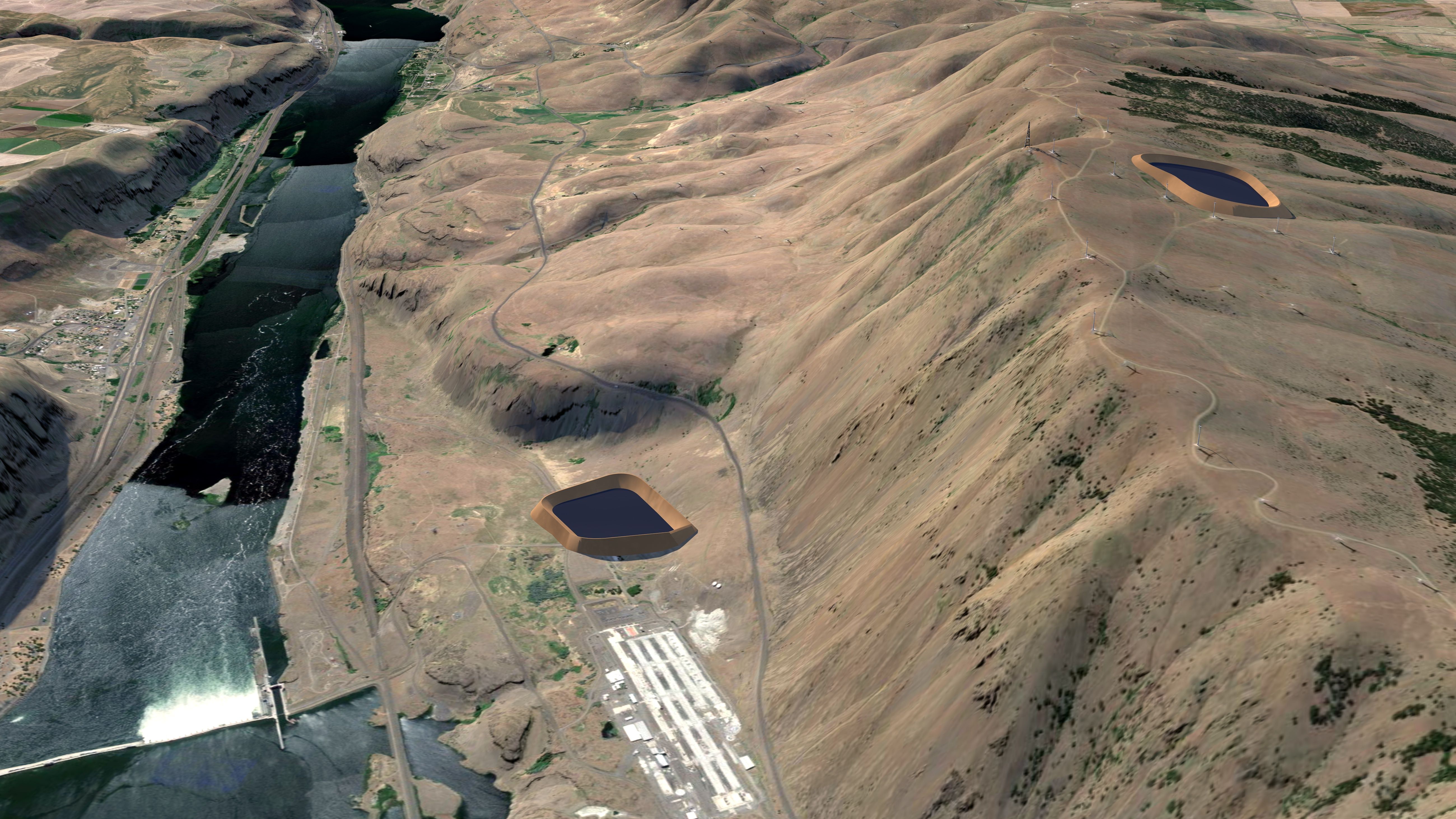
When that energy is needed, water is released back downhill, spinning the turbine and creating energy, essentially acting as a large gravity-based battery that developers say can power a city the size of Seattle for up to 12 hours.
The latest: The Federal Energy Regulatory Commission (FERC) on Thursday issued a 40-year license for Rye Development to operate the project.
- "With electricity demand and energy costs on the rise, this license represents a huge step toward a more reliable grid and affordable energy prices for the region," Erik Steimle, chief development officer for the company, said in a statement.
Yes, but: The upper reservoir will be near Juniper Point, or Pushpum in the Yakama language, the highest peak for miles and a sacred site to Indigenous people in the area.
- More than a dozen tribal governments have opposed the project since its inception, saying it will destroy important cultural artifacts, imperil access to traditional first foods and violate agreements between Native people and the federal government.
- "This decision threatens the constitutional power of long-held treaties between the United States and Tribal nations," Alyssa Macy, CEO of Washington Conservation Action and a citizen of the Confederated Tribes of Warm Springs, said in a statement.
- "We will not stand idly by as the Yakama Nation and our environment are sold to the highest bidder."
What's next: A group of tribal leaders and environmental justice advocates plan to ask for a rehearing in front of FERC, a precursor to an appeal of the license.
- Rye Development must still secure several more permits before construction begins.