Portland's winters grow longer, bucking U.S. trend


Add Axios as your preferred source to
see more of our stories on Google.
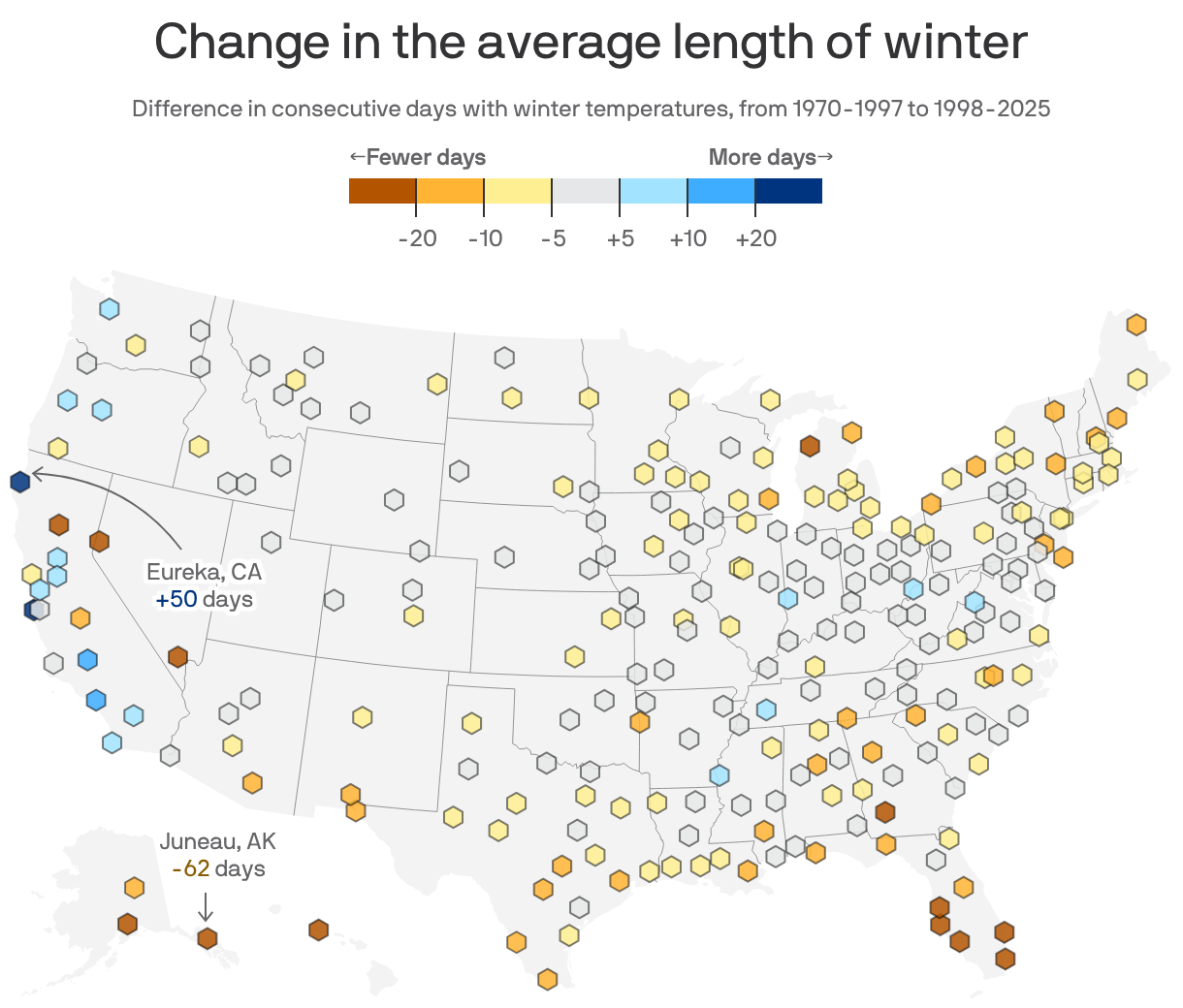
Winters are getting shorter across most U.S. cities amid climate change, but not in Portland.
- That's per a new analysis based on temperatures rather than calendar dates from Climate Central, a climate research group.
Driving the news: Compared to the 1970-1997 period, winters are now shorter in 80% of the 245 U.S. cities analyzed in the report.
- Among those 195 cities, winter lasts for nine fewer days on average.
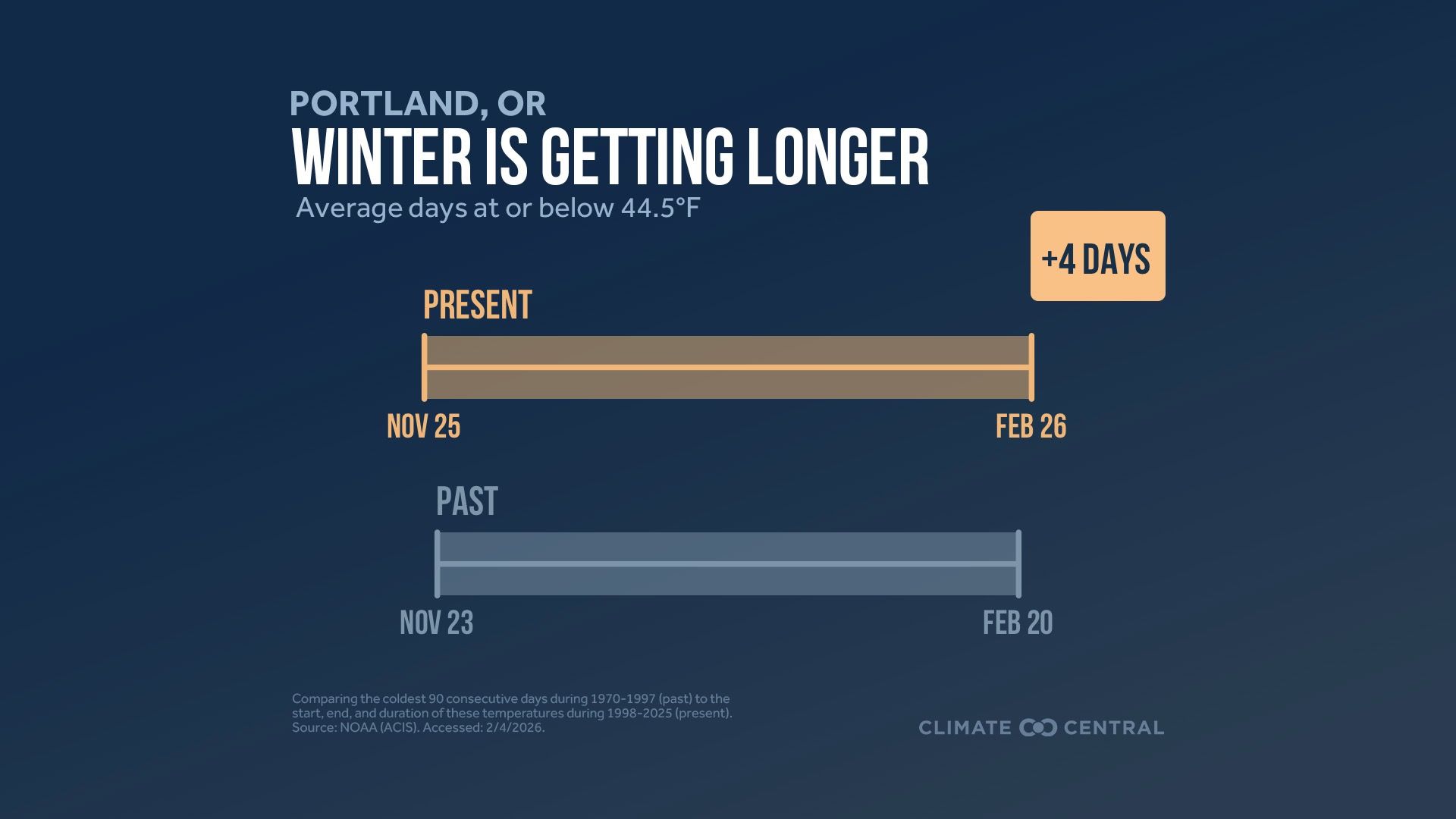
Yes, but: Portland has bucked the trend, with four more days of temperature-defined winter, per the analysis.
- And we're not the only ones: On the California coast, Eureka's winters are now 50 days longer, while those in Monterey are 46 days longer.
Context: Winter has shortened the most in Juneau (62 days) and Anchorage (49 days), "consistent with exceptionally rapid warming in Alaska and other high-latitude locations," per the report.
- Among continental U.S. cities, Miami's winters have shortened the most (38 days).
How it works: Climate Central defined "winter" as the coldest 90 days of the year in a row during the 1970-1997 period, then compared the frequency of those temperatures during the 1998-2025 period.
- That temperature-based approach is different from the way seasons are traditionally defined by calendar dates.
The big picture: The report comes as millions of Americans in other parts of the country are enduring a frigid, icy winter.
- Meanwhile, those of us in the West are staring down a snow drought that has hampered winter recreation and could have big implications for summer wildfires and water supplies.