How Dawson Park's origins contrast with its legacy

Add Axios as your preferred source to
see more of our stories on Google.
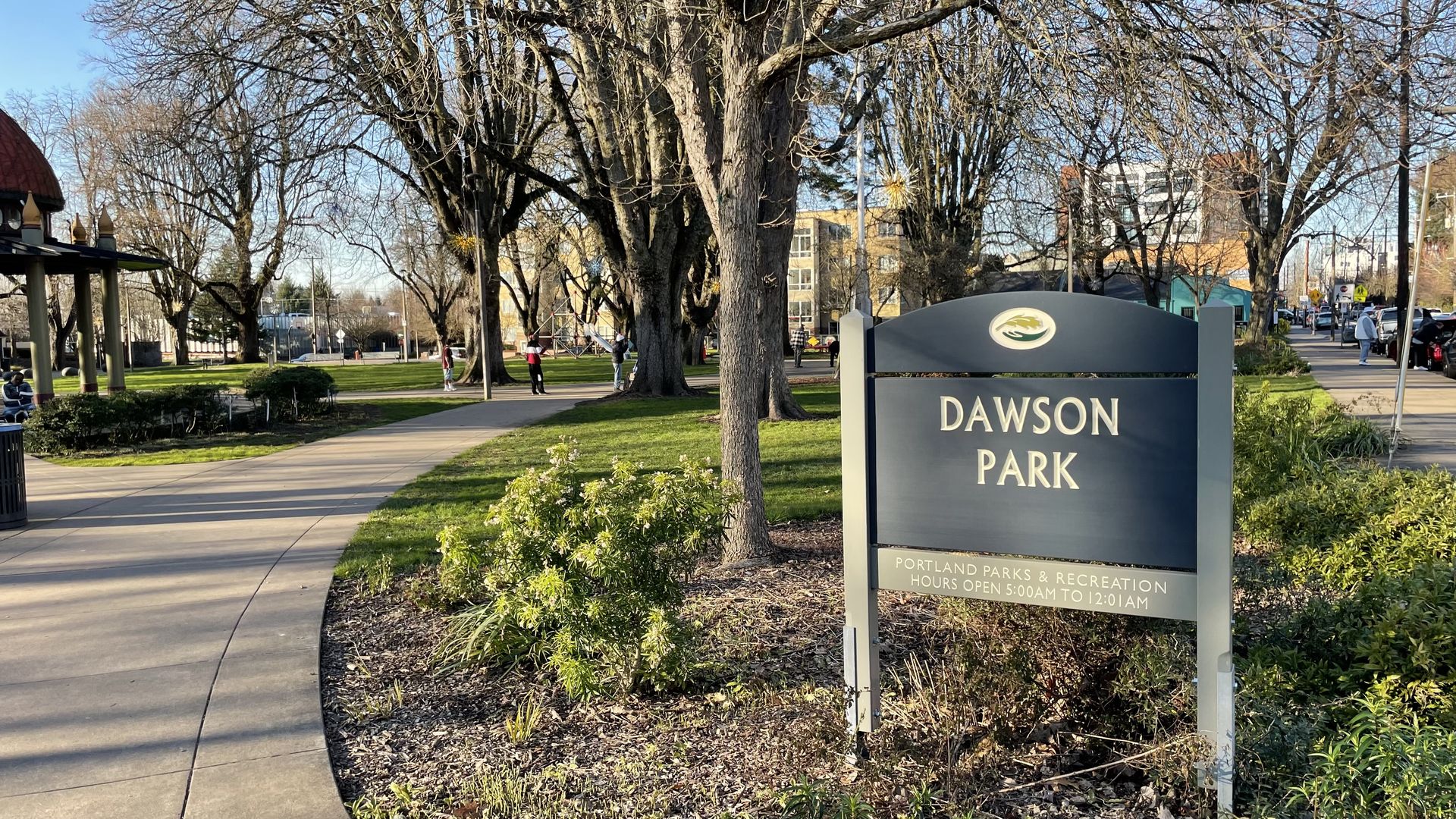
Dawson Park's origins contrast with its later role as a center of Portland's civil rights movement. Photo: Meira Gebel/Axios
Dawson Park has long been considered a cultural landmark for Black Portland — where civil rights rallies originated and prominent historical figures visited — but it was originally developed in the early 20th century to keep children segregated.
The big picture: The park's evolution reflects the Albina neighborhood's transformation: Shaped by racial tension and molded by redlining and displacement, it became a symbolic home base for Black life in the city.
State of play: The park's early history was recently resurfaced by Portland State University historian Catherine McNeur, who is developing a new undergraduate course examining the city's past through its public spaces.
- While building out an Albina walking tour for students, McNeur discovered more about Dawson Park's origins and its namesake — minister John Dawson of Good Shepherd Episcopal Church.
- Using old newspaper accounts, City Council records, public letters, maps and historical archives, McNeur found that Dawson worked closely with then–City Council member Dan Kelleher to lobby for a neighborhood park in Albina.
Flashback: In 1920, after Portland voters approved a parks bond, city leaders prioritized developing Irving Park over the Dutard tract, which would become Dawson. This led to Dawson and Kelleher launching a public campaign, McNeur told Axios.
- Dawson argued in newspapers that children in Albina — who were primarily of Irish, Scandinavian and German descent — should not have to play with Russian immigrant children who lived near the Irving Park site just a few blocks over.
- The pair continued to apply anti-Russian rhetoric and political pressure, even staging a large assembly of children at the lot during a City Council visit, until Dawson Park was designated in December 1920.
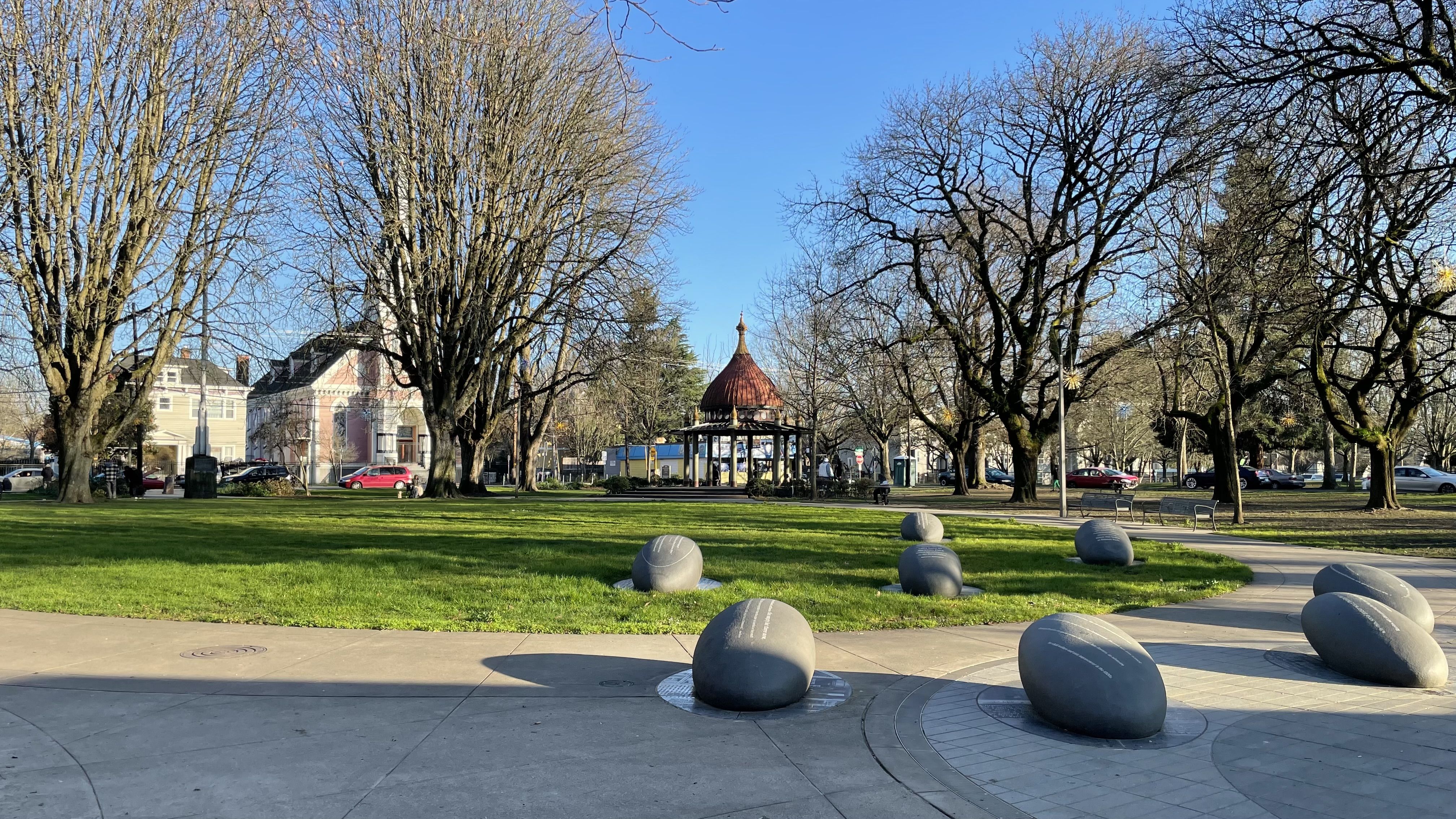
Not long after World War II, many of the families who had advocated for neighborhood improvements like Dawson Park left Albina for newer, suburban developments.
- This led Black residents — many of whom had been displaced by urban renewal projects and restricted by redlining — to move in.
- With a cluster of churches nearby, Dawson Park quickly became a gathering place for the Black community. It was integral to Portland's civil rights movement (many marches started there) and was visited by Martin Luther King Jr. and Bobby Kennedy in the 1960s.
The bottom line: The surrounding neighborhood continues to change, now driven largely by high home prices, even as community-led groups push to revitalize Albina.
- Through it all, Dawson has remained an anchor.
- "It's always good to know the deep history of these spaces," McNeur said. "Whether it's good history, positive or negative, magnificent or ugly."