How winter has warmed over time in Portland


Add Axios as your preferred source to
see more of our stories on Google.
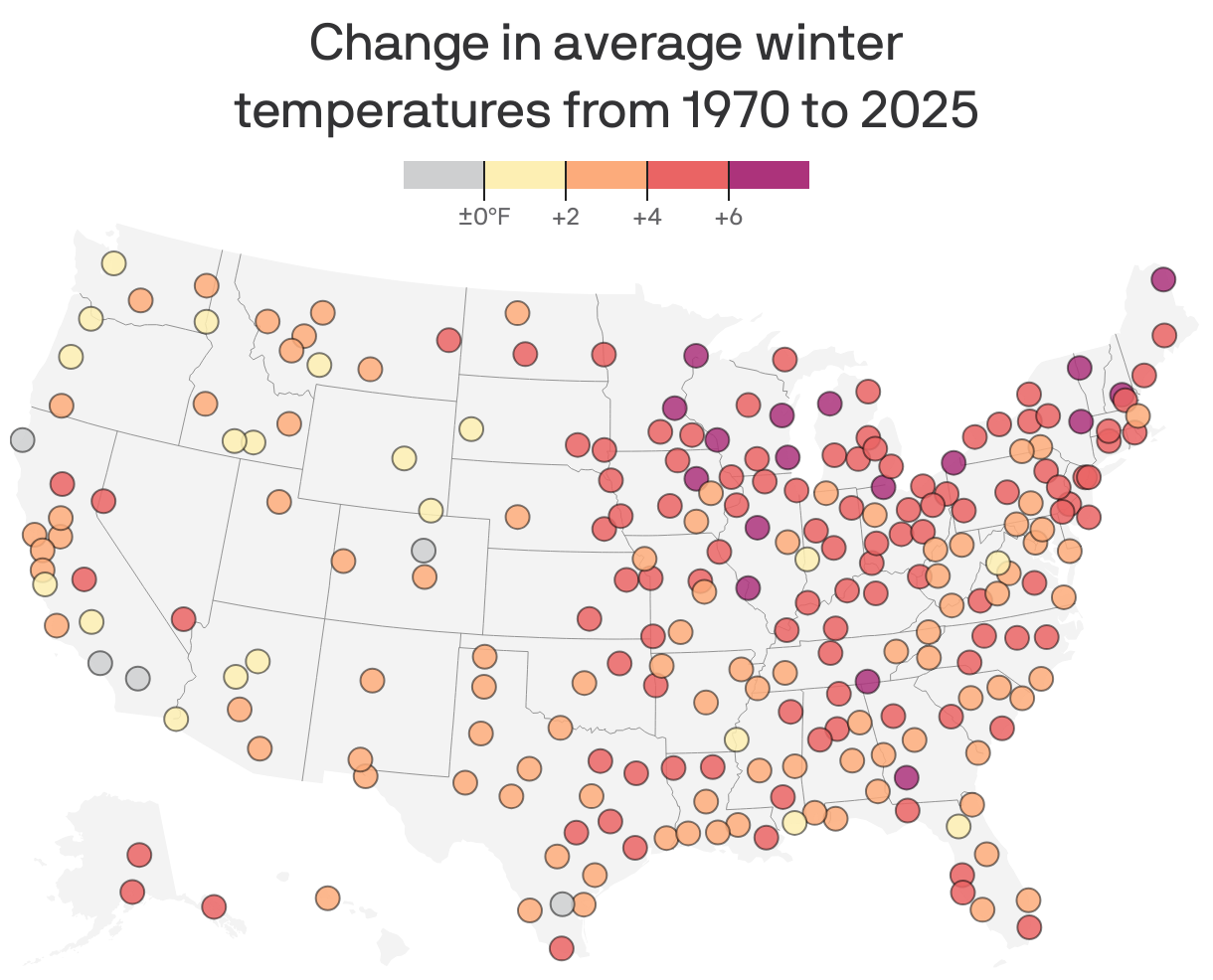
Winter is getting warmer in Portland and across the country, due in part to climate change, an updated analysis finds.
Why it matters: Warmer winters can be a bummer for skiers and snowboarders, affect water supplies tied to annual snowmelt, and more.
Driving the news: From 1970 to 2025, average winter temperatures rose in 98% of the 244 U.S. cities analyzed in a new report from Climate Central, a climate research group.
- Among the cities with an increase, winter temperatures rose nearly 4°F on average.
Zoom in: Portland saw an increase of 1.4°F, nearly the smallest of the cities included in the analysis.
- But statewide, warming has already taken a bite out of winter snowpack, with further depletions predicted as warming continues.
Zoom out: Many of the cities with the most warming over the covered period are in places with traditionally cold winters, including Burlington, Vermont (+8.1°F); Milwaukee (+7.3°F) and Green Bay, Wisconsin (+7°F).
How it works: Climate Central's analysis is based on NOAA data covering December, January and February of each year.
What's next: NOAA's latest winter outlook shows an elevated chance of below-normal temperatures, caused by a predicted La Niña, for parts of the Pacific Northwest, northern Rockies and Midwest.
💭 Kale's thought bubble: We've hit the part of the calendar where I start checking my favorite snow forecasts on a daily basis and, so far, the news hasn't been great.
- The resorts have yet to schedule an opening day and most of the live cams at Mt. Hood Meadows show a dreary brown landscape with just traces of winter blowing about.
- Seven-day forecasts for the mountain show some snow (yay!) but just as much rain (boo!) and several days with the dreaded "wintry mix."
If you need me, I'll just be over here doing snow-summoning rituals, grumbling and shaking my fist at climate change.