How Portland police track down prolific taggers

Add Axios as your preferred source to
see more of our stories on Google.
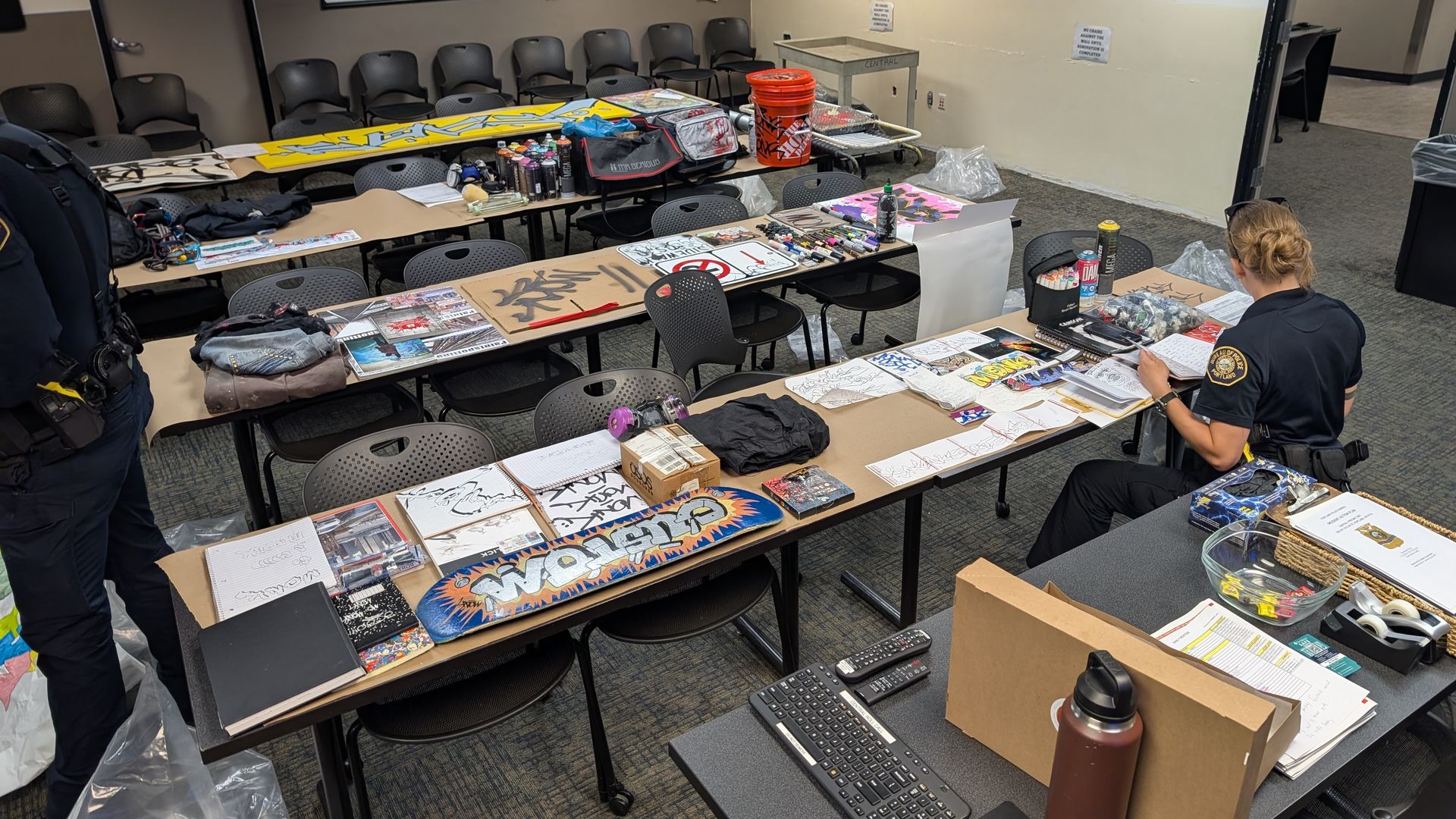
Police comb through evidence linked to graffiti artist Monk6 after a search warrant last month. Photo: Courtesy of Portland Police Bureau
Portland is waging a war against graffiti — to clean up the streets and the city's battered reputation — by doubling down on community and law enforcement efforts targeting the most prolific taggers.
Why it matters: Graffiti cleanup costs both the city and affected small businesses thousands of dollars each year. Widespread tagging can also fuel perceptions of disorder.
- "For a lot of people, it does lead to a subconscious or conscious feeling that there's some amount of permissiveness for criminality in areas where they see graffiti," Amelia Flohr, an officer on Portland Police Bureau's graffiti team, told Axios.
Driving the news: There have been several recent high-profile arrests and convictions since the city renewed its dedicated graffiti unit within PPB's Central Precinct during the pandemic, when tagging was rampant.
- Last month, prolific tagger Bambi was identified as Darvin V. Duffield, 22, who later pleaded guilty to two counts of first-degree criminal mischief and was sentenced to two years probation. She was also ordered to pay $10,000 in restitution.
- Investigators also found "thousands of drawn or painted examples of the moniker Monk6," a local tagger featured in a prominent YouTube documentary, during a search warrant of a Sunnyside neighborhood home in July.
Plus: One year ago, Jerry Mijangos (known as KASR) became the first graffiti vandal to be sent to prison since the crackdown for violating previous tagging-related probation terms.
This aggressive enforcement — where a conviction results in probation, restitution and potential jail time — has become a successful deterrent, according to Flohr.
- "There is so much evidence of what they're doing that it's not worth it for them to continue, because the consequences are now going to be much higher," she said.
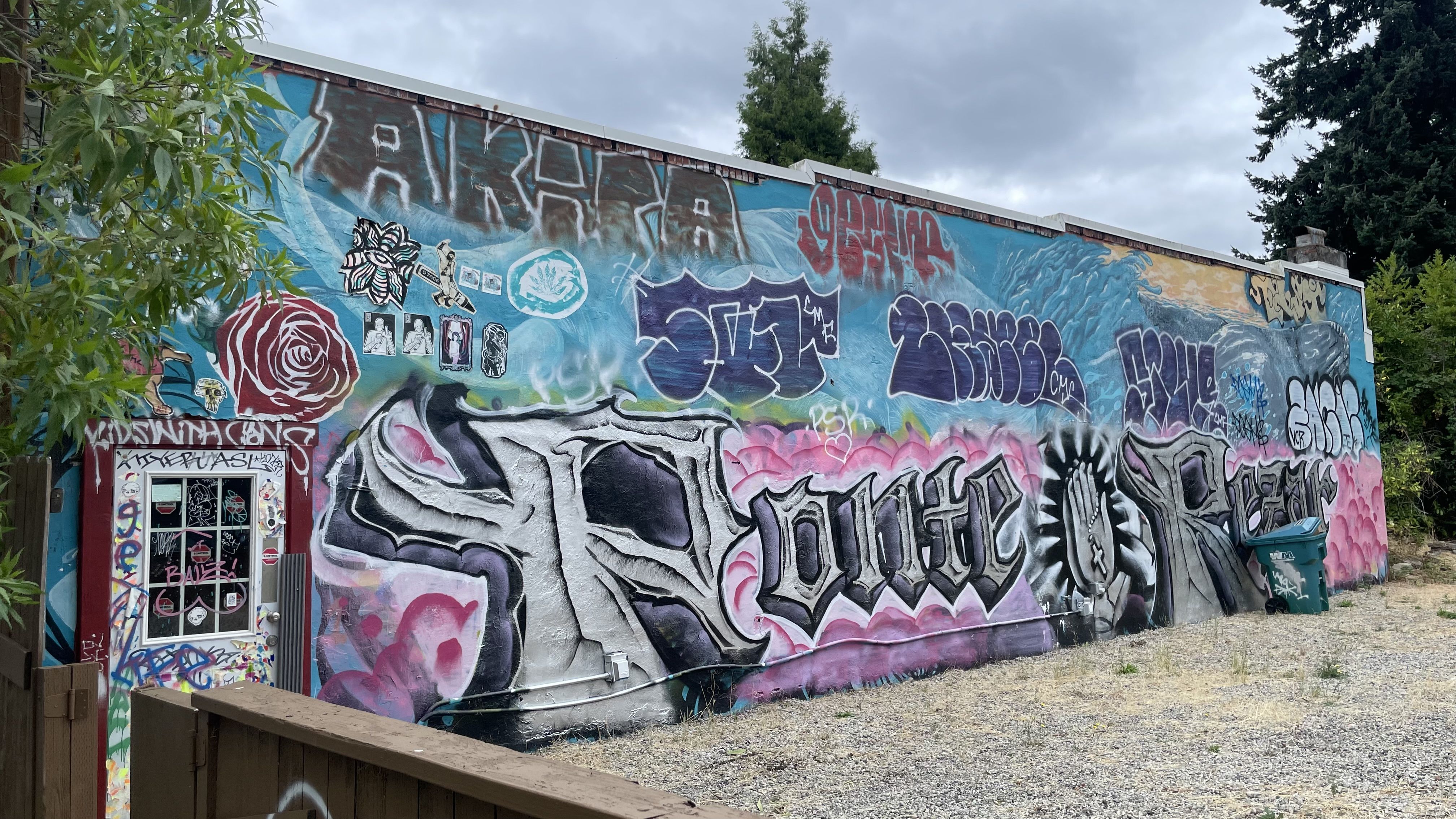
Behind the scenes: The process of linking a tag to an actual person isn't hi-tech — 90% of the time they're caught in the act, either by a police officer or community partner, Flohr said.
- Officers then trace the moniker across the city, gather damage reports from businesses, and use search warrants to seize paint, sketches or photos that tie the tagger to the tags.
- Flohr said she's learned a lot about graffiti subculture in the last five years, not only the crews and turf wars, but also the risk involved in tagging hard-to-reach locations, such as highway overpasses and sides of buildings.
- "It's fame-based, thrill-seeking behavior," she said.
The bottom line: Despite recent wins, graffiti remains a stubborn problem for Portland. Officers dedicate only 5% to 20% of their workload to it, meaning many tags go uninvestigated.
- Mayor Keith Wilson told Axios it's something he remains committed to.
- "By investing in both enforcement and creative activation of public spaces, we reinforce our shared commitment to stewardship, equity, and neighborhood pride," he said.