How to stay safe swimming in Oregon rivers

Add Axios as your preferred source to
see more of our stories on Google.
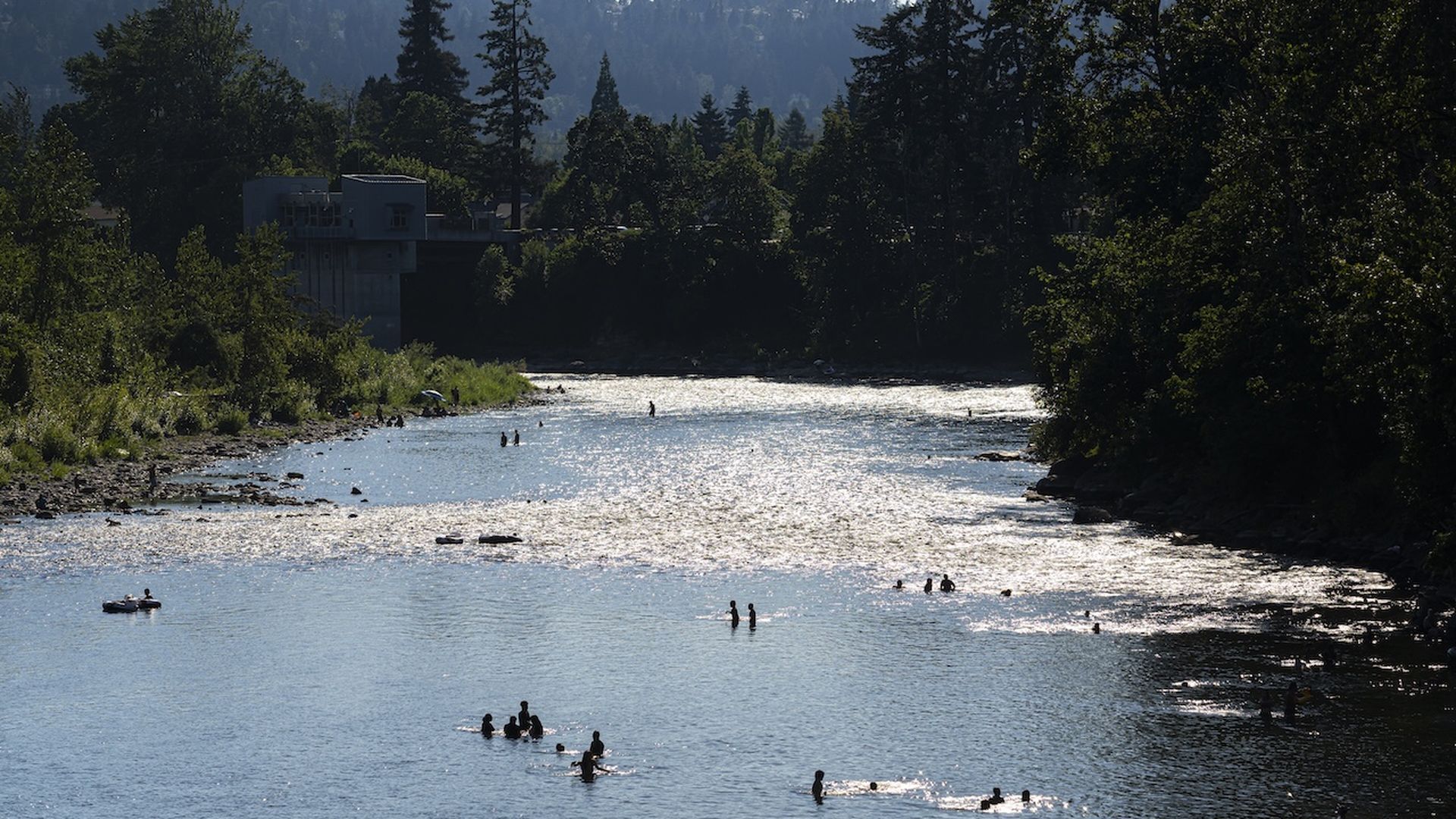
Make sure to grab a buddy before heading out on the river this summer. Photo: Nathan Howard/Getty Images
Swimming and recreating in Oregon's rivers is a summer staple. But it can also be deadly, claiming lives each year through accidental drownings.
The big picture: Cold, strong currents, environmental stressors (like sun, wind and glare) and other water users — anglers, boaters, paddleboarders — are all risks that should be examined before diving in.
- Plus: Waters in the state stay cold year-round, increasing the risk of hypothermia. Rip currents and fluctuating water levels make rivers unpredictable.
What they're saying: "We've seen a rise in water rescue incidents in the past few weeks, because people underestimate the deadly combination of warm air and dangerously cold water," said Scott Lucas, Oregon Department of Emergency Management's statewide search and rescue coordinator.
State of play: Ashley Massey of the Oregon State Marine Board said the first rule of water safety is to never swim alone.
- "Drowning is silent," she said. "That's why you want to have a buddy system and people around you that are paying attention."
Between the lines: Most drownings, Massey said, are a result of water conditions, fatigue and swimming ability. It's important to know your limitations — including whether you're a good swimmer and how cold water affects your body.
- Massey recommends everyone swim with a life jacket on, close to the shore and only in designated areas. Make a note of other water users, currents and obstructions, like boulders or narrows.
- Staying hydrated is also important.
Threat level: If you end up in a drowning emergency, stay calm. "Take a deep breath, and try to float on your back," Massey said.
- This counteracts the body's natural panic response, which is to go vertical and raise your hands above your head.
- If caught in a current, float with your feet facing downstream. This position gives you the best chance of self-rescue or being rescued.
The bottom line: If you see someone who is drowning, don't jump in. "Oftentimes, rescuers become victims themselves," Massey said.
- Reach for an object to hand them (like a tree limb or oar), throw out a flotation device, or call 911. If you're in the water with someone in distress, get them to take a breath and roll them onto their back.
- "These things can go a long way in saving a life," Massey added.