Many Oregon pharmacies restrict syringe access

Add Axios as your preferred source to
see more of our stories on Google.
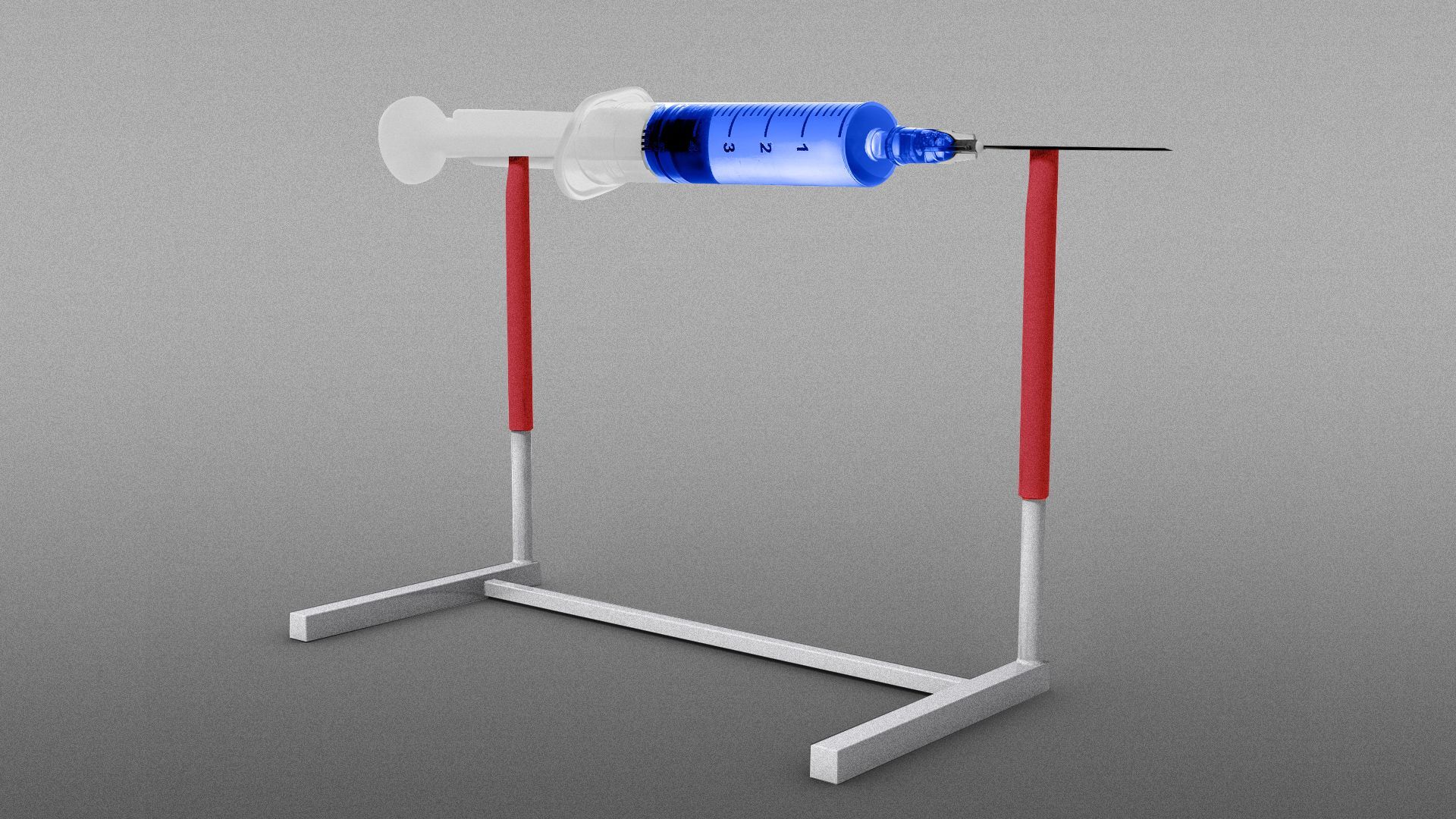
Illustration: Aïda Amer/Axios
Nearly half of the more than 400 pharmacies Oregon State University researchers surveyed in a new study would not sell over-the-counter sterile syringes without a prescription — revealing a significant access barrier in the fight against infectious disease.
Why it matters: Oregon has historically had one of the highest infection and mortality rates for hepatitis C and HIV in the country, largely driven by injection drug use and the ongoing opioid epidemic.
- Having a reliable access point to receive sterile syringes — for not only drug users, but also those with medical conditions that require regular injection — is an evidence-based solution to minimize the spread of diseases, Adriane Irwin, one of the lead researchers and chair of OSU's pharmacy practice department, told Axios.
Context: Pharmacies are often the first place people go to receive health care.
- That's what makes them "well-positioned to help fill in the gaps that syringe exchange programs can't," Irwin said.
Zoom in: Multnomah County has one harm reduction clinic that offers syringe exchange, as well as several outreach partners, but operational days and hours vary.
What they found: While Oregon law allows non-prescription syringe sales, many pharmacies opt out.
- Working from a list of 425 pharmacies obtained from the Oregon Board of Pharmacy website, Irwin and OSU pharmacy resident Victor Abreu used the "secret shopper" approach to survey whether each location would sell a 10-pack of syringes.
- Just over 43% of pharmacies said they would not without a prescription.
- There was no significant difference among chains versus independents. "We were very surprised by the extent of their reluctance," Abreu said.
The intrigue: Urban pharmacies were much more hesitant to sell syringes compared with rural ones — a stark contrast from another OSU study in which rural pharmacies were less likely to provide buprenorphine, one of few drugs considered to be the gold standard for treating opioid addiction.
What they're saying: In an email statement, the Oregon Board of Pharmacy said it encourages pharmacies to increase access to sterile syringes.
- For those that choose to restrict sales, "the opportunity to decrease or prevent individual and community harm from addiction and injection drug use are lost."
The bottom line: Both Abreu and Irwin acknowledged pharmacies are businesses that set their own policies, even though those decisions may in part be fueled by stigma.
- "Pharmacies are partners in how we combat the opioid crisis and improve care for patients with substance use disorders," Irwin said.