Wolf numbers jump in Oregon for the first time in years

Add Axios as your preferred source to
see more of our stories on Google.
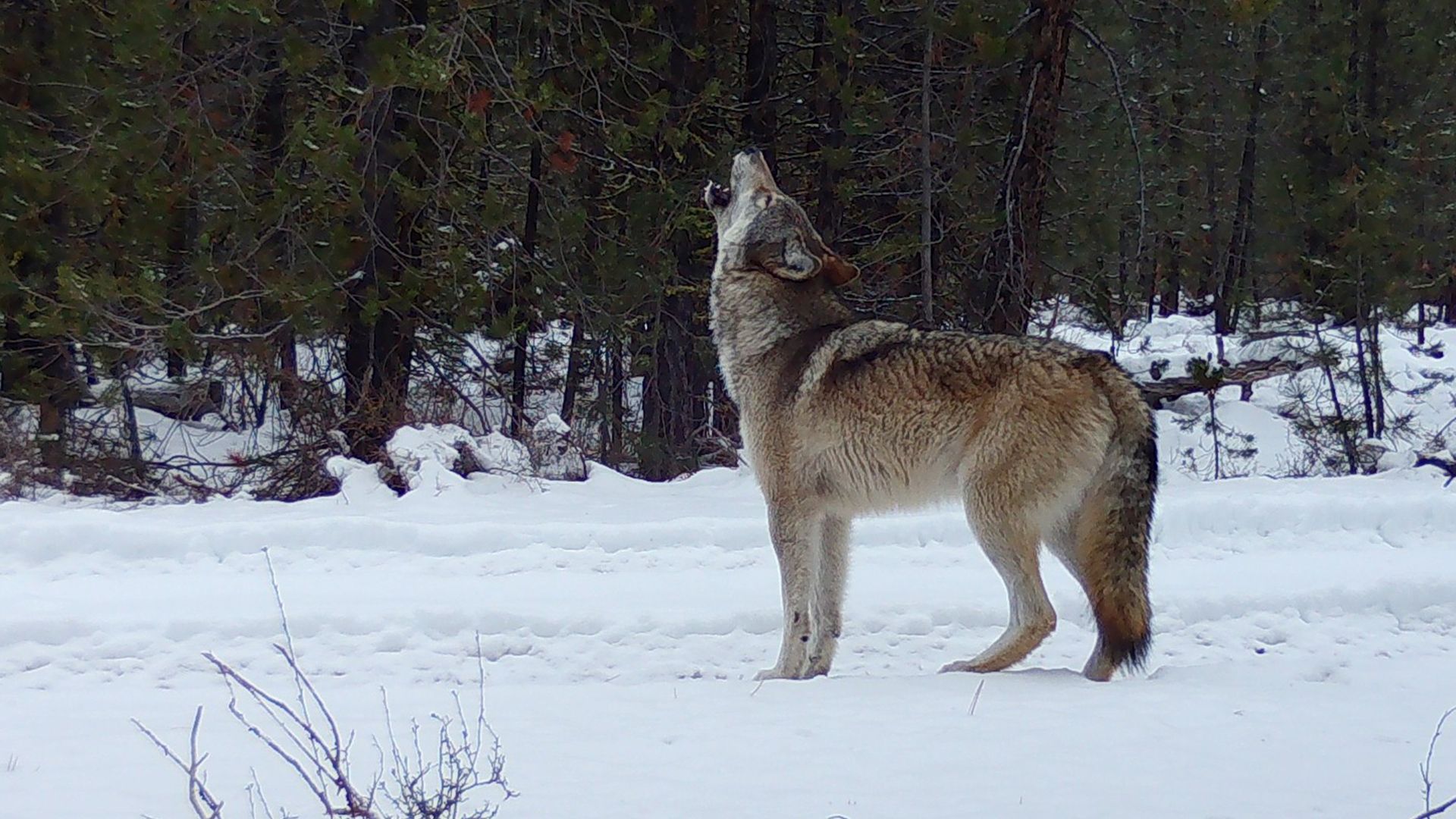
A female gray wolf in Klamath County. Photo: Courtesy of the Oregon Department of Fish and Wildlife
After several years of mostly stagnant growth, the number of wolves in Oregon increased last year, a new report shows, even as the total number of attacks on livestock declined.
Why it matters: The gray wolf has had a contentious presence in Oregon since they began repopulating the state in the early 2000s.
State of play: Wolves mean different things to different people — to advocates, they are a native apex predator that plays an important role in the ecosystem, but to ranchers, they often represent a threat to their livelihood.
- Wolves have caused fierce debates, especially in rural parts of Oregon, over how the animals should be managed.
- They have federal protection in the western part of the state and killing them is forbidden, but in eastern Oregon, wolves can be killed for attacking livestock under certain circumstances.
By the numbers: The number of wolves in the state grew to 204 in 2024 — though the count includes only animals verified with evidence, so the actual number is likely higher — a 15% increase over the previous year, according to the Oregon Department of Fish and Wildlife's annual report.
- The number of packs in the state increased by three to 25, with continued expansion of wolves in the western part of the state.
- Wolf attacks on livestock declined slightly from the previous year, from 73 to 69.
- A total of 26 wolf deaths were documented last year, 22 of them caused by humans — one was killed in a car crash, 14 were killed for attacking livestock and seven remain under investigation by law enforcement — while the rest died of natural causes.
What they're saying: Joseph Vaile, senior representative to the Northwest program at Defenders of Wildlife, said that, with wolf numbers up and attacks on livestock down, the state should continue to encourage "non-lethal deterrence," including using range riders to watch over herds and electric fencing.
- "Oregon must do more to reduce human-caused mortality or wolves will never fully recover," he said in an emailed statement.
The other side: John Williams, co-chair of the wolf committee for the Oregon Cattlemen's Association, said that while the number of attacks on livestock went down, the number of livestock killed or injured actually rose, from 91 in 2023 to 115 last year.
- "If one cow gets hit, it's an incident. If nine cows get hit, it's an incident," he told Axios. "But that's a big difference for the rancher."
The latest: A bill in the Oregon Legislature would increase the compensation paid to ranchers who lose livestock to wolves.
- The bill, which passed the Senate 28-1, now awaits a vote in a House committee.
- At the federal level, a bill to remove Endangered Species Act protections for wolves nationwide was introduced earlier this year and approved by a House committee last week.