What to know about xylazine in Oregon's drug supply

Add Axios as your preferred source to
see more of our stories on Google.
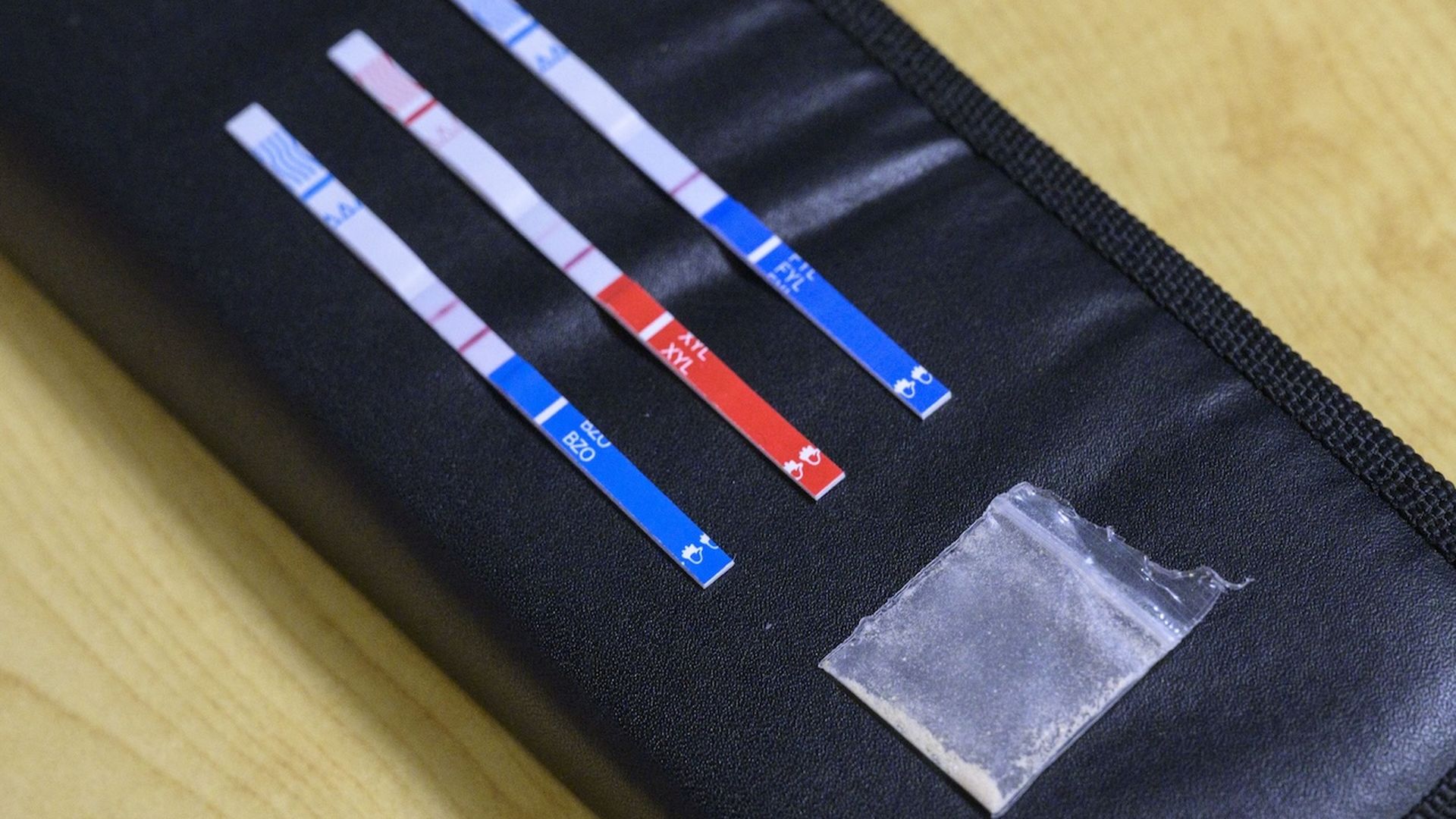
Test strips, used to detect the presence of fentanyl and xylazine in different kinds of drugs, such as cocaine, methamphetamine and fentanyl. Photo: ANGELA WEISS/AFP via Getty Images
Xylazine, known on the streets as "tranq," is showing up in Oregon's drug supply in small but growing amounts, public health officials warn.
Why it matters: A surge in the animal tranquilizer — typically mixed with heroin or fentanyl — could overwhelm medical emergency response systems, which may be under-equipped to diagnose and treat symptoms.
- Xylazine causes wounds and sores that can result in amputations and does not respond to overdose reversal drugs like naloxone.
What they're saying: "All it would potentially take is for one batch of fentanyl to have significant amounts of xylazine in it to create a real public health disaster," John McIlveen, the state's opioid treatment authority, told Axios.
- Following Portland's 90-day fentanyl emergency last year, Multnomah County's health director, Richard Bruno, told OPB that medical professionals were preparing for the possibility of xylazine becoming a bigger problem in the future.
Threat level: Xylazine isn't as widespread in Oregon's drug supply as it is in other parts of the country, like Philadelphia, McIlveen said. The Oregon Health Authority tracks xylazine, along with other illicit drugs, via mortalities and drug seizures.
- The number of overdose deaths involving xylazine remain low — less than a dozen annually — but have risen since 2020, according to a state database.
- Yes, but: Anecdotal reports from service providers on the ground who work with drug users indicate it is "popping up" more and more, McIlveen said.
Context: Xylazine is used for large animals, like horses, and not approved by the Food and Drug Administration for human consumption.
- It's been found in illicit drug supplies nationwide for decades. Many drug users may not be aware of its presence, but it's known to lengthen the high of traditional short-acting opioids like fentanyl and cause overdoses.
- It shortens the breath and slows the heartbeat, resulting in prolonged loss of consciousness.
- Those who use the drug develop severe, deep lesions, which can turn yellow and black. Some people have been turned away from care due to stigma, making treatment more difficult.
Zoom in: McIlveen said he's concerned many of the state's health care providers may not be able to recognize or effectively treat xylazine-related symptoms as its presence becomes more pronounced in Oregon.
- Unlike other opioids, there's no pharmacological solution or replacement therapy — such as methadone or buprenorphine — for xylazine.
- And while naloxone should be given in response to any suspected drug overdose, there are different detox protocols for xylazine, which are "very complex and very difficult to manage," per McIlveen.
The bottom line: The Oregon Health Authority is working to expand peer networks throughout the state, especially in rural communities in the eastern part of the state, to better reach at-risk populations and educate health care providers, while continuing to track its prevalence in the drug supply.