New drug emerges in Philly's drug supply as xylazine use falls

Add Axios as your preferred source to
see more of our stories on Google.
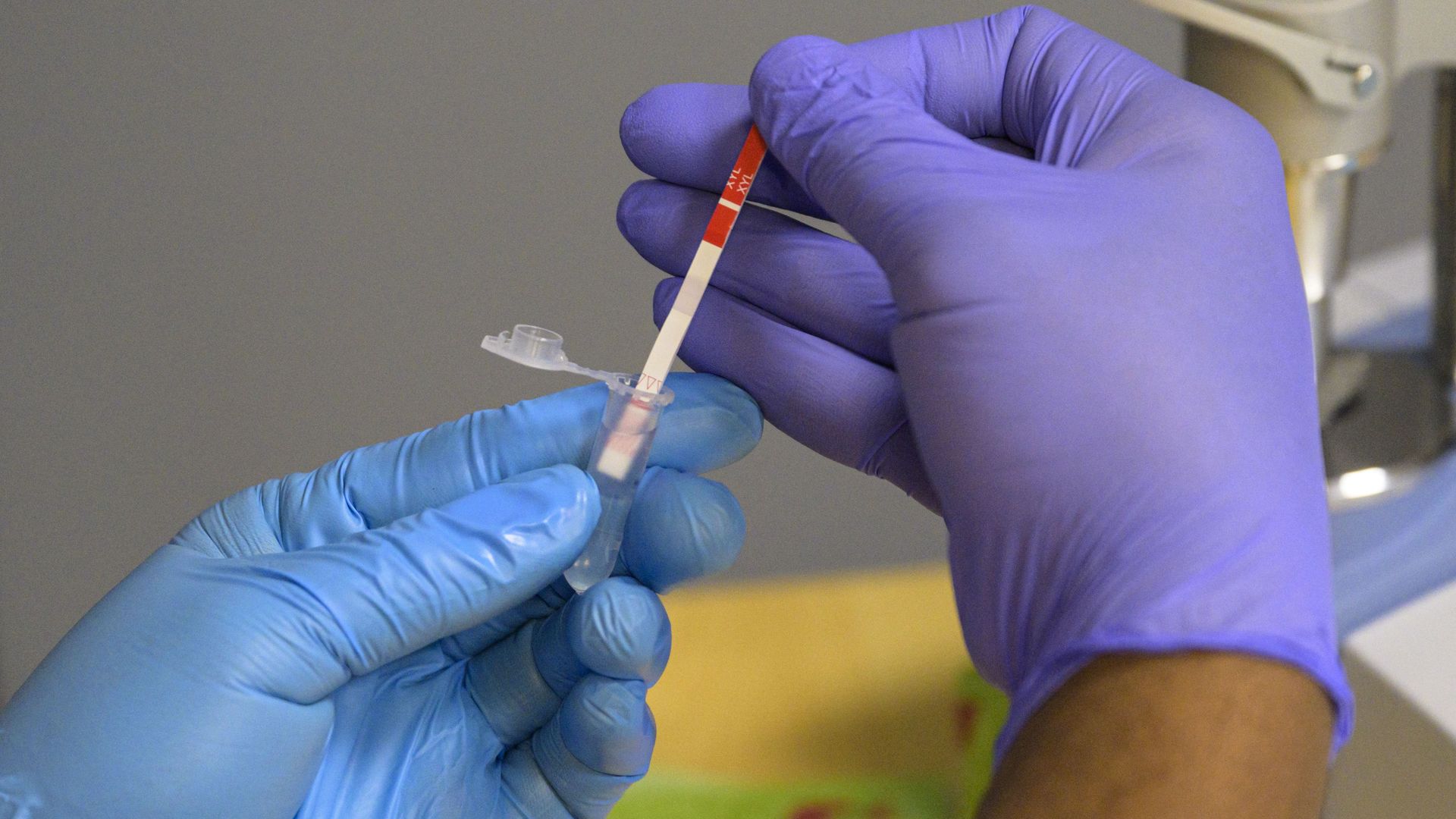
A New York City Department of Health worker tests a heroin sample for xylazine. Photo: Angela Weiss/AFP via Getty Images
Once rampant in Philly's drug supply, xylazine is now on the decline after a statewide crackdown, experts tell Axios.
Why it matters: The drug, known on the streets as "tranq," is being replaced by a new powerful sedative: medetomidine.
The big picture: Pennsylvania added xylazine, an animal sedative that's often mixed with fentanyl, to its list of controlled substances in 2023.
- Last year, Gov. Josh Shapiro signed a bill that made the ban permanent. It criminalizes misuse of the drug and requires authorized users to ensure it's properly safeguarded.
- But the crackdown has given rise to a new batch of cutting agents, like medetomidine.
Threat level: Xylazine can cause nasty wounds and sores and is linked to fatal overdoses, but some experts worry medetomidine is as bad, if not worse.
State of play: Pennsylvania's Department of Health doesn't have a drug-checking program, spokesperson Mark O'Neill tells Axios. Often, a patchwork of public health experts and harm-reduction groups help test samples and educate people about dangerous new adulterants cycling through local drug supplies.
- That forces them to be nimble, which is challenging since Philly's drug supply can change "hour to hour, half-hour to half-hour," Charlie Nolan, a community health specialist at Kensington-based recovery nonprofit Savage Sisters, tells Axios.
Driving the news: There has been a "precipitous decline" in the presence of xylazine in Pennsylvania's drug supply, drug-testing group PA Groundhogs wrote in its February report.
- The group has partnered with the Horsham-based Center for Forensic Science Research and Education (CFSRE) to test hundreds of drug samples from across Pennsylvania, including Philly and Pittsburgh, over the last year, PA Groundhogs founder Christopher Moraff tells Axios.
By the numbers: 31% of the 800 statewide samples, about half of which were from Philly, tested positive for xylazine, Moraff tells Axios.
- In early 2023, 99% of Philly's drug samples contained xylazine, per CFSRE. By late 2024, that number had dropped to 42%.
What they're saying: Drug traffickers have had a harder time getting their hands on xylazine as the overseas supply has dried up and the drug has become more expensive to acquire stateside, Moraff says.
- "Buyers here told me that it had doubled in price."
Meanwhile, law enforcement has also brought down the hammer.
- Pennsylvania State Police seized 26 kilograms of xylazine in 2024. That's more than the amount of heroin and nearly 30% of the fentanyl (92.7 kg) they seized from the streets last year.
- Philly police tell Axios they seized nearly 48 kilograms of xylazine worth $14.3 million last year, compared with just 1.6 kilograms in 2023.
Yes, but: While xylazine fades, experts are bracing as medetomidine takes hold.
- Last May, the Philadelphia Medical Examiner started testing for medetomidine and reported at the end of the year it had been found in at least 46 people who had died of overdoses.
Between the lines: The drug, another unscheduled animal sedative typically used by veterinarians during surgery, is 10 to 20 times more potent than xylazine.
- It's causing more severe withdrawal symptoms, as well as spikes in heart rate and blood pressure, in drug users, who are flooding area emergency rooms, some with life-threatening issues, Kory London, a professor and emergency room doctor at Thomas Jefferson University, tells Axios.
- Doctors who helped develop xylazine treatment regimens are now adjusting those protocols to accommodate medetomidine, London says.
- "We use similar medications, but we use more of them. We use stronger versions of them," London says.
The bottom line: Harm-reduction advocates say the unintended consequence of the state scheduling of xylazine is that the local drug supply becomes even more unpredictable.
- "All they do is shift to another substance that there's less research about," Nolan says. "People fall victim to an ever-changing, ever-evolving drug supply."