Portland Street Response expands under new policy changes

Add Axios as your preferred source to
see more of our stories on Google.
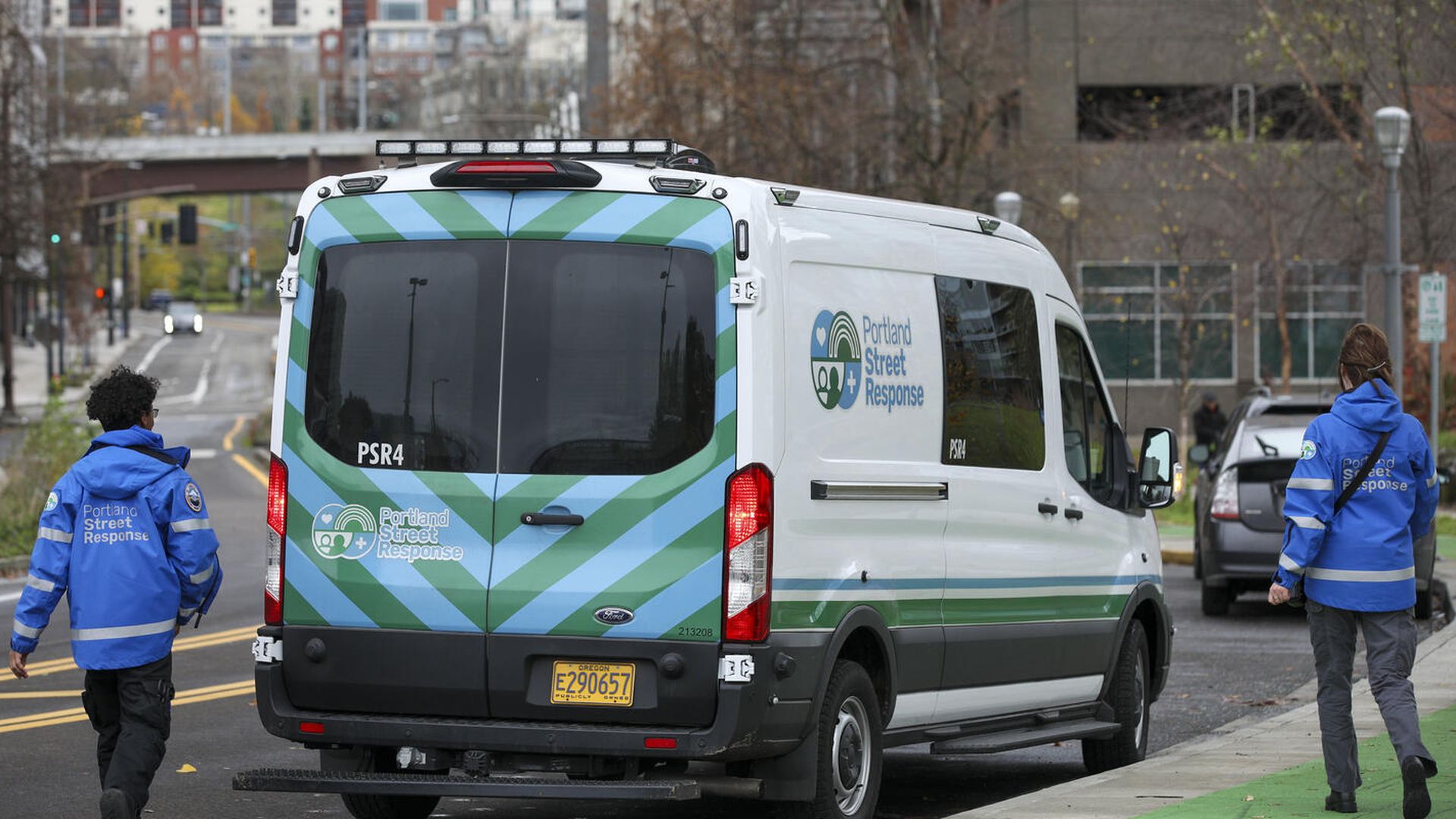
Portland Street Response will now use its vans to shuttle people to homeless shelters, food pantries and treatment centers. Photo: Courtesy of city of Portland
In a unilateral move, Mayor Keith Wilson announced a major expansion of Portland's unarmed crisis response team, raising new concerns among some city council members over fiscal priorities and executive authority.
Why it matters: The move aims to bolster Portland Street Response (PSR) after years of the program operating with limited bandwidth due to budgetary concerns and shifting political priorities.
Context: The city launched PSR in 2021 as an alternative to sending police to scenes where someone is in need of mental or behavioral health support.
- Wilson campaigned on supporting, and expanding, PSR's reach as an avenue to reduce the burden on first responders and help end unsheltered homelessness.
Zoom in: PSR teams can now respond to more emergency calls alongside police, firefighters and EMTs, according to a news release from Wilson's office on Thursday.
- That includes being able to respond to calls inside government and commercial buildings. They can also now shuttle people to homeless shelters, addiction treatment centers and food pantries.
- However, the 52-person team cannot respond to calls involving suicide or persons with a weapon, nor enter private residences or board public transportation without police, due to safety concerns.
What they're saying: "Once these changes have been fully implemented, PSR personnel will be able to respond to more call types, connect more individuals to the help they need most and create better outcomes for those they serve," Wilson said in a statement.
- Union representatives for PSR and the Portland Police Bureau told OPB they are supportive of the new collaboration.
By the numbers: The expansion is not expected to go outside of the program's $7.4 million annual budget, city spokesperson Dan Douthit told Axios.
Between the lines: Portland's new government structure allows Wilson to make administrative changes to city programs without City Council approval.
- The council's public safety committee will discuss PSR's future, operations and cost at a meeting Tuesday.
Yes, but: The move is another example of the executive branch making decisions without getting feedback from the legislative body first.
- Angelita Morillo, who represents District 3, told the Oregonian that the council was not "involved in the process of making this change" and heard about it shortly before a press release was published.
- "I just don't see how it wouldn't impact the budget," she said, adding that the council should have been consulted first.
What we're watching: The city isfacing a large budget shortfall and PSR's fate remains uncertain amid competing priorities between the Council and the mayor's ambitious campaign promises.