Year in reflection: Ice storm impacts linger

Add Axios as your preferred source to
see more of our stories on Google.
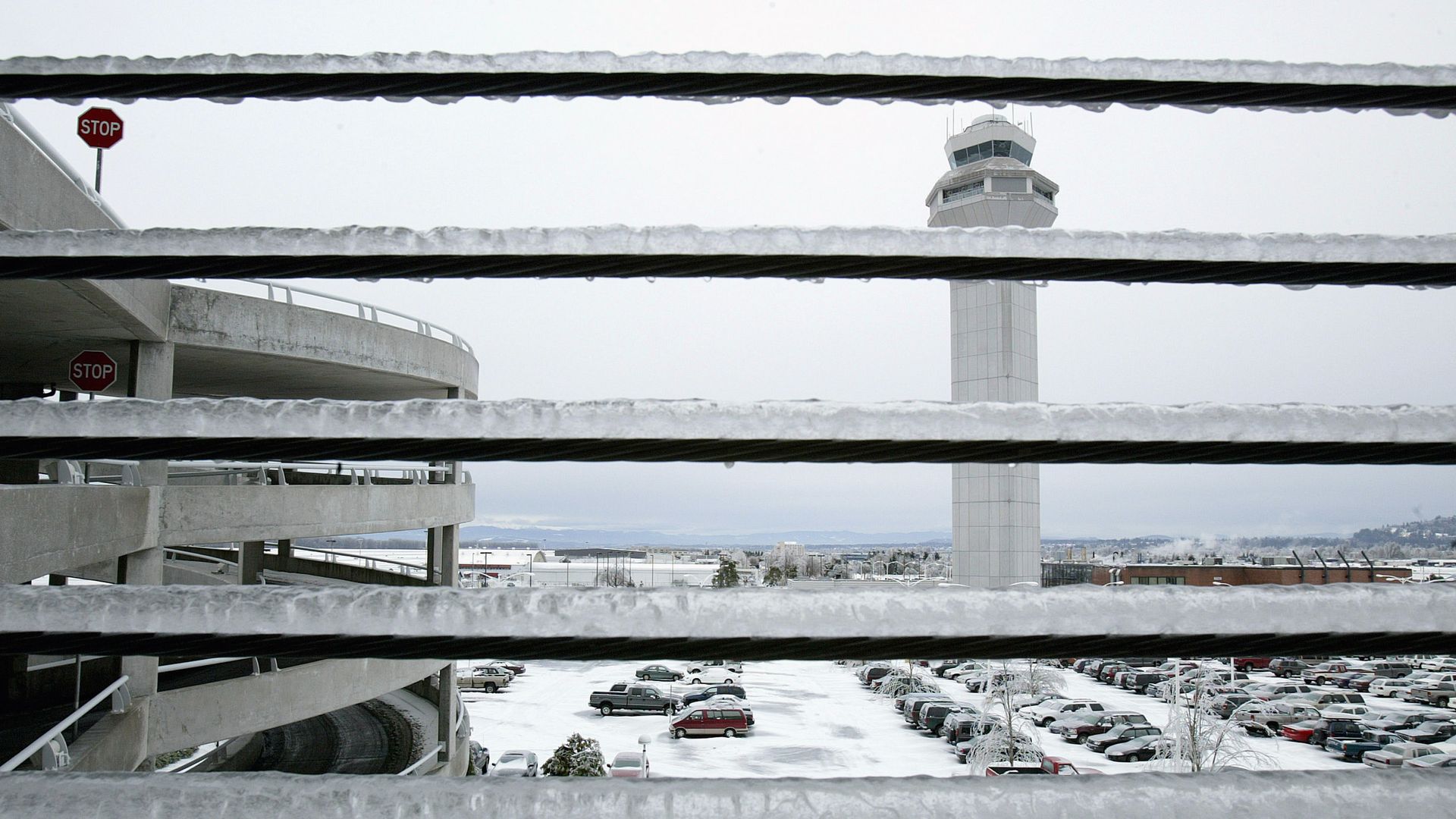
We don't miss this. Photo: Jonathan Ferrey/Getty Images
At the start of the year, a series of extreme winter weather systems pummeled Portland and ice rained down from the skies.
The big picture: The impact of that event — when hundreds lost power and were trapped in their homes, businesses were forced to close and potholes plagued the streets — has raised questions about how the city will respond to future natural disasters.
- The Portland Bureau of Transportation estimates that the January storms cost $8 million. The agency budgets only $750,000 per year for storm contingency plans.
The latest: We asked Sarah Iannarone, the executive director of transportation advocacy group Street Trust, about what the ice storm taught us about our transit system and how to move forward.
- This interview has been edited for length and clarity.
What did we learn from January's ice storm?
- "Bad weather events teach us about where the system really breaks down. Safe routes to transit is a gap that we don't ensure that we're going to close for so many people in our region."
- "Using the sneckdown method, storms show us how many trips people could be taking by means other than driving. Those are the places where we should be focusing our transportation demand management efforts."
Climate-related extreme weather events are expected to happen more frequently. What should transportation officials be thinking about?
- Reliable transportation affects all facets of city life, beyond convenience: "It's that lower-wage worker who misses the bus and misses a shift, whose family might miss a meal during that storm that we need to be thinking about through the transportation lens."
Lawmakers plan to pass a transportation package next year. What are you advocating for?
- "We will be fighting for the absolute basics: safe sidewalks to transit stops where that transit stop is well-maintained, as well as biking trails that connect parks and schools."
- "Funding for the earthquake-ready Burnside Bridge project is of regional importance because we need to make sure that we have that critical route across the Willamette in the event of an earthquake."