Past ocean-current collapse is a warning for the future

Add Axios as your preferred source to
see more of our stories on Google.
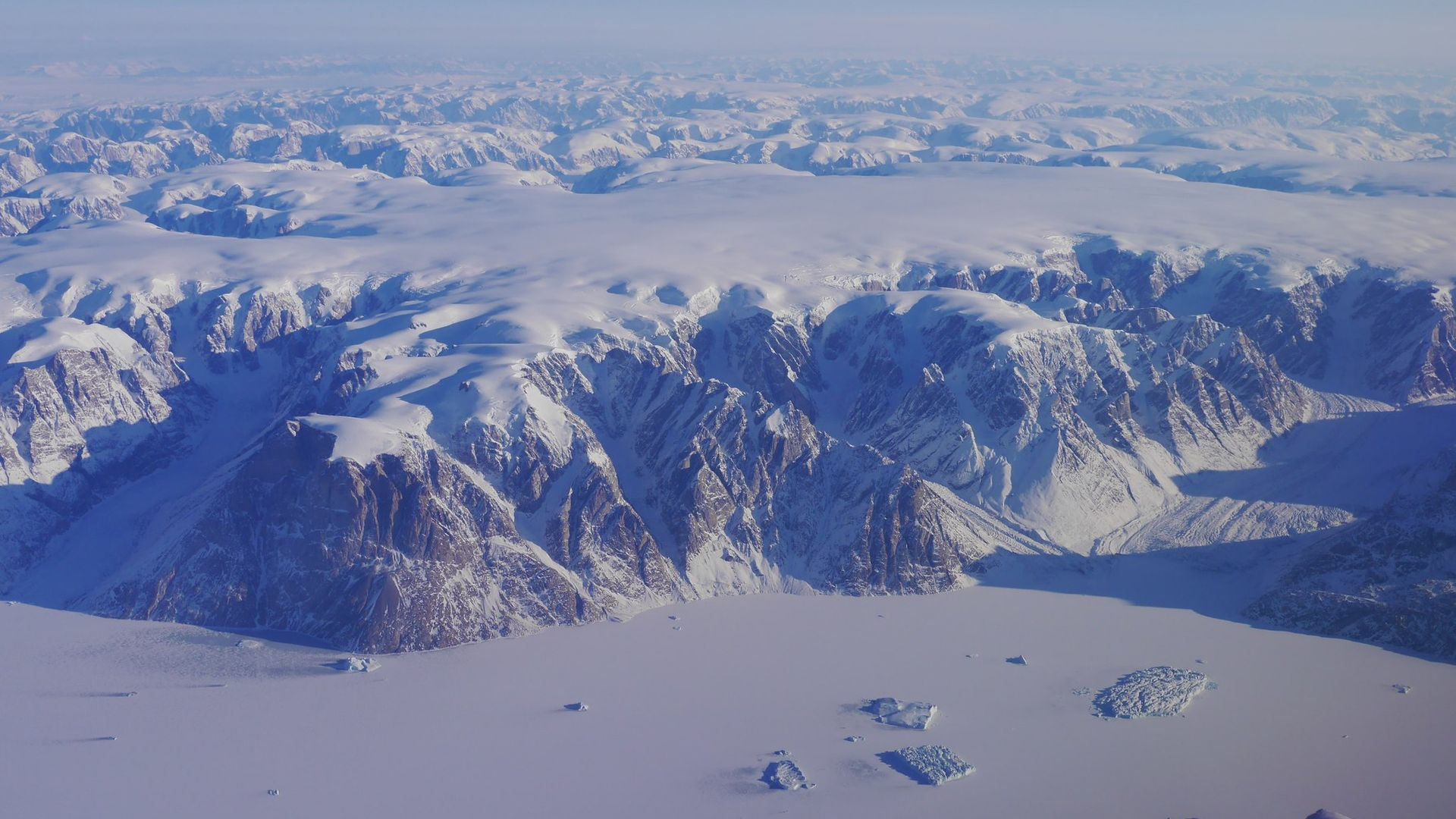
Researchers used ice cores taken from the Renland Ice Cap in eastern Greenland to study past changes in climate. Photo: Courtesy of Oregon State University/Lars Berg Larsen.
The weakening of an important ocean current has caused "catastrophic" climate shifts in the past and offers new clues to what could be in store for us unless we drastically lower greenhouse gas emissions, according to new research from Oregon State University.
Why it matters: The Atlantic Meridional Overturning Circulation (AMOC) is part of a global conveyor belt that brings warm water from the tropics to the North Atlantic and helps regulate weather patterns around the globe.
- The AMOC shut down repeatedly during the last ice age, and there is evidence it could happen again within the next few decades.
Zoom in: Researchers at Oregon State analyzed ice cores drilled from the 2-mile-thick ice cap that covers Greenland, with data spanning up to 120,000 years.
- Christo Buizert, lead author of the study, said his team found the AMOC collapsed at least 25 times during the last Ice Age, with severe implications for global weather patterns.
- Temperatures in Greenland rose by up to 20° Fahrenheit over just a couple of decades, leading to the failure of monsoons in Central Asia and crippling drought in central Africa.
How it works: The AMOC is primarily driven by differences in water density.
- As warm water moves north along the Gulf Stream, it cools and gets saltier due to evaporation, gaining density.
- That dense water sinks in the North Atlantic, then moves south where it returns to the surface in a process known as upwelling.
The intrigue: Buizert said a number of factors are already slowing the AMOC, including warmer sea surface temperatures in the North Atlantic and an influx of fresh water from melting ice caps on Greenland.
- This week, dozens of leading climate scientists penned an open letter calling for a renewed focus on the threat of an AMOC collapse, saying, "this risk has so far been greatly underestimated."
- Though there is evidence the AMOC is slowing, scientists don't know when we might reach a tipping point.
Stunning stat: Buizert's team found that, during previous AMOC collapses, sea ice reached as far south as New York City, similar to the plot of the 2004 disaster film "The Day After Tomorrow," though the movie greatly exaggerated how quickly a collapse could happen.
Yes, but: Recent studies have shown that an AMOC collapse could occur within the next few decades, but that runs contrary to the most recent report from the U.N. Intergovernmental Panel on Climate Change, which found an AMOC shutdown is "very unlikely" to occur this century.
State of play: Buizert said the climate impacts in the Pacific Northwest would be relatively muted, with a slight cooling effect locally, but the societal impacts — which could include upheaval in global agriculture and waves of climate refugees — would be felt worldwide.
What they're saying: Buizert said the AMOC represents one of several climate "tipping points."
- "At some point you might pass a threshold, or one of these tipping points, and then you can get very quick and very catastrophic and potentially irreversible change," he told Axios.
The bottom line: Buizert said the climate goals set forth in the Paris Agreement — limiting warming to 1.5 degrees Celsius — were designed to keep the world from reaching tipping points like an AMOC collapse.
- "It's really incumbent upon us all to try to prevent this from happening," he said.