Portland's camping ban, 100 days in

Add Axios as your preferred source to
see more of our stories on Google.
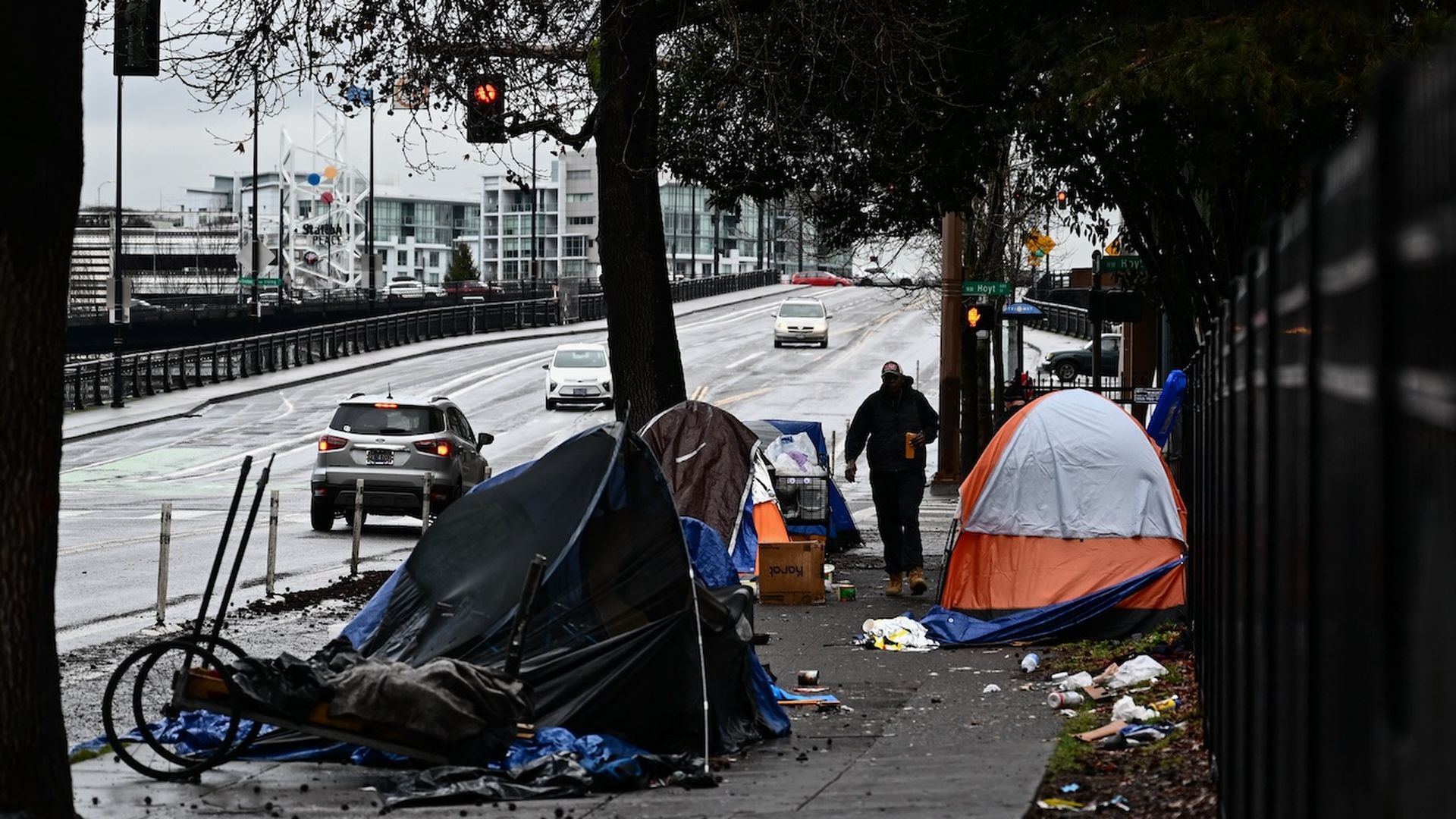
Photo: Patrick T. Fallon/AFP via Getty Images
It's been 100 days since the city of Portland began enforcing its outdoor camping ban.
Why it matters: Whether the policy is working as a way to curb rising homelessness, trash and tents depends on who you ask.
Catch up quick: The ban, which was unanimously passed by the City Council last spring, restricts activities like blocking pedestrian right-of-ways like sidewalks and business entrances or building fires.
- Camping is allowed only if the person does not have the "means to acquire reasonable alternate shelter," per the ordinance.
- Individuals who are offered shelter at one of the city- or county- run sites can accept or face penalties.
- Violators can face a maximum $100 fine or up to seven days in jail — or both, though the district attorney is encouraged to divert offenders to other emergency services instead of pursuing convictions.
By the numbers: Since July 1, when enforcement began, the outreach team from the Street Services Coordination Center has identified approximately 11,600 campsites and removed — or swept — 1,779 campsites, per Mayor Ted Wheeler's office.
- Of those, 24 camping sites (some with multiple people) have been referred to law enforcement. Five have since been issued citations for unlawful camping and eight have accepted shelter offers, the mayor's office said.
- "The goal is to connect people with services; not to impose punishment," Cody Bowman, a spokesperson for Wheeler, told Axios in an emailed statement.
The intrigue: Just one arrest took place in July, when one man refused to move from the corner of NE 28th and Alberta or accept shelter after several attempts.
- Yes, but: When Portland police officers took him to jail, Multnomah County Sheriff Nicole Morrisey O'Donnell refused to book him — leading to a back-and-forth squabble with the mayor.
- She's since agreed to book violators until the end of the year, and then evaluate the ban's effectiveness.
As of now, no one has been booked into Multnomah County jail on the city of Portland camping ordinance, John Plock, a spokesperson for the sheriff's office, told Axios.
- "We will let the city speak to what constitutes success for them."
Zoom in: For on-the-ground homeless social service providers like Blanchet House, "the ban has not been a prominent topic of conversation," executive director Scott Kerman said.
- While Kerman has noticed several campsite sweeps in Old Town, he said Oregon's recriminalization of drug possession and delayed rollout of the planned deflection center are at the top of people's minds.
What they're saying: "The camping ban and new drug deflection laws don't reach people we serve whose greatest challenge is mental illness and severe trauma," Kerman told Axios.
- "They need a level of shelter support that is not readily available."
The bottom line: Multnomah County severely lacks enough shelter beds to serve those experiencing homelessness.
- According to a 2023 Portland State University point-in-time count, nearly 6,300 people in Multnomah County were considered homeless, while there were less than 3,150 shelter beds.