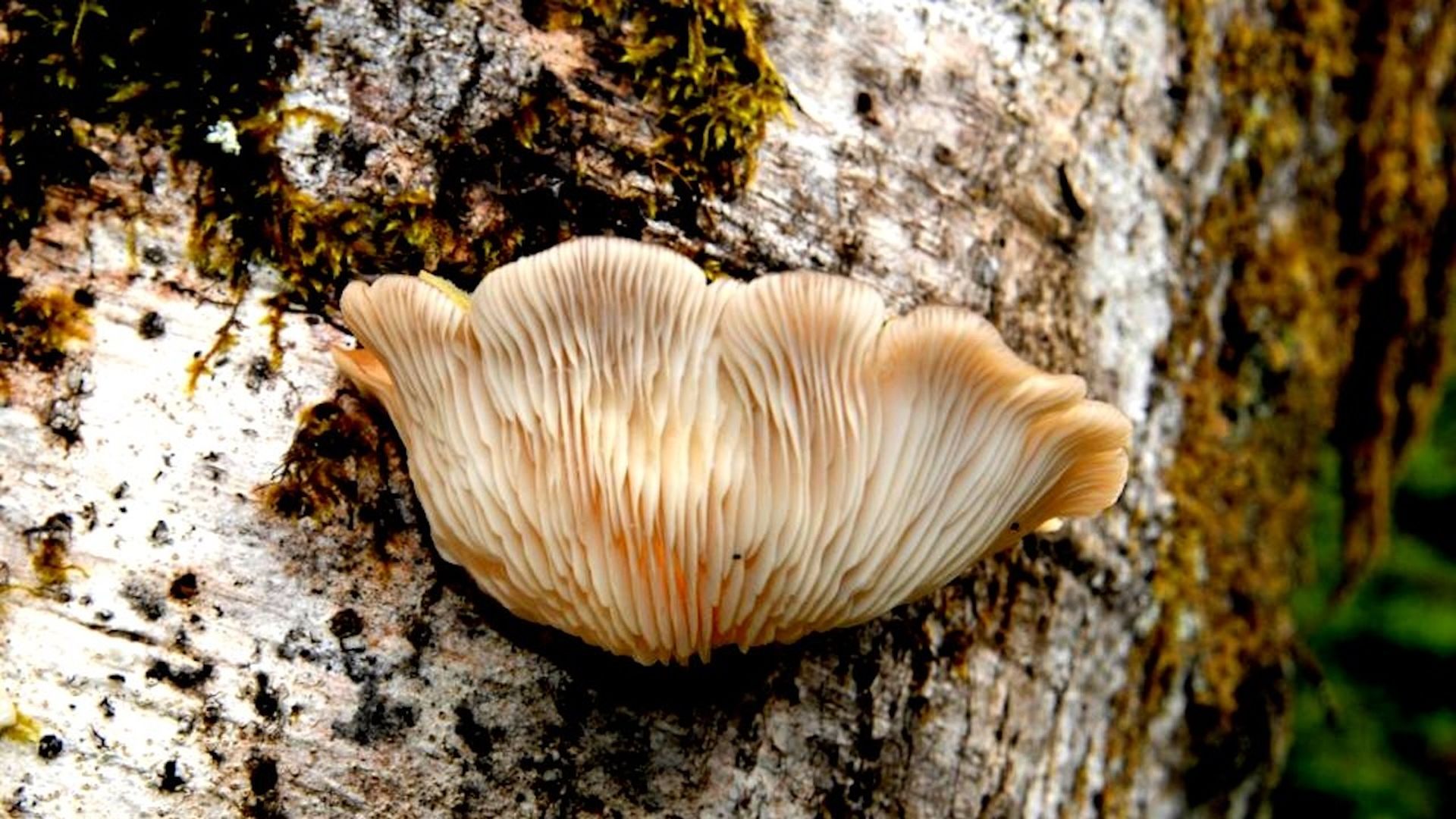
An oyster mushroom on the side of a tree at the Tillamook Forest Center. Photo: Courtesy of Oregon Department of Forestry
Weather conditions in the fall are ideal for fungi — lower temperatures and near-consistent moisture from precipitation without the threat of frost.
Driving the news: Over the next few weeks, edible mushrooms will once again start popping up all throughout Oregon and southwest Washington, and anyone can forage them.
The big picture: Wild mushrooms are a hot commodity among enthusiast hunters, chefs and retailers. It's also a low-barrier hobby for newbies, too.
But knowing what to look for (and cooking them so they're more easily digested) is essential because even edible fungi have poisonous look-alikes.
What they're saying: Elan Hagens of Temptress Truffles told Axios that the Pacific Northwest is home to dozens of edible fungi, but the most recognizable are the golden chanterelle, matsutake, lobster, oyster and porcini.
Mushrooms can be identified by first understanding their characteristics. So be sure to document stem thickness, slime, gills or pores, color, size, spore pattern, whether it's growing out of the ground or a tree, and even its smell.
Hagens uses the app iNaturalist to identify fungi in the wild.
Where to go: Anywhere wet, dark and full of pine trees, Hagens said.
Foraging is popular in Mount Hood National Forest, Siuslaw National Forest, also known locally as the coastal forest, and Gifford Pinchot National Forest in Washington.
Some forests may require a permit or have specific guidelines for mushroom hunting, so check with a local park ranger or online before heading out.