Where to find wild mushrooms in Oregon

Add Axios as your preferred source to
see more of our stories on Google.
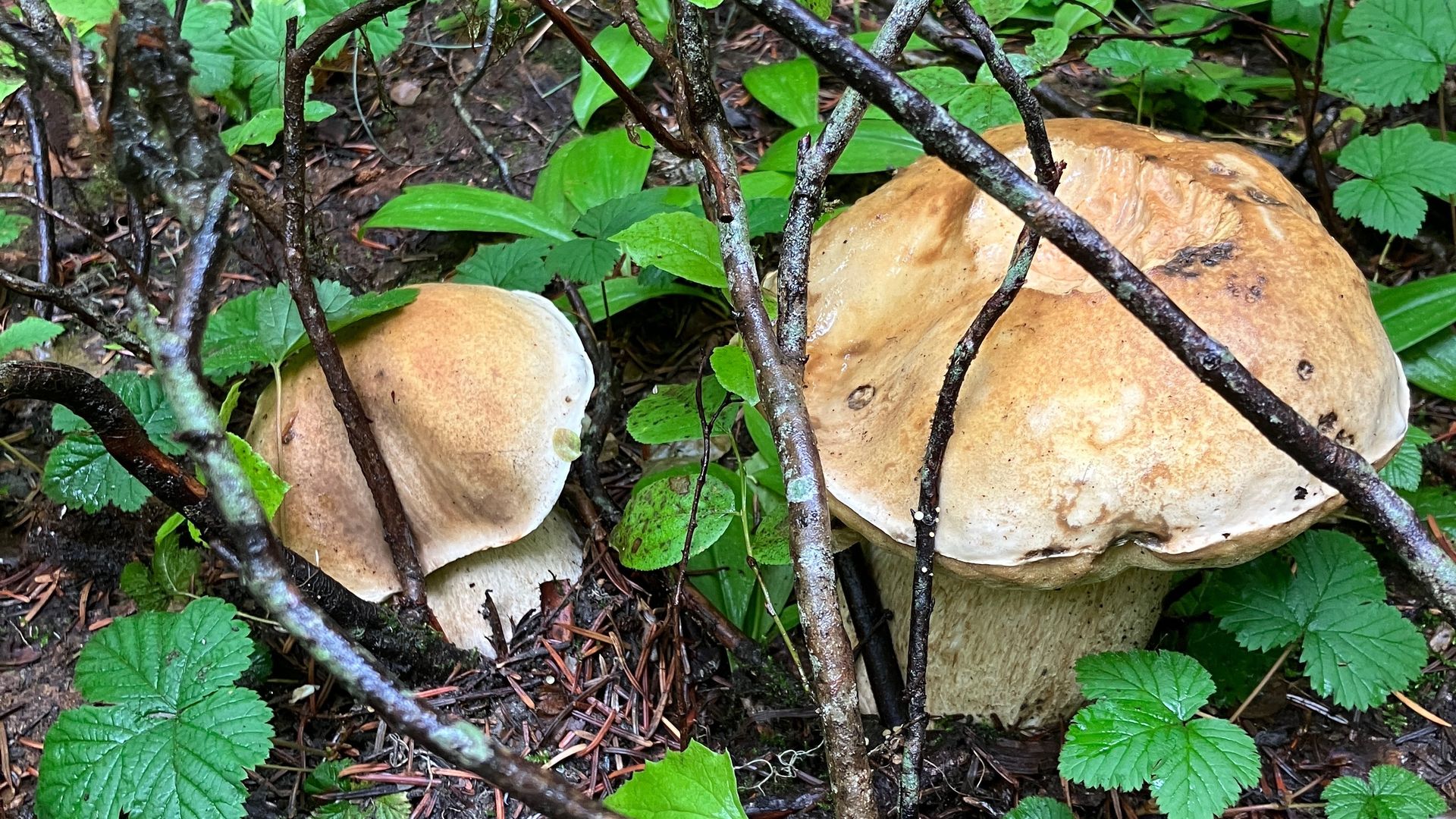
Boletus edulis, commonly known as the king bolete (or porcini in Italian), grows along the Timberline Trail just west of Zigzag Canyon. Photo courtesy of Ned Hayes
When the rain comes, so do the mushrooms.
Driving the news: Weather conditions in the fall are ideal for fungi — lower temperatures, and near-consistent moisture from precipitation without the threat of frost.
Why it matters: Over the next few weeks, edible mushrooms will be popping up all throughout Oregon and southwest Washington and anyone can forage them. Hunting is a fun way to explore the outdoors with a delicious (and free) reward.
Wild mushrooms are a hot commodity among enthusiast hunters, chefs and retailers. It's also a low-barrier hobby for newbies, too.
- But knowing what to look for (and cooking them so they're more easily digested) is essential because even edible fungi have poisonous lookalikes.
We spoke with mycologist Elan Hagen of Temptress Truffles about how to identify edible mushrooms, where to find them and ethical harvesting techniques.
What to know: The Pacific Northwest is home to dozens of edible fungi, but the most recognizable are the golden chanterelle, matsutake, lobster, oyster and porcini.
- Mushrooms can be identified by first understanding their characteristics. So be sure to document stem thickness, slime, gills or pores, color, size, spore pattern, whether it's growing out of the ground or a tree, and even its smell.
- Hagen uses the app iNaturalist to identify fungi in the wild.
Where to look: "A dark, wet pine forest is what they like," Hagen said. Foraging is popular in Mount Hood National Forest, Gifford Pinchot National Forest in Washington, and Siuslaw National Forest, also known locally as the coastal forest.
- Some forests may require a permit or have specific guidelines for mushroom hunting, so check with a local park ranger or online before foraging.
What to do: Sustainably harvest by carefully pinching or cutting the stem right above the soil to keep some of the microbes in the ground.
- Harvesters should identify a mushroom before plucking it. "If you don't know 'em, don't pick 'em," Hagen tells Axios.
And finally, respect the forest and stay on the trail.
The bottom line: "It's all about fun," Hagen said, but before you start picking, consider purchasing a mushroom book, go foraging with an expert or take a class with the Oregon Mycological Society.