Eating blackberries is a win for you — and the environment


Add Axios as your preferred source to
see more of our stories on Google.
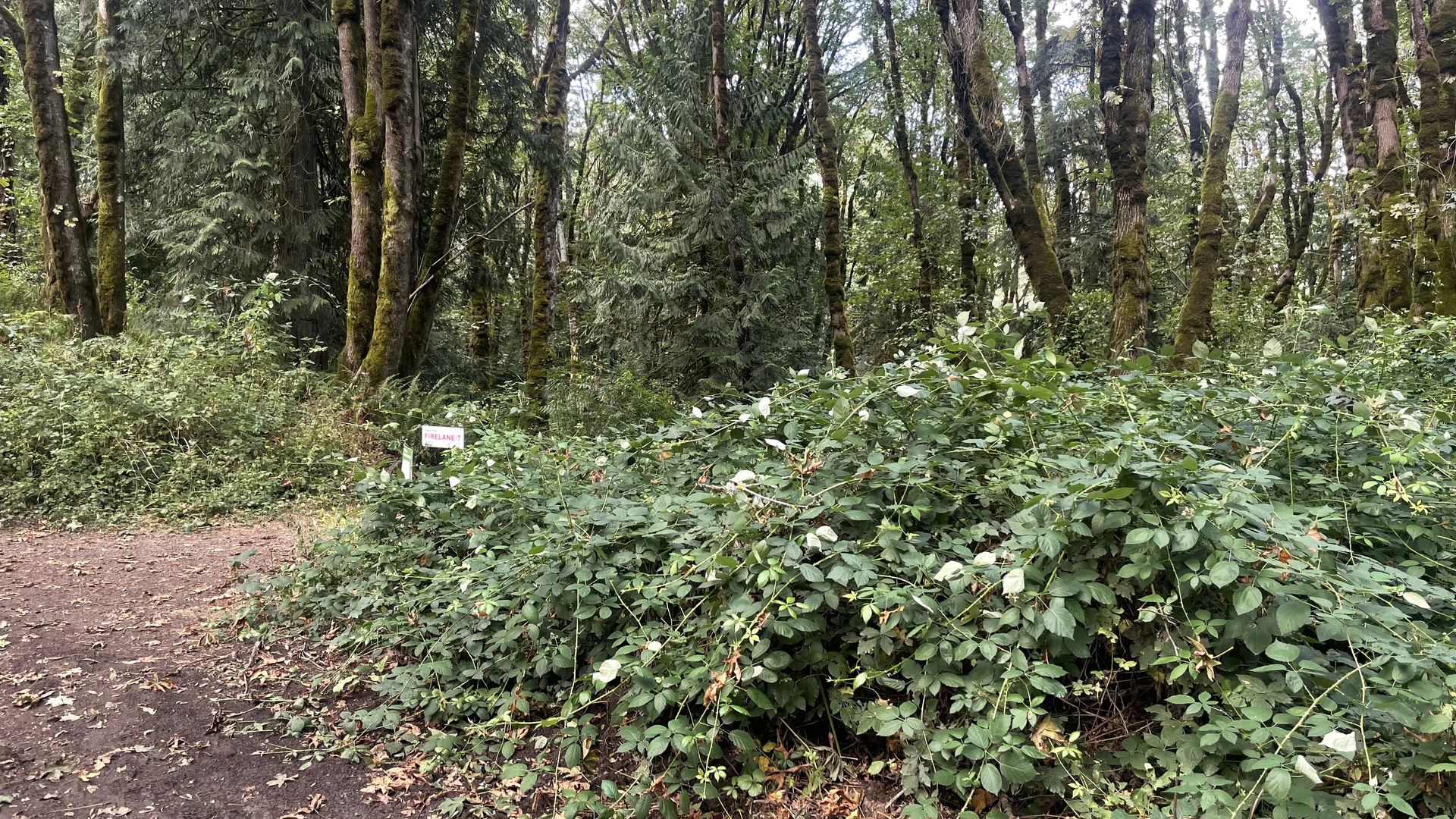
Caption: A thicket of Himalayan Blackberry, seen here in Portland's Forest Park. Photo: Meira Gebel/Axios
Gorging on wild blackberries in the Pacific Northwest is not just delicious, it's good for the environment.
Why it matters: The normal rules of foraging, which call for taking no more than 20–30% of what's available, don't apply to Himalayan blackberries, a notorious, prolific spreader that suffocates native plants.
What they're saying: "Blackberry is one of those plants we know we're never going to get rid of," Crystal Durbecq, an invasive plant coordinator with the USDA Forest Service, told Axios. "But the more people who are aware about it, the more it helps."
Threat level: Himalayan Blackberry, also known as Armenian Blackberry, has a growth rate of up to 20 feet per year and bushes can get as tall as 15 feet.
- Its deep, sprawling roots and thick, sharp vines make eradication difficult. Once it's laid its grip in a landscape, it's likely to stay for good, Durbecq said.
- The species was first found in Oregon's Marion County in 1920 and now consumes 1.6 million acres of the state.
State of play: The berry's fruits, however, are sweet and delicious. Across the country, invasive species experts are highlighting cuisine as one way to take a bite out of the spread of invasive weeds.
- Last week, Corvallis hosted the Invasive Species Cook-Off with local chefs creating gourmet dishes out of plants and animals that are crowding out native species.
- In West Virginia last month, Harpers Ferry National Historical Park invited people to harvest invasive wineberries.
The big picture: A 2021 study estimated that invasive species have cost North America over $26 billion per year since 2010, according to the U.S. Department of Agriculture.
- A 2017 estimate by the Oregon Department of Forestry found that Himalayan Blackberry and Scotch broom — a yellow-flowered weed that's prolifically widespread in western Oregon — cost the state $80 million annually.
How it works: Eating Himalayan blackberries not only reduces seeds in a specific area, it promotes awareness about noxious weeds and how to counter them, Skye Pelliccia, an education specialist with the King County Noxious Weed Control Program in Seattle, told Axios.
- Birds and other animals will still have plenty of blackberries no matter how many we eat, she said.
- Eating weeds can be even more directly helpful with plants such as garlic mustard, in which the roots can be dug up and consumed, she said.
The fine print: There are rules about whether or how much harvesting can be done on public lands, according to Pelliccia.
- Generally, five gallons of berries a year can be harvested on Forest Service land with a free use permit.
Yes but: Commercial foraging on Mount Hood is illegal. The daily limit per person is 1 gallon and 3 gallons per year.