Fighting invasive species one bite at a time

Add Axios as your preferred source to
see more of our stories on Google.
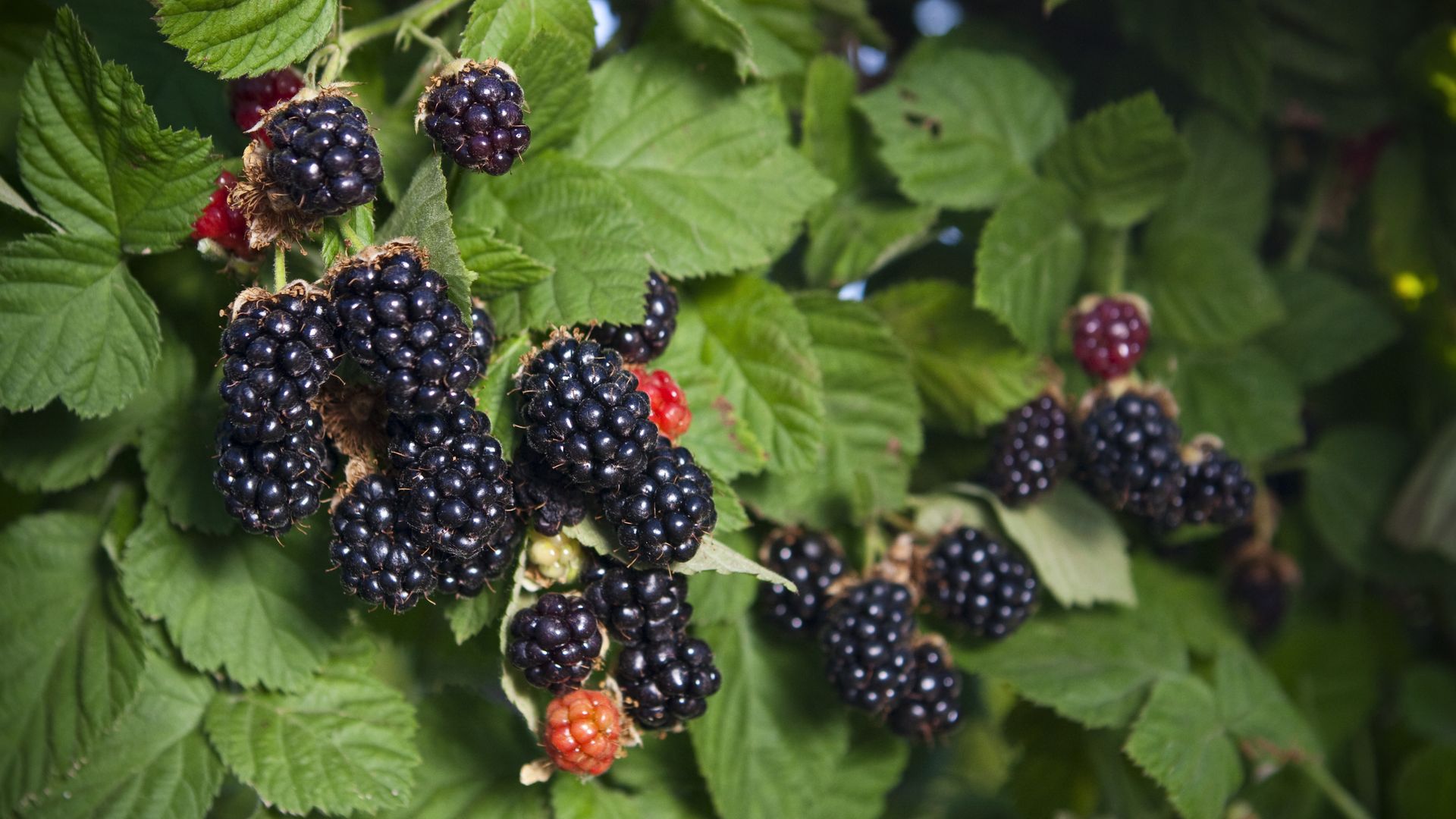
Ripe blackberries on the vine are begging to be picked. Photo: Steve Goossen/Design Pics Editorial/Universal Images Group via Getty Images
Gorging on wild blackberries in the Pacific Northwest is not just delicious, it's good for the environment, according to noxious weed specialists.
Why it matters: The normal rules of foraging, which call for taking no more than 20–30% of what's available, don't apply to Himalayan blackberries, a notorious, prolific spreader that suffocates native plants.
What they're saying: "We will never run out of blackberries in the Pacific Northwest," Skye Pelliccia, education specialist with the King County Noxious Weed Control Program, told Axios.
State of play: Across the country, invasive species experts are highlighting cuisine as one way to take a bite out of the spread of invasive weeds.
- In West Virginia last month, Harpers Ferry National Historical Park invited people to harvest invasive wineberries.
- And Corvallis this month hosted the Invasive Species Cook-Off with local chefs creating gourmet dishes out of plants and animals that are crowding out native species.
The big picture: A 2021 study estimated that invasive species have cost North America over $26 billion per year since 2010, according to the U.S. Department of Agriculture.
- Washington state estimates annual damage at $1.3 billion from the uncontrolled spread of just 23 out of over 200 known invasive species in or near the state.
How it works: Eating Himalayan blackberries not only reduces seeds in a specific area, it promotes awareness about noxious weeds and how to counter them, Pelliccia told Axios.
- Birds and other animals will still have plenty of blackberries no matter how many we eat, she said.
- Eating weeds can be even more directly helpful with plants such as garlic mustard, in which the roots can be dug up and consumed, she said.
The fine print: There are rules about whether or how much harvesting can be done on public lands, according to Pelliccia.
- Generally, five gallons of berries a year can be harvested on Forest Service land with a free use permit.
- Removing vegetation is technically against the rules on park and municipal land in Seattle and King County, she said, though that rule is not widely enforced.