The breeding patterns of hatchery salmon, explained

Add Axios as your preferred source to
see more of our stories on Google.
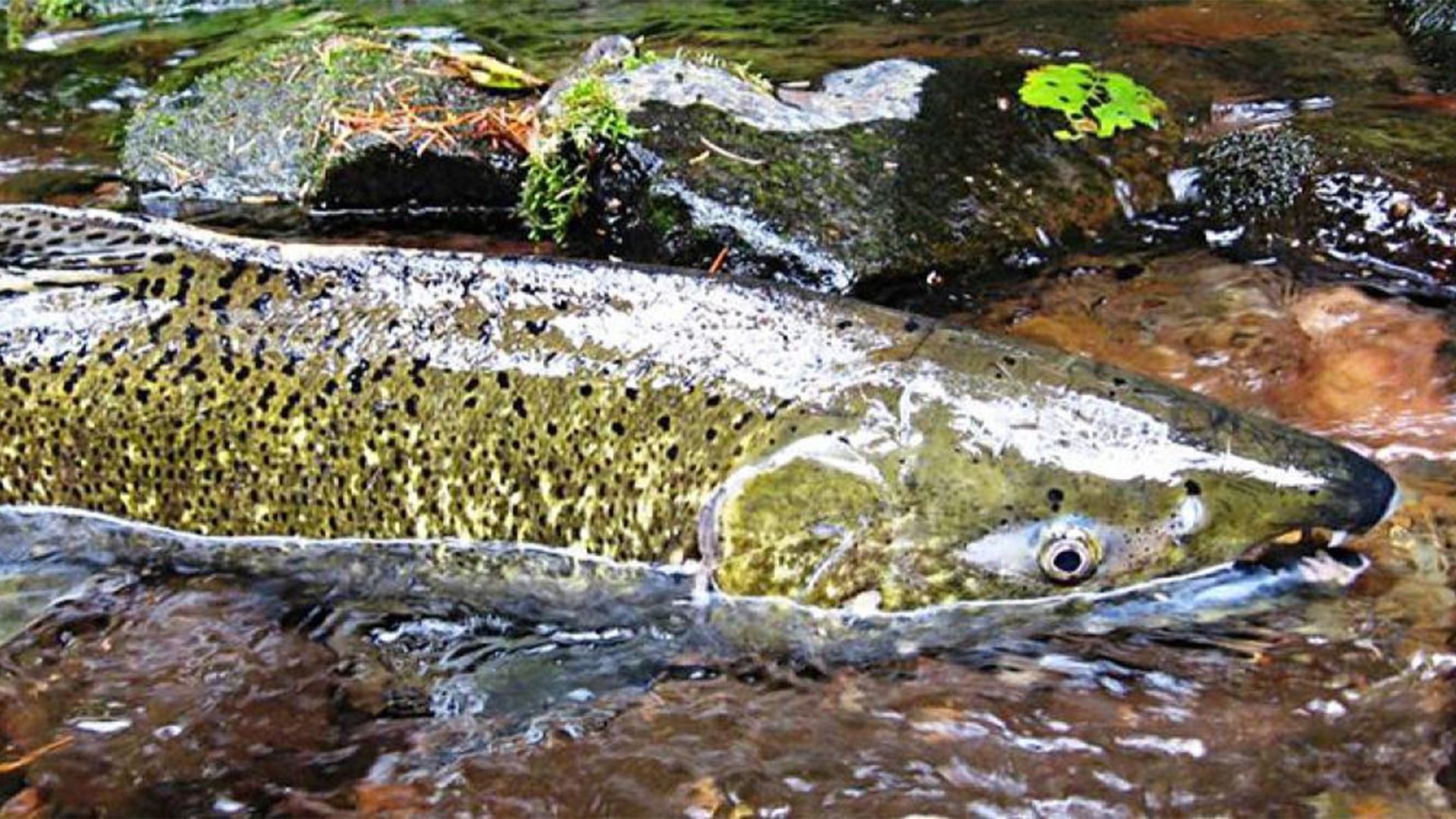
Photo: Courtesy of Oregon State University
Hatchery-born salmon struggle with reproduction — an issue that has puzzled researchers for years. But luckily that trait hasn't affected their offspring, according to a new OSU study.
Why it matters: Billions of dollars for salmon restoration efforts are being poured into the Pacific Northwest, and hatcheries play a big role in the future survival of the threatened Columbia River Basin species.
What they did: OSU researchers compiled 13 years' worth of family tree data from over 10,000 hatchery-born spring Chinook salmon in the McKenzie River, a tributary to the Upper Willamette River to determine each generation's fitness — the number of adult offspring a fish produces, according to a press release.
What they found: While hatchery-born salmon historically produce less offspring compared to their native counterparts when spawning in the wild, wild-born offspring of hatchery fish don't share that characteristic.
- The study did not conclude whether the environment or genetics play a role in improved fitness but found that wild-born fish produce significantly more than their hatchery parents and about equal to their native peers.
The bottom line: The increased fitness of first-generation fish is a positive sign for conservation efforts, like re-establishing wild-born salmon populations via hatcheries.
Yes, but: Researchers warned that interbreeding between hatchery-born and wild salmon could potentially cause further reproductive fitness decline, and more research is needed in other river systems to test their findings.