Tasting menus see resurgence in Portland restaurants

Add Axios as your preferred source to
see more of our stories on Google.
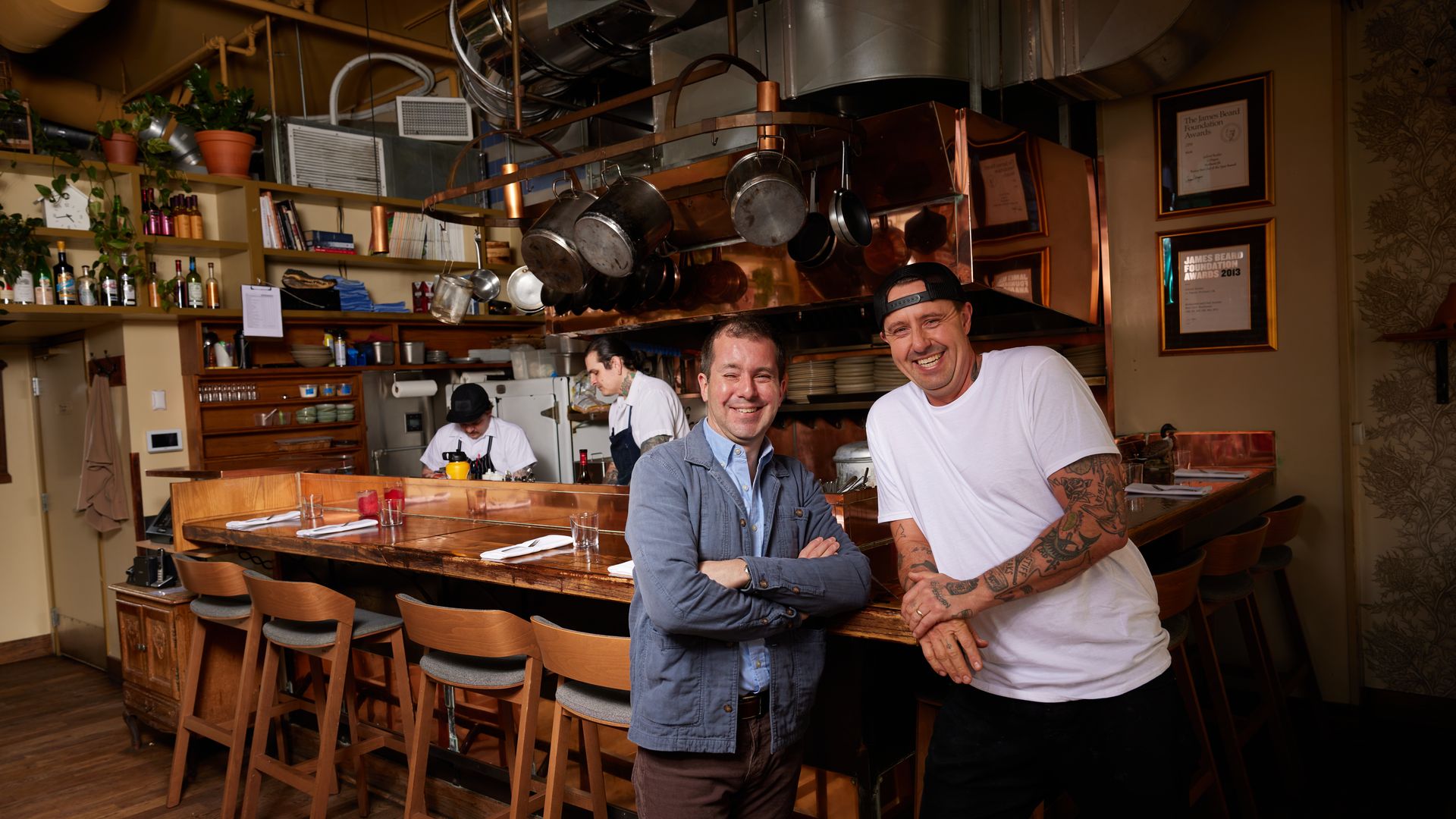
Andy Fortgang (left) and Gabriel Rucker of Le Pigeon. Photo: Courtesy of Le Pigeon
The hottest reservation in Portland is now typically at a restaurant where you don't get to choose what you're served.
Why it matters: To cut pandemic losses, restaurants everywhere pared down menus in response to rising food costs, labor shortages and changing dining habits.
- The rise of the tasting menu — chef-curated, multi-course meals — is just the industry's natural response, local restaurateurs told Axios.
What they're saying: "People would rather save up for the week and eat at home and then have that one really nice special dinner," Elijah Rivers, executive chef at Quaintrelle, which offers a newly-developed 10-course, $155 menu, said
Flashback: Tasting menus are not a new dining concept. But because many of Portland's pioneering prix-fixe restaurants didn't survive the pandemic, fine dining was put on the back burner for a while in favor of takeout boxes.
- James Beard Award winner Naomi Pomeroy closed Beast to open an all-day cafe, Ripe Cooperative, in its place, though it also shuttered shortly after.
- Castagna closed its doors after two defining decades in Portland — chefs like Berlu's Vince Nguyen and Okta's Matthew Lightner sharpened their skills there — while Holdfast Dining, the popular supper-club style pop-up, said its small space wasn't suited for distance dining.
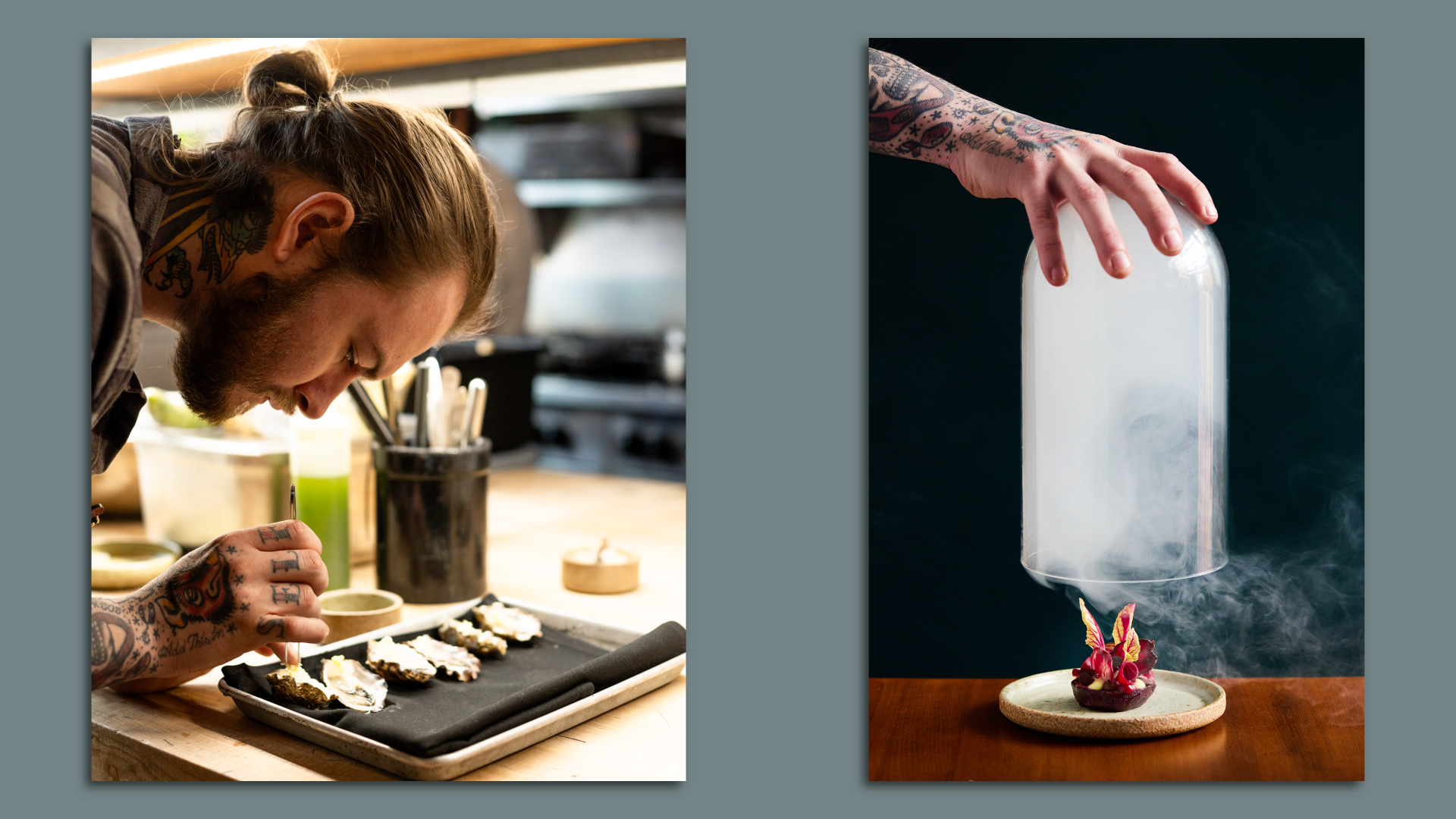
The latest: Luckily, more chef-driven restaurants have popped up in their place.
- Astera from chef Aaron Adams dishes out its vegan fine dining fare nightly and wine-focused L'Orange launched its first-ever seven-course tasting menu this spring.
- Nationally acclaimed 25-course omakase spot Nodoguro revived after its initial pandemic closure, and Äniks, a new 16-seat "chef's counter" space in Kerns (from Quaintrelle alum Ryley Eckersley) opens next week.
Dig in: What makes a tasting menu more economical is that chefs can set prices that make sense for their bottom line.
- "When you're trying to operate a restaurant, you can't afford to be there if two people decide to split a salad and an entree," Gabriel Rucker, chef of Le Pigeon, told Axios.
- Back-end labor is still very expensive, as are high-quality, seasonal ingredients, but what makes one-off diners come back is "a really fun, comfortable three and a half hours where you feel taken care of and really special," River said.
The bottom line: This wave of new tasting-menu restaurants signals a craving for consumers who want to experience a chef's overall vision in an intimate, but non-pretentious setting, Rucker added.
- "The accessibility of the tasting menu is all about what's on the plate and what's in the glass, and that's a trend Portland set."