Oregon skin cancer rates have been dropping

Add Axios as your preferred source to
see more of our stories on Google.
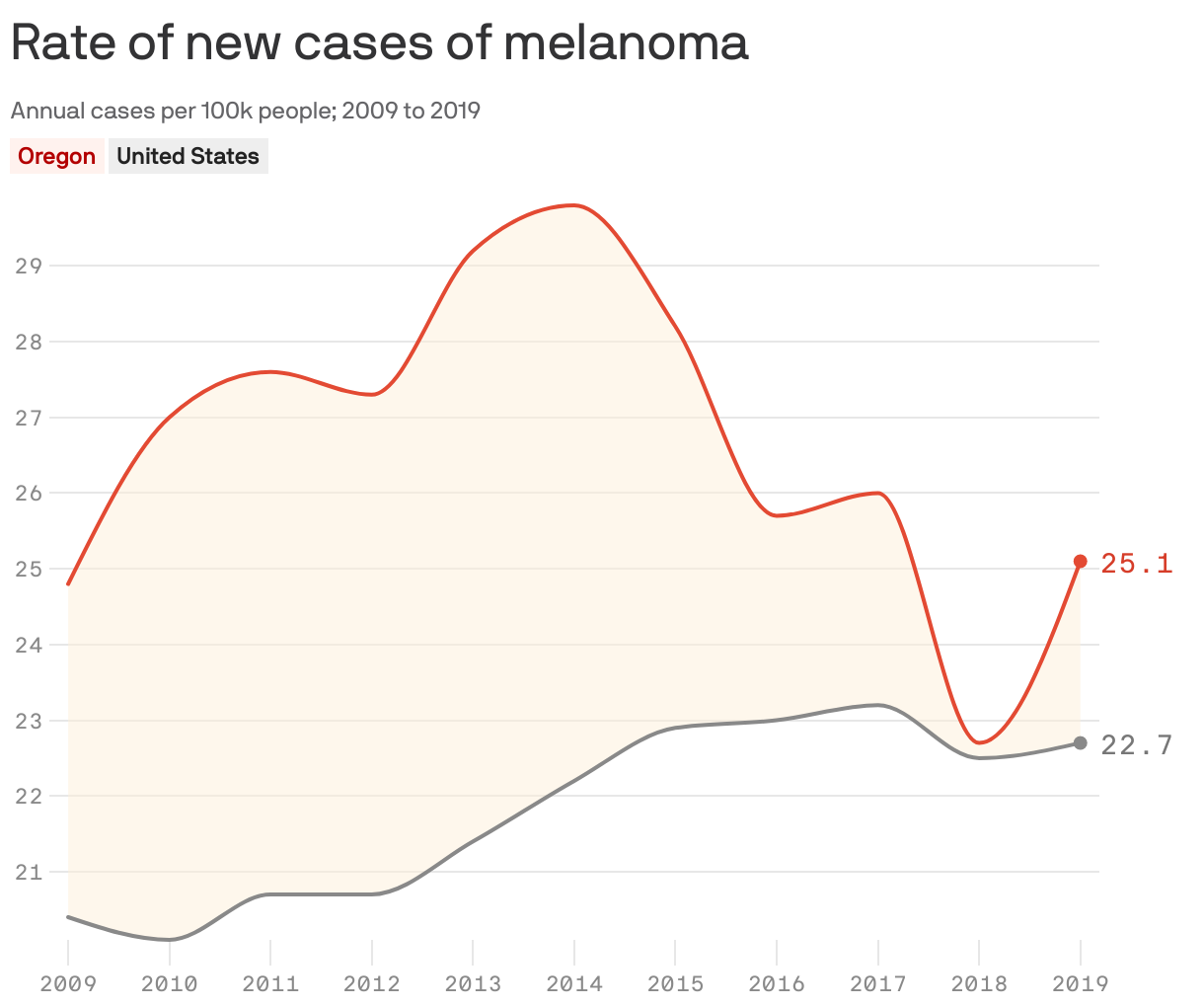
Skin cancer rates in Oregon dropped significantly over the past decade, from fifth-highest among all states for melanoma diagnoses in 2013 to 21st in 2019.
Why it matters: Experts say the biggest factor in lowering skin cancer rates is being aware of your risk and taking steps to protect yourself — something particularly worth understanding now that summer is back.
By the numbers: Oregon has long seen higher-than-national rates of new melanoma cases.
- In 2009, Oregon's rate was nearly 25 new cases for every 100,000 people, compared to a national average rate of just over 20, per data compiled by the Centers for Disease Control.
- Oregon's relative rate had ballooned to nearly 30 cases per 100,000 people in 2014, but by 2018 had dropped to 22.7, almost matching the national rate of 22.5 at that time.
- In 2019, the most recent numbers available, Oregon had just over 25 new melanoma cases per 100,000 people, while the U.S. rate had grown to almost 23 new cases per 100,000 people.
Context: It's unclear exactly why the numbers have been so persistently high here, says Sancy Leachman, who directs the melanoma research program at Oregon Health & Science University's Knight Cancer Institute. She suspects our dark, rainy winters make Oregonians overeager sun seekers, finding rays outside or in a tanning salon.
- "And they overdo it," Leachman told Axios.
The myth of the base tan is just that — a myth, Leachman says.
- "If you have a tan, it means that your skin has had DNA damage done to it," she told Axios.
Of note: The darker your skin is, the more built-in protection you have against skin cancer that is caused by the sun, according to Maritza Perez, a dermatologist with UConn Health who has researched melanoma rates in Latino communities. But not by much.
- Perez told Axios that the comparable protection it offers is equivalent to SPF 5.
- Melanoma cases are lower among people of color, but death rates are higher, in part because it's not caught early.
The big picture: Both doctors agree the key to lowering skin cancer rates is education, and four years ago, OHSU launched a statewide melanoma information campaign.
- Leachman says the first step is a close look all over your body. Find a buddy and look for any spots that look a little different.
- There's an app that can help track changes, and tips on talking to your insurance company to make sure a visit is covered.
- Tattoo artists, nail techs and fitness instructors can also help.
Between the lines: Low rates of health insurance can affect a community's rate of getting a melanoma diagnosis, because it's easy to ignore in the cancer's early stages.
- That also pushes death rates higher. UConn Health's Perez said that when people don't have insurance, they avoid doctor visits and "so you're going to be making the diagnosis later, when the thing is huge and metastatic."
What's next: Put on your hat and sunscreen and enjoy the summer.