Axios Finish Line: The myth of the "protective" base tan

Add Axios as your preferred source to
see more of our stories on Google.
Illustration: Maura Losch/Axios
The general advice that you should get a "protective" base tan before your beach vacation? It's not science-backed.
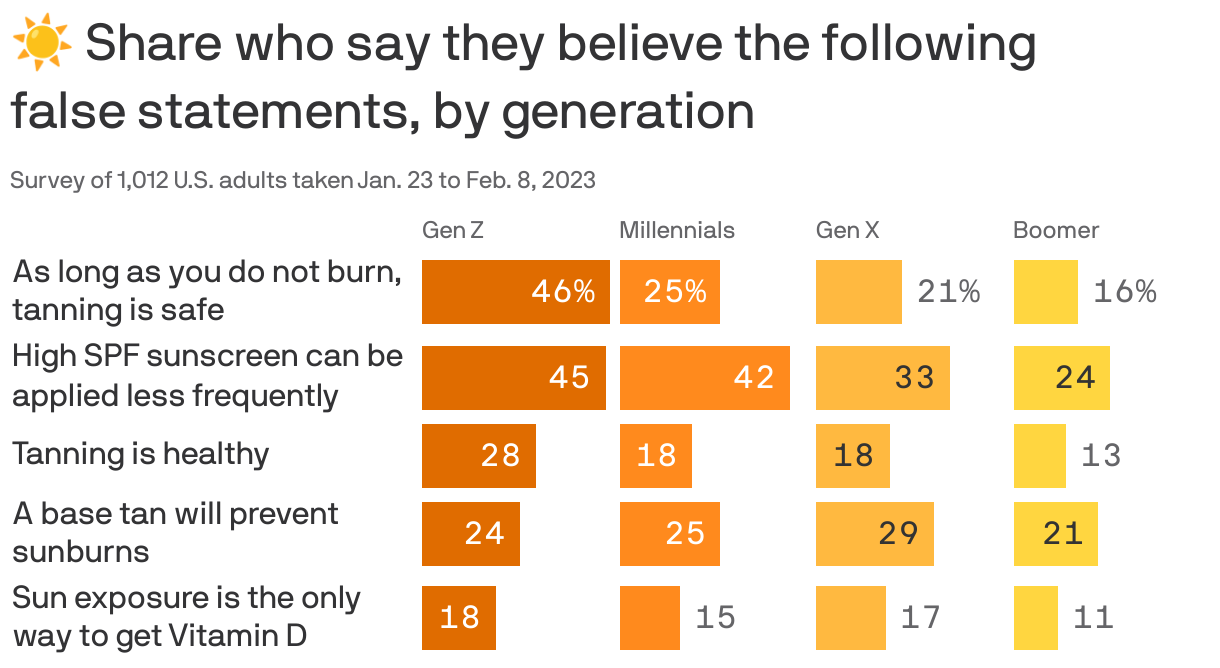
Why it matters: Nearly 1 in 4 (24%) adults think getting a base tan will prevent sunburn, according to a new American Academy of Dermatology survey shared with Axios.
Reality check: You can still burn with a base tan, which offers minimal sun protection while also creating additional health risks.
- A suntan only provides an SPF (sun protection factor) of less than 4, while a tan from the salon could provide an SPF of less than 1, said Nancy Akerman, senior policy adviser for the Environmental Protection Agency.
- Damage from UV exposure is cumulative over your lifetime, so a base tan "increases your likelihood of developing not only skin cancer, but also wrinkles [and] brown spots," dermatologist Nazanin Saedi told Axios.
- UV radiation is the cause of most skin cancer cases and deaths — many of them preventable, according to the EPA.
If you want to protect your skin, you're better off wearing sunscreen with an SPF 15 or higher, and reapplying.
- "For an adult, you really need about a shot glass-full of sunscreen to give yourself good coverage when you're outdoors," Akerman told Axios.
By the numbers: The idea that "you should get a base tan" isn't the only misconception many Americans have about the sun and their skin.
- In its survey, the American Academy of Dermatology found that many people — younger generations, in particular — believe a number of myths about "healthy" and "safe" tanning.
This article originally appeared in Axios Finish Line, our nightly newsletter on life, leadership and wellness. Sign up here.
