Fire weather days surge in Arizona


Add Axios as your preferred source to
see more of our stories on Google.
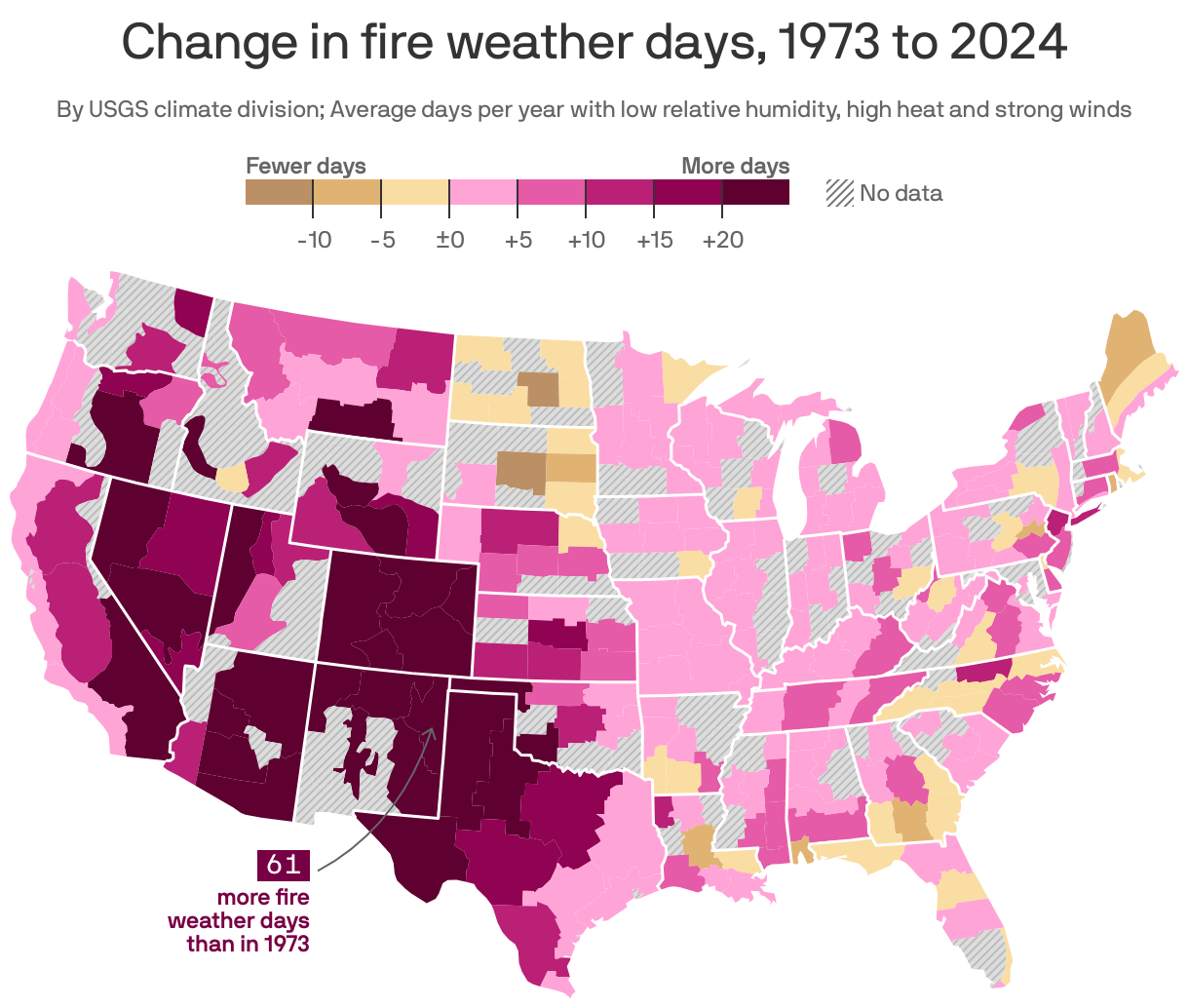
Hot, dry and windy weather that helps wildfires spread is becoming more common in Arizona and across much of the U.S. amid climate change, a new analysis finds.
Why it matters: While the vast majority of fires are human-caused, "fire weather" can give them the push they need to grow.
- Extreme wildfire events more than doubled in frequency and magnitude globally over the past two decades, a recent study found.
Driving the news: The number of fire weather days across Arizona rose by 30-plus days on average between 1973 and 2024, per an analysis from Climate Central, a research group.
- South Central Arizona (Maricopa and Pinal counties) and Southeastern Arizona (Cochise, Santa Cruz and Pima counties) saw the biggest increases, with an extra 49 days and 57 days of fire weather, respectively.
How it works: Climate Central's analysis defined a "fire weather day" as one with temperatures of at least 45°-55°F (depending on the season), relative humidity within 5% of regional thresholds, and sustained wind speeds of 15mph or more — all happening simultaneously during at least two hourly measurements on a given day.
The intrigue: Arizona's most destructive fires have historically occurred in wooded areas away from major metros, but climate change and highly flammable invasive plants have significantly increased their likelihood in the Phoenix and Tucson metro areas.
- Southern California's shocking fires in January served as a painful reminder that a perfect storm of poor conditions could lead to catastrophic blazes in urban areas.
Stunning stat: More than half of metro Phoenix properties have some risk associated with a wildfire in the next 30 years, per climate risk firm First Street.
What we're watching: Our excessively dry winter means the state is looking at a longer-than-usual fire season accompanied by above-average temperature forecasts this summer, National Weather Service warning coordination meteorologist Tom Frieders told Axios earlier this year.
- "This is one of the most critical years that we've seen in our careers," he added.
- The summer could be a hot one. The National Weather Service forecasts a 45% chance that the average temperature during the July-September period is above normal, meaning hotter than approximately 93 degrees.
- AccuWeather's 2025 summer forecast predicted that western Arizona will be 2-3 degrees hotter than historical averages, and the eastern part of the state will be 1-2 degrees warmer.