How Phoenix could experience L.A.-like wildfires

Add Axios as your preferred source to
see more of our stories on Google.
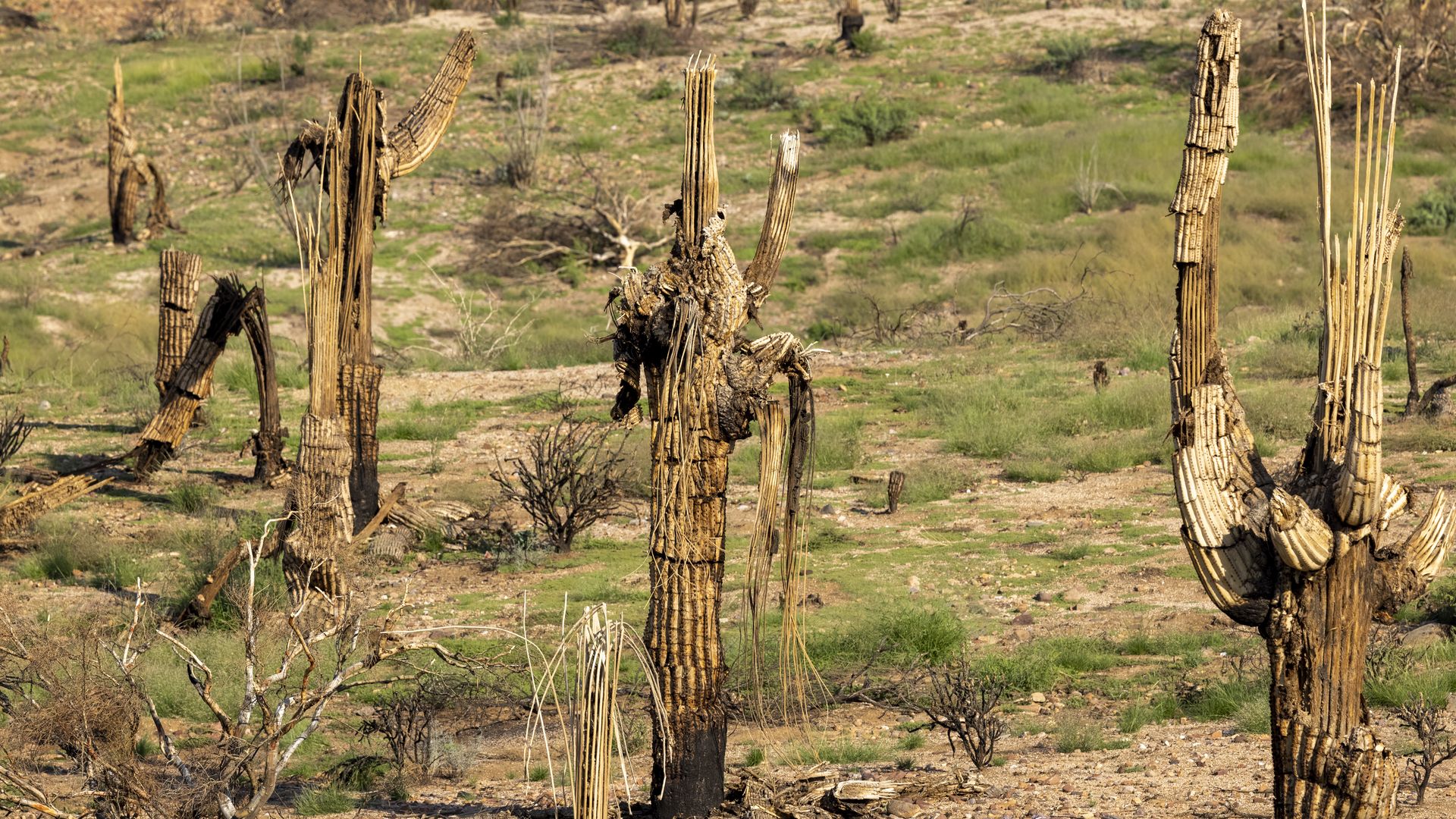
Dead saguaro cactuses that burned in the 2020 Bush Fire northeast of Mesa are seen in 2021. Photo: David McNew/Getty Images
The devastation in Southern California is an alarming reminder that wildfires are increasingly encroaching on urban areas, where the risks of property destruction and death are much higher.
Why it matters: Metro Phoenix has many of the key risk factors that combined to fuel the ferocious wildfires in the L.A. region this month and Maui in 2023, scientists and researchers tell Axios.
The big picture: Arizona's deadliest and most destructive fires have historically occurred in wooded areas far from major metros, but climate change and highly flammable invasive plants have significantly increased their likelihood in the Phoenix and Tucson metro areas.
Threat level: More than half of metro Phoenix properties have some level of risk associated with a wildfire in the next 30 years, per climate risk firm First Street.
- Ron Coleman, a spokesperson for Maricopa County's Emergency Management Department, said homes in the Valley's outermost suburbs and those near mountain preserves are most at risk.
Zoom out: The L.A. area and Maui fires erupted due to a combination of weather events that can in part be attributed to human-caused climate change — notably, high temperatures and relentless drought that dried out vegetation and high winds that allowed flames to spread quickly.
Zoom in: Arizona is experiencing the same drought as L.A., and our high temperatures have set records each of the past two summers.
- While we don't have the same intense Santa Ana winds that L.A. has seen, climate change is shifting traditional wind patterns, making them more difficult to predict, Jeremy Porter, head of climate implications research for First Street, told Axios.
The intrigue: In Maui, invasive plants also helped fuel the flames.
- The Sonoran Desert is undergoing a shift from shrublands to a grasslands ecosystem because of thriving invasive plants, according to Benjamin Wilder, a Tucson-based ecologist and director of Next Generation Sonoran Desert Researchers.
- Most of these grasses were brought here intentionally for cattle grazing or erosion control, but they've multiplied and introduced significant fire risk in an ecosystem once thought to be immune to wildfires, per Wilder's research.
Between the lines: There are actions local and state governments can take now to decrease our wildfire risk, including installing firebreaks and managing the growth of invasive plants, Wilder said.
Yes, but: Leaders have been mostly uninterested in investing in these measures because the risk didn't seem pressing, he said.
What they're saying: "We don't think about living in a fire-prone landscape and that's a paradigm we need to change," Wilder said. "We do live in a fire-prone landscape now."
What we're watching: Coleman told Axios the county is working with 44 local cities, towns, tribes and agencies to update its Community Wildfire Protection Plan, which will be approved by year's end.
- The plan outlines areas most at risk and recommends fuel mitigation tactics, such as vegetation cleanup.
The bottom line: Individuals should also take steps to protect their property by keeping tree branches away from homes and landscaping with fire-resistant materials and plants, Coleman said.
More from Axios: Wildfire risk could make home insurance more expensive in Arizona