How Philadelphia could feel a prolonged port strike


Add Axios as your preferred source to
see more of our stories on Google.
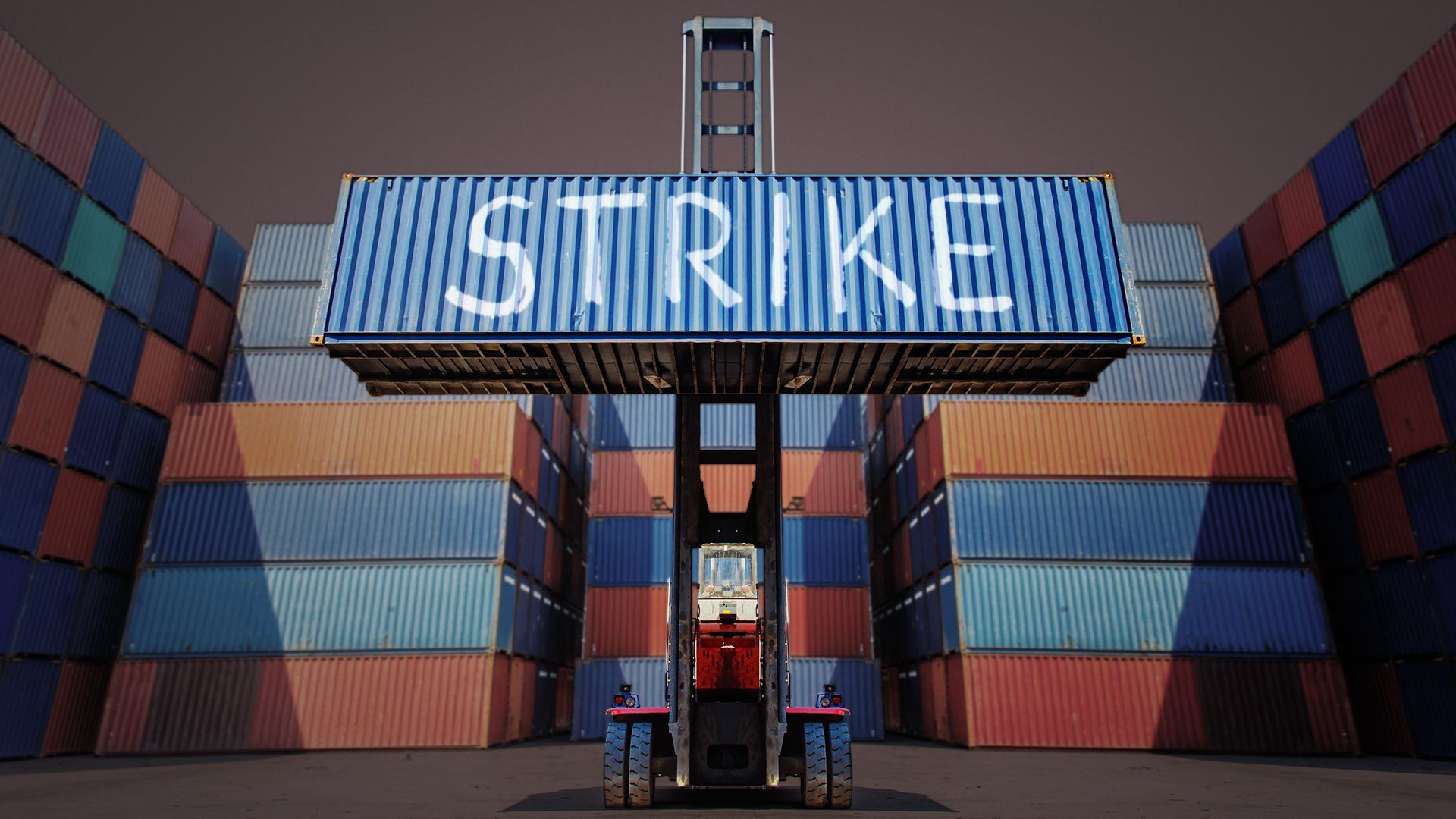
Illustration: Megan Robinson/Axios
Unionized dock workers in Philadelphia and other major East Coast ports are striking for the first time in nearly half a century.
Why it matters: A prolonged strike could snarl supply chains and raise prices on everything from bananas to auto parts as the presidential election and holidays near.
Driving the news: Workers began walking the picket lines at the Port of Philadelphia Tuesday, halting operations at four terminals, PhilaPort said in a statement.
- Similar work stoppages were reported at ports along the Atlantic and Gulf coasts after the International Longshoremen's Association (ILA), which represents some 85,000 members, said it rejected the United States Maritime Alliance's (USMX) final contract proposal made on Monday.
The big picture: While some companies redirected goods to the West Coast or shipped products early in preparation for a strike, certain industries may not be able dodge the blow that would come with a prolonged strike.
- Jonathan Gold, vice president of supply chain and customs policy at the National Retail Federation, told Axios a one-day shutdown of a port could mean anywhere from three to five days for recovery.
Context: Philly's port is the largest refrigerated port in the U.S., and the 19th busiest in terms of total tonnage.
By the numbers: The strike is estimated to involve around 45,000 workers, which includes hundreds of Local 1291 members at the Philly port.
- Its ripple effects could potentially put up to 105,000 other workers, like those in warehousing and transportation, temporarily out of a job, per Oxford Economics' estimates.
What's at stake: JPMorgan estimates a strike would cost the economy $3.8-$4.5 billion per day.
- The Conference Board is somewhat more conservative, projecting $3.7 billion after a week of strikes.
What they're saying: "We are prepared to fight as long as necessary, to stay out on strike for whatever period of time it takes, to get the wages and protections against automation our ILA members deserve," said union president Harold Daggett.
- The other side: The USMX said in a statement Monday it had "traded counteroffers related to wages" ahead of the strike, including increasing wages by nearly 50%.
The intrigue: The situation puts President Biden in a jam. He has the power, under the 1947 Taft-Hartley law, to intervene to either prevent or end a strike, and impose an 80-day cooling off period.
- But that's not the kind of move a president who claims to be the most pro-labor in history can make without serious blowback from unions and their advocates.
- Letting a work stoppage go on longer than a week, however, risks the ire of voters who are still frustrated after years of rising prices.