Thousands of dockworkers strike at East Coast and Gulf ports

Add Axios as your preferred source to
see more of our stories on Google.
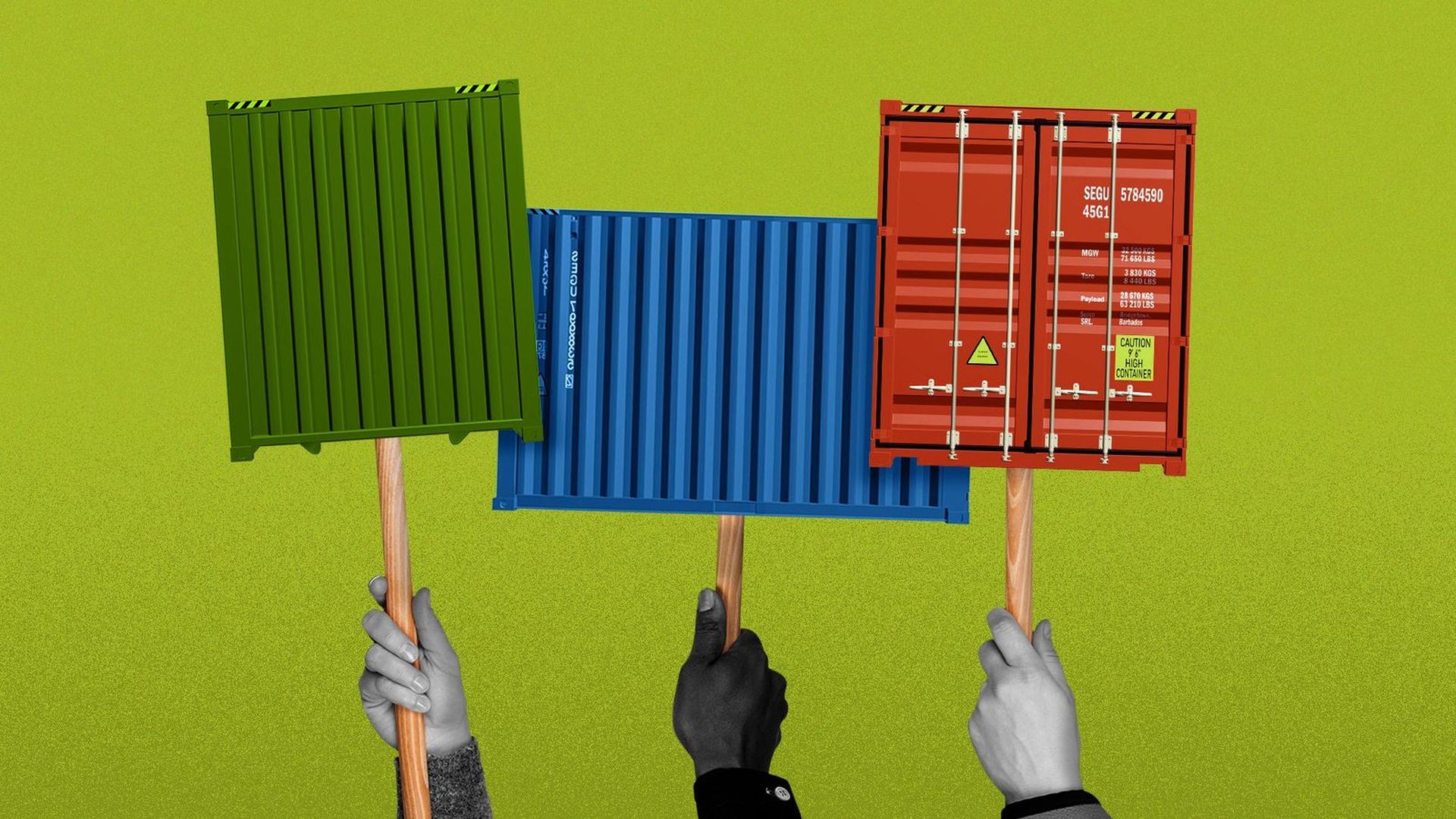
Illustration: Allie Carl/Axios
Thousands of unionized dockworkers at 14 major ports stretching from Maine to Texas went on strike just after midnight Tuesday, after failing to come to terms on a new labor contract.
Why it matters: A work stoppage that lasts more than a few days will snarl supply chains, raising the prospect of higher prices and shortages of everything from auto parts to bananas as the U.S. heads into the holidays — and a presidential election.
- This is the first port strike on the East Coast since 1977, well before the rise in global trade that's made shipping an even more critical piece of the country's supply chain.
State of play: The International Longshoremen's Association, which represents some 85,000 members, said on Facebook early Tuesday that it "shut down" the ports at 12:01am on Tuesday as workers "began setting up picket lines at waterfront facilities up and down the Atlantic and Gulf Coasts."
- The union said it rejected the United States Maritime Alliance's (USMX) final proposal made on Monday, "setting the stage for the first ILA coast wide strike in almost 50 years."
What they're saying: "USMX brought on this strike when they decided to hold firm to foreign owned Ocean Carriers earning billion-dollar profits at United States ports, but not compensate the American ILA longshore workers who perform the labor that brings them their wealth," said Union president Harold Daggett.
- "We are prepared to fight as long as necessary, to stay out on strike for whatever period of time it takes, to get the wages and protections against automation our ILA members deserve," he added.
The other side: The USMX said in an online statement Monday evening it had "traded counteroffers related to wages" ahead of the strike action.
- "Our offer would increase wages by nearly 50 percent, triple employer contributions to employee retirement plans, strengthen our health care options, and retain the current language around automation and semi-automation," per the statement.
Zoom out: The situation puts President Biden in a jam. He has the power, under the 1947 Taft-Hartley law, to intervene to either prevent or end a strike, and impose an 80-day cooling off period.
- But that's not the kind of move a president who claims to be the most pro-labor in history can make without serious blowback from unions and their advocates.
- Letting a work stoppage go on longer than a week, however, risks the ire of voters who are still frustrated after years of rising prices.
- On Monday afternoon, the U.S. Chamber of Commerce called on the president to intervene to stop a strike.
For the record: Administration officials, including chief of staff Jeff Zients, acting Labor Secretary Julie Su and economic adviser Lael Brainard, have been in regular communication with both sides to keep the negotiations moving forward, a White House official said late Monday.
The big picture: The Biden administration has declined to intervene to cut off several recent labor disputes that left the economy hanging in the balance, including negotiations between shipping giant UPS and its workers.
Zoom in: When the autoworkers went on strike, the president even walked the picket line — essentially the opposite move to invoking Taft-Hartley.
- The exception was in negotiations between railroad companies and their employees in 2022.
- The White House blocked workers from striking ahead of the holidays — and faced blowback from the labor community.
- "That left a kind of sour taste in the mouth of a lot of folks in the labor movement," said Todd Vachon, a labor professor at Rutgers University. The general feeling is that the government should stay out of private negotiations between employers and employees.
- But this strike could have bigger economic implications than those other disputes. Some analysts are saying that they expect the administration to intervene if the strike lasts more than a week or so.
Between the lines: Former President Trump has an opportunity here. If the White House doesn't stop a strike, and prices ultimately do rise — the Republican presidential candidate can call out the administration. If Biden does intervene, Trump can say the president isn't so pro-union after all.
By the numbers: JPMorgan estimates a strike would cost the economy $3.8—$4.5 billion per day. The Conference Board is somewhat more conservative at $3.7 billion after a week of strikes.
- The strike would involve around 45,000 workers, but would would have ripple effects on other jobs, including warehousing and transportation.
- Oxford Economics estimates up to 105,000 other workers could find themselves temporarily out of a job.
Reality check: A few days of a strike won't be felt by most people. Analysts generally agree that the worry lies with a prolonged work stoppage.
Follow the money: Companies have known this strike was coming for months, and many have rerouted shipments to the West Coast or shipped goods early to avoid chaos.
- Still, some industries won't get a pass — particularly for imports and exports of perishable goods like fruits and vegetables.
Catch up fast: Negotiations started more than a year ago between the union, The International Longshoremen's Association, and the United States Maritime Alliance, which represents ocean carriers and port operators. But they stalled over the summer.
- The two sides are far apart on pay, and are also at odds over automation provisions (the union wants more protections from, basically, robots taking its jobs).
What to watch: Unions have a high approval rating among Americans right now, but there also hasn't been a strike that's severely disrupted the economy since the 1970s, Vachon said.
- How the public reacts if a port strike goes on for any length of time is an "open question."
Go deeper: Why East and Gulf coast ports strike could push up consumer prices
Editor's note: This article has been updated with comment from the International Longshoremen's Association and the United States Maritime Alliance.
