Arkansas plays a role in national grocery squeeze


Add Axios as your preferred source to
see more of our stories on Google.
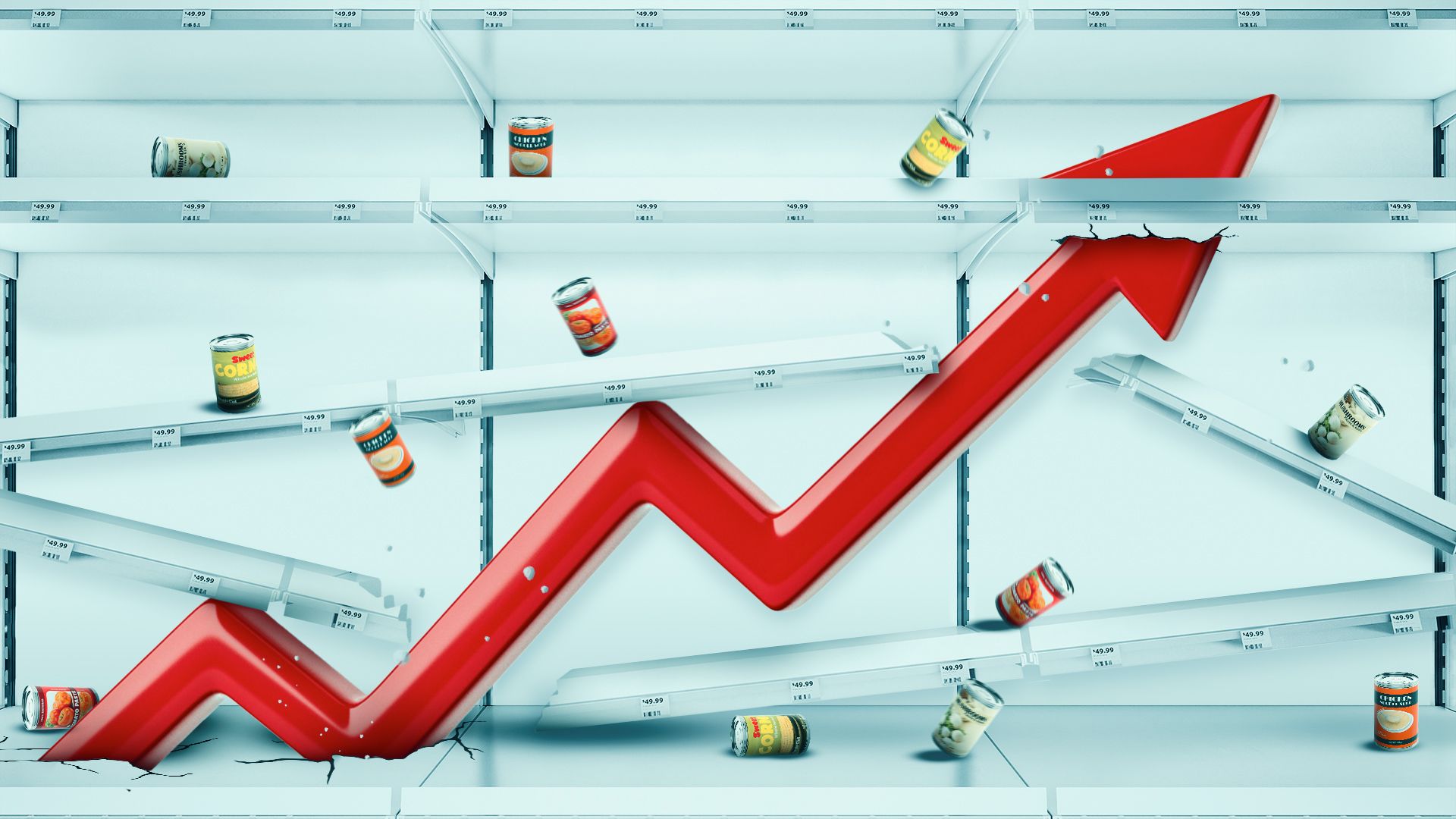
Illustration: Aïda Amer/Axios
America's grocery squeeze has been most painfully felt in a few expensive categories, like beef, coffee and chocolate.
- Now, the forces pushing up food prices are starting to pile up: expensive grain, soaring fertilizer and fuel, plus unpredictable weather and raging wars.
Why it matters: The next grocery price shock could hit much harder — and much wider.
The big picture: Your grocery store is fed by a vast global supply chain, and pressures are building all along it.
- The Iran and Russia-Ukraine wars have driven up diesel prices, making it more expensive to operate farm equipment for harvesting and to truck food from suppliers to stores.
- The war in Iran has also disrupted fertilizer supply and price, as a large share of the world's fertilizer passes through the Strait of Hormuz.
- Corn and wheat prices are surging, this week hitting their highest level in three years. Bad weather has hit corn crop yields, and the Russia-Ukraine war has roiled wheat exports.
Zoom in: Arkansas led the nation in farm bankruptcies last year. The state is the No. 1 grower of rice and the third-largest producer of poultry, so stress, like that described by Arkansas farmers to Axios this spring, can impact the national food supply and ultimately grocery prices.
Friction point: Wheat's a key ingredient in pantry staples and corn is a major animal feed, so as they go up, so can meat, dairy and eggs.
The intrigue: Don't assume those soaring commodity prices are a bonanza for farmers, either. They're still getting squeezed by all the other crises.
Add all these pressures to the list of already inflated food items:
- Instant coffee is up 15.8% year-over-year; tomatoes, 12.8%; beef roasts, 13.5%; apples, 11.1%.
- In the latest Economist/YouGov poll, about three-quarters of people said grocery prices are still rising where they live.
Threat level: There's reason to believe it's only going to get worse.
- In a widely cited report earlier this month, J.P. Morgan analysts warned that global food inflation would hit 5% in the first half of 2027, nearly double what it was in the first half of 2026.
The bottom line: These forces don't drive up your grocery budget overnight, but the compounding strain on the cost of growing, harvesting and transporting food is poised to make an already expensive grocery run even worse.