Trump's return-to-office push will likely lead to talent exodus


Add Axios as your preferred source to
see more of our stories on Google.
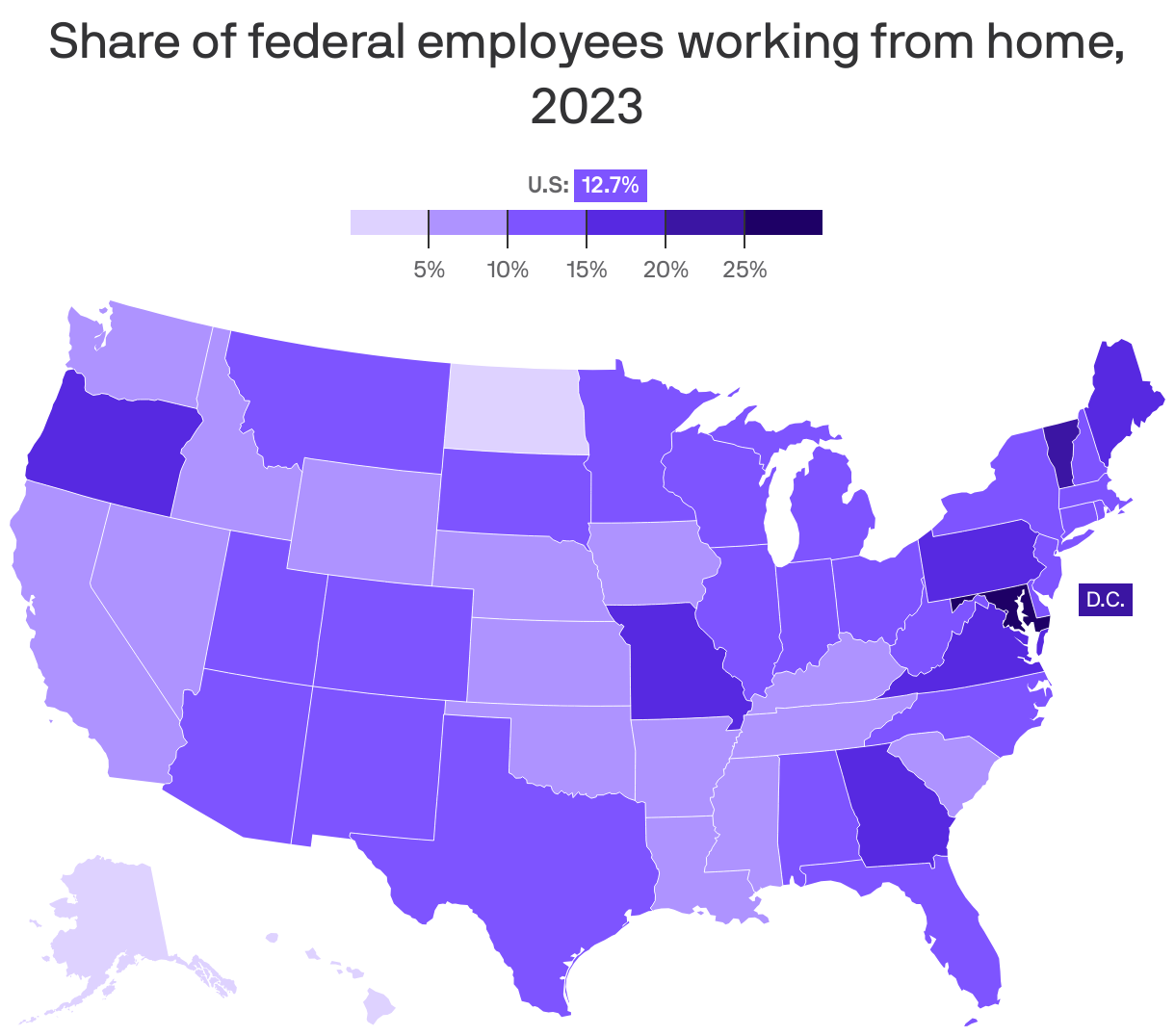
The federal government will have a tougher time attracting and retaining talented employees now that President Trump has ordered workers back to the office full time, experts tell Axios.
Why it matters: That's likely the point. Trump's return-to-office executive order is part of a broader DOGE effort to cut the size of the bureaucracy, Axios' Emily Peck writes.
Zoom in: About 7.3% of Arkansas' 35,000 federal workers worked from home in 2023, compared to the national rate of 12.7%.
The big picture: It's been years now, but employers are still banging the drum on return to office. As the labor market slows — and businesses care less about hanging on to employees — they're starting to notch wins.
- 75% of workers with jobs that could be done remotely said their employer has put in-person mandates in place, according to a Pew Research survey conducted last fall and released last week. That's up from 63% in 2023.
Zoom out: Trump and DOGE head Elon Musk have telegraphed the return-to-office push for months, said Rob Sadow, CEO of Flex Index.
Between the lines: Return-to-office pushes can often be a way for companies (and governments) to do layoffs without technically having to fire anyone.
- For the Trump executive order, that appears to be the plan.