Arkansas home prices grew less than national average

Add Axios as your preferred source to
see more of our stories on Google.
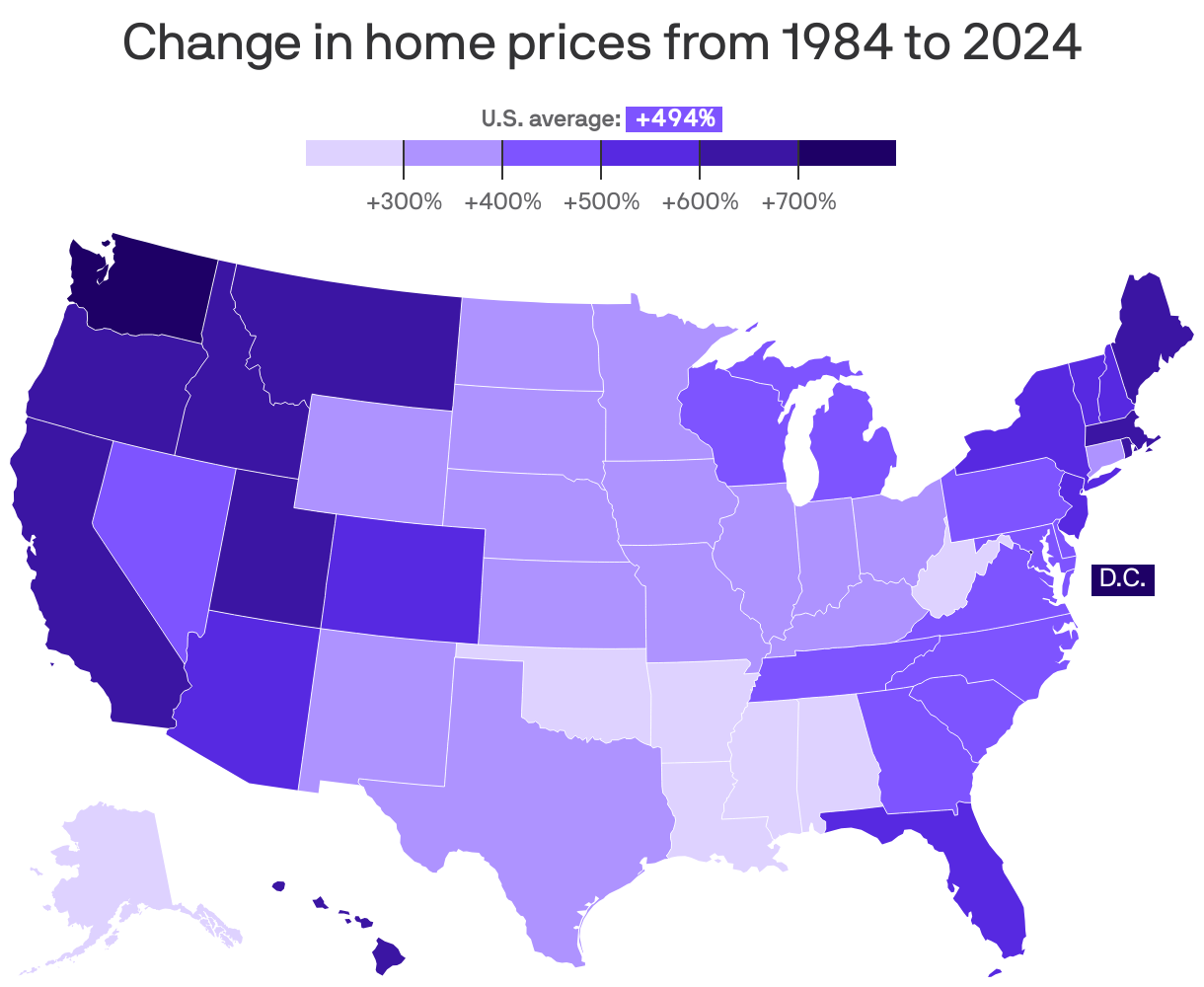
Housing prices in Arkansas grew 275% over the past four decades, according to one analysis of Freddie Mac data.
Why it matters: That's lower than the national average of nearly 500%.
The big picture: Attainable housing is a top concern for residents and employers in NWA, reflecting the gap between housing costs and household incomes, which are growing, but not fast enough to keep pace.
- An estimated 42% of Arkansas households find it hard to make ends meet and about a third of workers in the state earn less than $17 per hour.
Overall inflation rose 203% in the last 40 years, while median U.S. household incomes rose 233%, journalist Lance Lambert of ResiClub wrote in his analysis of Freddie Mac House Price Index data.
State of play: Home prices in Benton and Washington counties have more than doubled since 2015, according to the Arvest Skyline Report.
- Average rent prices topped $1,000 for the first time last year.
- Special projects are in the works to ensure teachers have access to living space and dedicated workforce housing is being developed in Springdale.
Yes, but: Many of Arkansas' metro areas — including Fayetteville — are one of the most affordable places to live in the U.S. with a low cost of living by comparison to other locations, according to the Arkansas Economic Development Commission.
What we're watching: The Fed cut interest rates by 0.25% Thursday. That will likely encourage some real estate activity, but won't impact affordability much for most people.