Fed cuts interest rates for second time this year against election backdrop

Add Axios as your preferred source to
see more of our stories on Google.
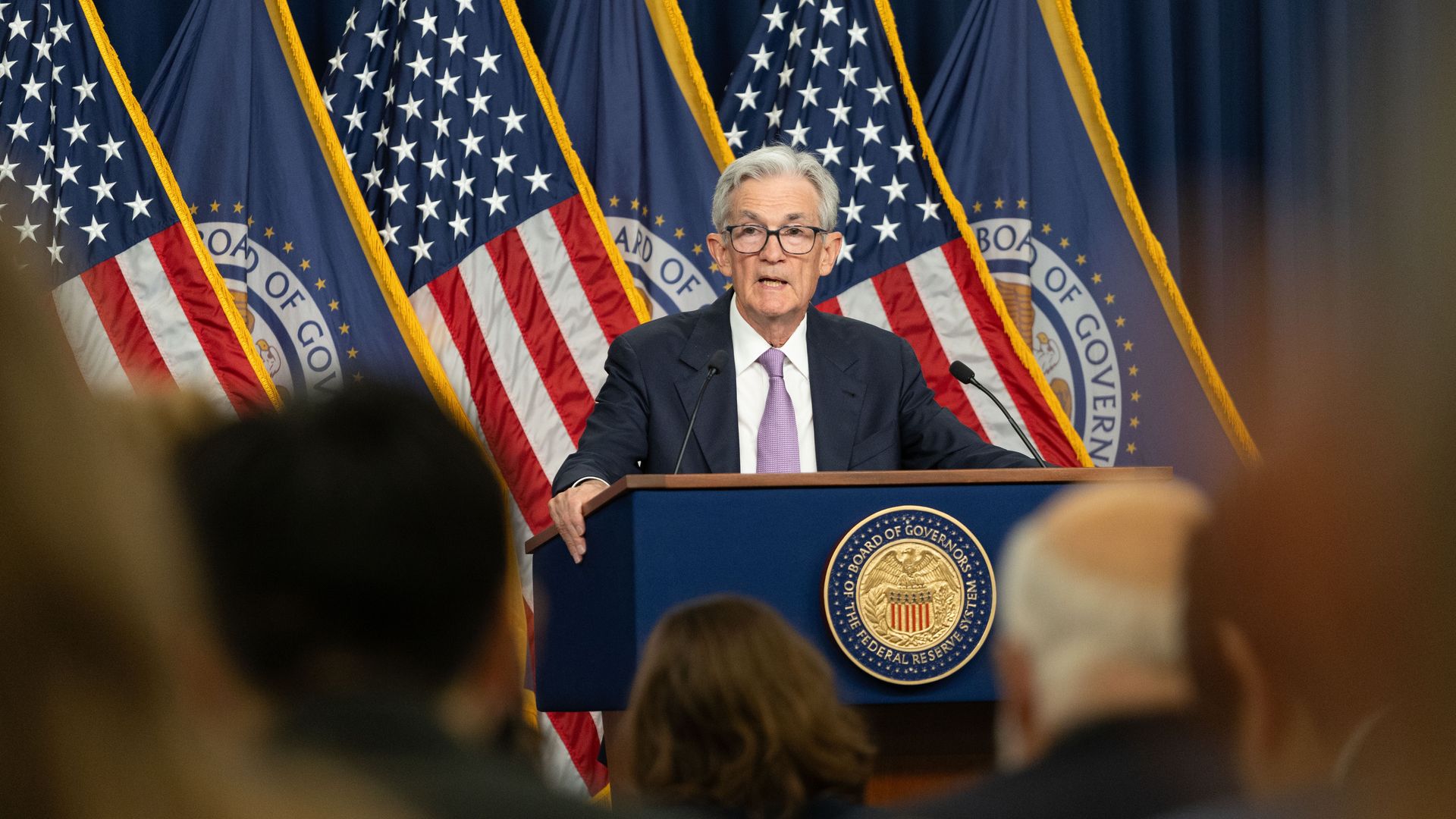
Federal Reserve chair Jerome Powell at a pressure conference in Washington, D.C. in September. Photo: Hu Yousong/Xinhua via Getty Images
The Federal Reserve cut interest rates by a quarter percentage point on Thursday, its second consecutive reduction in the cost of borrowing.
Why it matters: The Fed is gradually loosening its grip on the economy as inflation cools and the job market holds steady, though President-elect Trump's proposed economic policies risk disrupting that balance.
What they're saying: In its closely watched policy statement, the Fed said that the economy has continued grow at a "solid pace."
- The statement said that job market conditions have "generally eased," removing a reference to slowing job gains.
- Officials also scrapped a key sentence that the Fed was gaining confidence that inflation was "sustainably" moving toward its 2% target.
Zoom in: The Fed's policy-setting committee lowered its target range for the federal funds rate to 4.5%-4.75%, from the 4.75%–5% range set in September. The decision was unanimous.
State of play: Powell said in a news conference Thursday that "in the near term, the election will have no effects on our policy decisions." He noted uncertainty on the incoming Trump administration's policy plans.
- "We don't know that what the timing and substance of any policy changes will be," Powell said. "We therefore don't know what the effects on the economy would be."
- "We don't guess, we don't speculate, and we don't assume," he added.
Powell was also asked whether he would resign if President-elect Trump asked him to. He responded, simply, "No."
- His term extends until May 2026.
The big picture: The Fed kicked off the rate cutting cycle with a supersized half percentage point cut. Officials slowed the pace of cuts on Thursday, as widely expected.
- Since the Fed's last policy meeting, data has shown inflation near the Fed's 2% target, though there are lingering price pressures in the services sector.
The U.S. economy grew at a healthy 2.8% last quarter with solid consumer spending.
- The unemployment rate — 4.1%, as of October — is historically low. But the latest government jobs report did not give a clear signal about the health of the labor market as strikes and hurricanes sidelined workers.
- Long-term rates have been on the upswing since the last policy meeting, keeping upward pressure on consumer borrowing costs.
Between the lines: Fed officials have said its key areas of focus, stable prices and employment, are roughly in balance after years of fighting inflation.
- A subtle change to the Fed's policy statement suggests that is still the case: the Fed decided to lower rates "in support of its goals," the statement said.
The intrigue: The Fed is an apolitical agency, but Thursday's rate decision happens against the backdrop of the re-election of former President Trump.
- There are questions about whether Trump will follow through with campaign promises to slap tariffs on all U.S. imports and the effect it might have on inflation, the economy and monetary policy.
There is also uncertainty about whether the Fed's political independence will be at risk during the Trump administration. Earlier this year, Trump said he believes presidents should have some say on how rates evolve.
- Trump nominated Fed chair Powell in 2017, but soured on him and then openly criticized the central bank leader for raising interest rates at the time.
Editor's note: This story has been updated with additional developments from Powell's news conference.
