Fed's go-to inflation gauge cooled in September

Add Axios as your preferred source to
see more of our stories on Google.
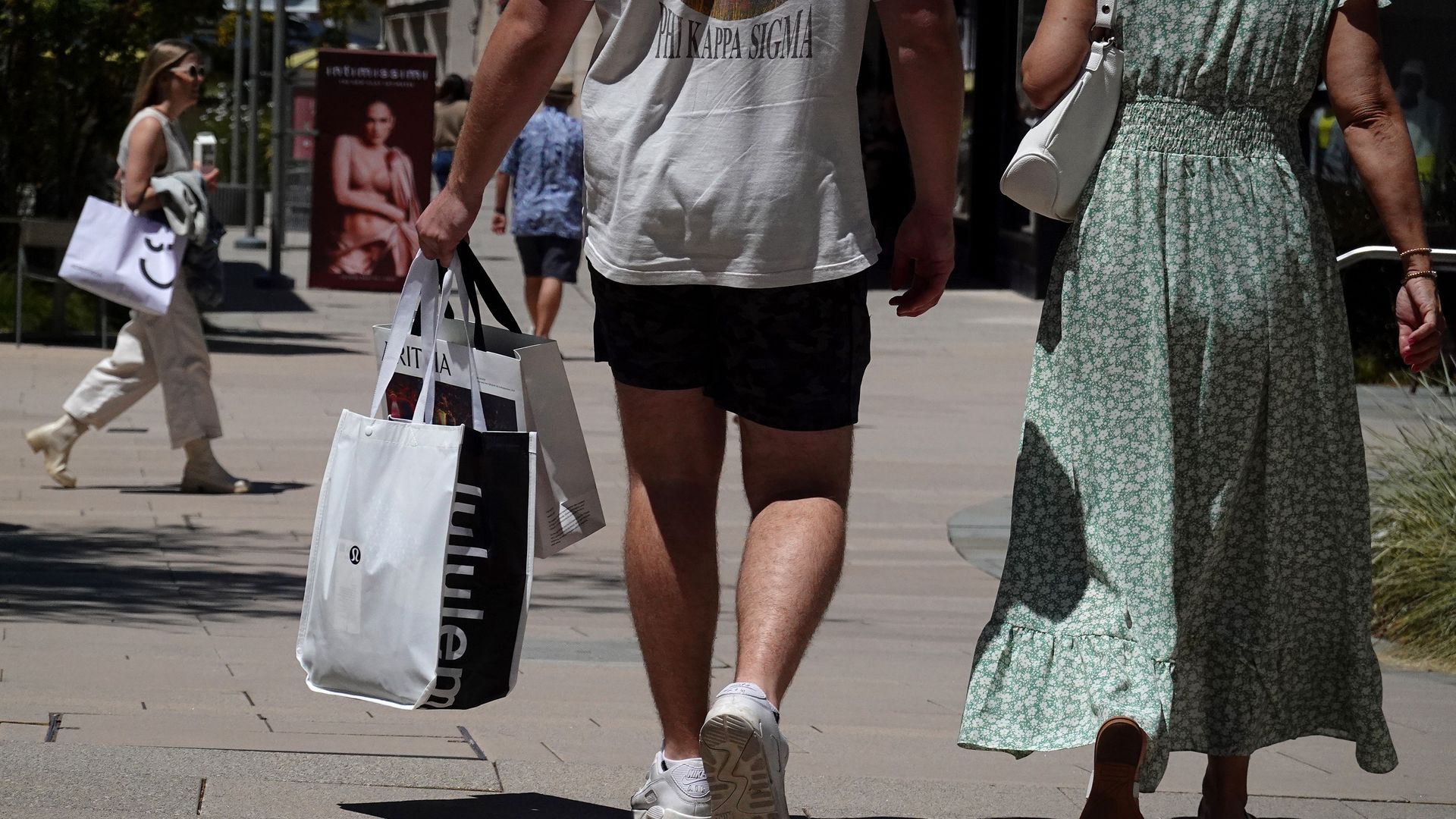
Shoppers in Corte Madera, Calif. Photo: Justin Sullivan/Getty Images
The Federal Reserve's preferred measure of inflation rose 2.1% in September compared to a year ago, within striking distance of the central bank's 2% target, the Commerce Department said Thursday.
Why it matters: That data, one of the last major reports before the U.S. election and the Fed's policy decision next week, confirms the economy is solid as inflation pressures recede.
By the numbers: The Personal Consumption Expenditure price index slowed from the 2.3% increase in August.
- The core measure, which excludes food and energy costs, held at 2.7% for the third straight month.
Yes, but: On a monthly basis, PCE and the core measure increased by 0.2% and 0.3% respectively — both ticking higher from August.
- It was the biggest monthly increase for core PCE in 5 months.
The big picture: The report also showed that personal consumption expenditures, a measure of consumer spending, rose 0.5% from 0.3% in August.
- Adjusted for inflation, it rose 0.4% compared to the 0.2% increase the prior month.
- That spending was supported by growing disposable personal income, which rose by 0.3% from the prior month. Accounting for inflation, incomes rose 0.1% for the fourth consecutive month.
The intrigue: A separate report released on Thursday showed wages and salaries continued to increase in the third quarter, though at a slower pace.
- The Employment Cost Index, considered the most comprehensive measure of pay, showed wages and salaries for workers rose 0.8% in the three-month period ending in September. That is a slower rate than the 0.9% increase the previous quarter.
- Wages and salaries increased 3.9% for the 12-month period ending in September, slowing from the 4.1% increase in June.
