A Fed decision in the shadows of the election


Add Axios as your preferred source to
see more of our stories on Google.
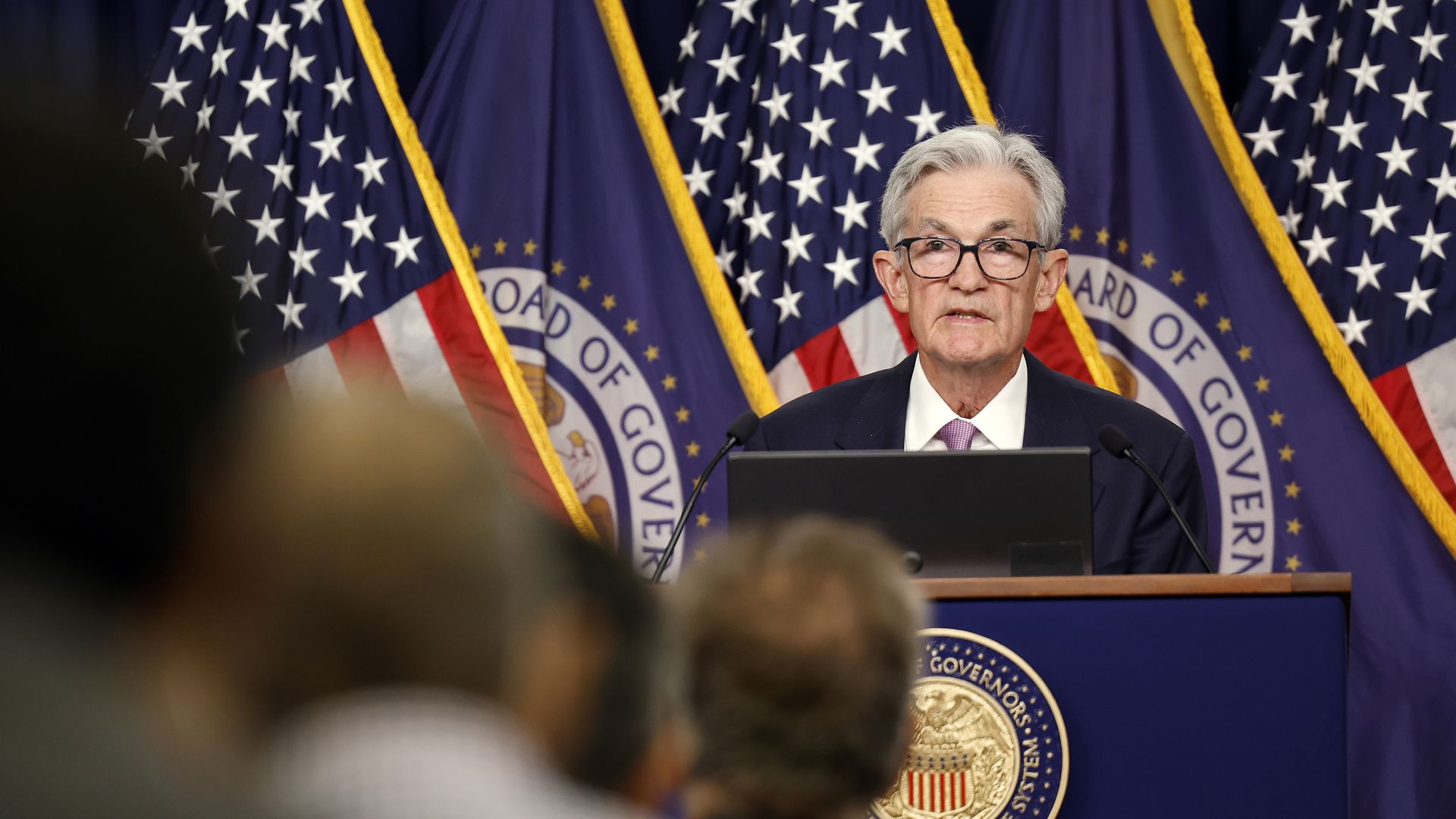
Federal Reserve chair Jerome Powell speaks during a news conference in September. Photo: Anna Moneymaker/Getty Images
The Fed decided six weeks ago that it's time to loosen the screws on the economy. The bond market, and election year rhetoric, aren't cooperating.
Why it matters: For now, financial markets have settled on a new reality that America's political backdrop may keep interest rates higher than Fed officials anticipated when they commenced their rate-cutting campaign in September.
- Following a policy meeting concluding Thursday, Fed chair Jerome Powell will likely duck questions about the next administration's potential policies.
- But the outcome of the election — whenever it's settled — will shape monetary policy dynamics in the years to come.
Driving the news: The Fed is poised to cut interest rates by a quarter-point this week, following its half-point rate reduction in September.
- The central bank will surely aim for a tone of calm, apolitical decision-making in its communications.
- Even if there is a clear winner in the election by Thursday, the Fed will not look to make preemptive policy moves based on the next president's likely policies.
- Instead, Fed officials will wait for the winner to take office and start turning campaign rhetoric into specific governance decisions — and see how businesses, consumers and financial markets react before calibrating monetary policy.
Flashback: If there is no resolution to the race by Thursday, Powell will likely adopt a tone similar to that he used in his November 2020 press conference when the results were up in the air.
- "I'm very reluctant, as you will imagine, to comment on the election directly, indirectly, at all, other than just to say that it's a good time to take a step back and let the institutions of our democracy do their jobs," Powell said then.
The big picture: The yield on the 10-year Treasury note has jumped over 0.6 percentage point since the Fed cut rates in September.
- The Fed controls short-term rates. Long-term borrowing costs are influenced by both the monetary policy outlook and other global economic developments.
- That includes the increasing likelihood that debt will soar under the next U.S. president, especially in a possible Trump administration.
By the numbers: The Committee for a Responsible Federal Budget projects that the fiscal plans of Vice President Harris would add $3.95 trillion to cumulative U.S. deficits over the coming decade if implemented.
- The fiscal watchdog estimates former President Trump's agenda would widen them by $7.75 trillion.
What they're saying: "If we agree that the rise in long-term rates is at least partially a reflection of election dynamics, since both candidates' policy platforms look likely to grow the deficit, then it's probably keeping the Fed on its toes," J.P. Morgan Wealth Management's Elyse Ausenbaugh tells Axios.
- "The potential for looser fiscal policy, in whatever form, could mean that the Fed doesn't have as much room to ease monetary policy as we all think in the years ahead," Ausenbaugh adds.
Yes, but: That doesn't mean the Fed should, or will, act preemptively.
- "A lot of what Trump has talked about is inflationary, in terms of tariffs and immigration," Lazard's Ron Temple tells Axios. "I think if you're at the Fed, you have to wait to see what he actually does if he wins."
A key open question is whether fiscal policy evolves in ways that bump up the "terminal rate" of this policy cycle — at what level the Fed stops cutting rates.
- As of September, the median Fed official expected rates to ultimately settle around 3% in the years ahead, well below the current range of 4.75%-5%. Those projections won't be updated until December.
- "If it looks like you're going to get a lot more fiscal stimulus coming down the pike that would suggest inflation could be harder to corral," says Sarah House, a senior economist at Wells Fargo. "Rates may need to stay a little bit higher, a little bit longer."
Zoom out: Larry Fink, co-founder of the massive asset management firm BlackRock, has an op-ed out Tuesday in which he calls public debt the "Achilles' heel" of an otherwise strong U.S. economy.
- But he offers an optimistic take that investment in AI and infrastructure can help the nation prosper despite the debt overhang.
- "Yes, fiscal discipline is important," Fink writes. "We can't tame deficits without it. But any realistic path out of debt has to rely mainly on growth. We need to increase the size of our economy so that what we owe becomes smaller relative to what we make."
