Tennessee faces steep costs related to the opioid epidemic


Add Axios as your preferred source to
see more of our stories on Google.
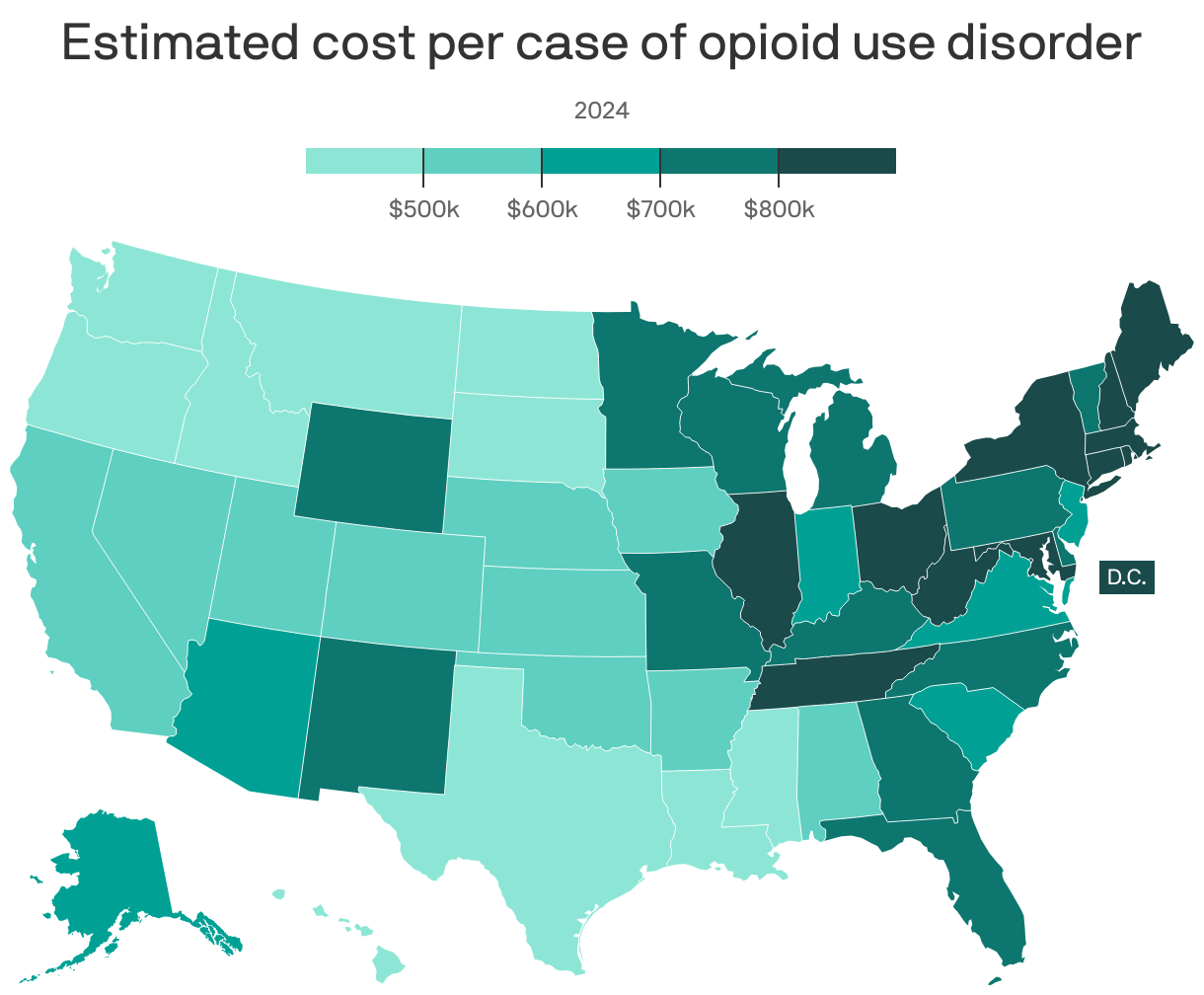
A new analysis provided first to Axios shows the steep financial toll of the opioid crisis in Tennessee.
Why it matters: The epidemic has ravaged Tennessee on several fronts. Overdose deaths hit the state particularly hard, even pulling down our life expectancy.
- The epidemic is an economic crisis as well. Families, businesses and local governments have faced a wave of unexpected costs.
By the numbers: Opioid use disorder — defined as frequent opioid use and unsuccessful efforts to quit — cost the U.S. an estimated $4 trillion last year, per the analysis from Avalere, which used 2017 figures to project 2024 net costs.
Zoom in: The cost burden falls unevenly, and Tennessee is one of the hardest-hit states, according to Avalere.
- The projected cost of opioid use disorder in 2024 was more than $808,000 per case in Tennessee. That's more than $100,000 higher than the national case average.
Between the lines: Those figures include costs related to health insurance, treatment, lost productivity at work and related criminal justice expenses.
- Some of the regional variation in costs is from lost tax revenue, which varies by state.
- The local availability of treatment for opioid use disorder may also drive the cost, said Margaret Scott, a principal at Avalere and author of the report.
State of play: Opioid use disorder is estimated to affect more than 6 million people in the United States.
- Federal data from 2022 showed that only one-quarter of adults who needed medication treatment for OUD actually got it.
Where it stands: Effective treatment can defray the costs by more than 40% in some instances, the analysis found.
- Behavioral therapy alongside long-acting injectable buprenorphine — a treatment that reduces the risk of future overdoses — generated an estimated $295,000 savings per case, the biggest cost-saver of the options Avalere analyzed.
The latest: Overdose deaths in Tennessee and around the country have eased in recent years, partly due to policy changes that expanded access to the overdose reversal drug naloxone.
- Legal settlements are also pouring millions of dollars into treatment in Tennessee.
Yes, but: Some addiction experts say cuts to federal grant funding and other program changes led by Health and Human Services Secretary Robert F. Kennedy Jr. could hurt addiction recovery programs.
The fine print: Indivior, a pharmaceutical company specializing in treatments for opioid use disorder, funded the Avalere analysis.