
Inside Tennessee State University's comeback effort

Add Axios as your preferred source to
see more of our stories on Google.
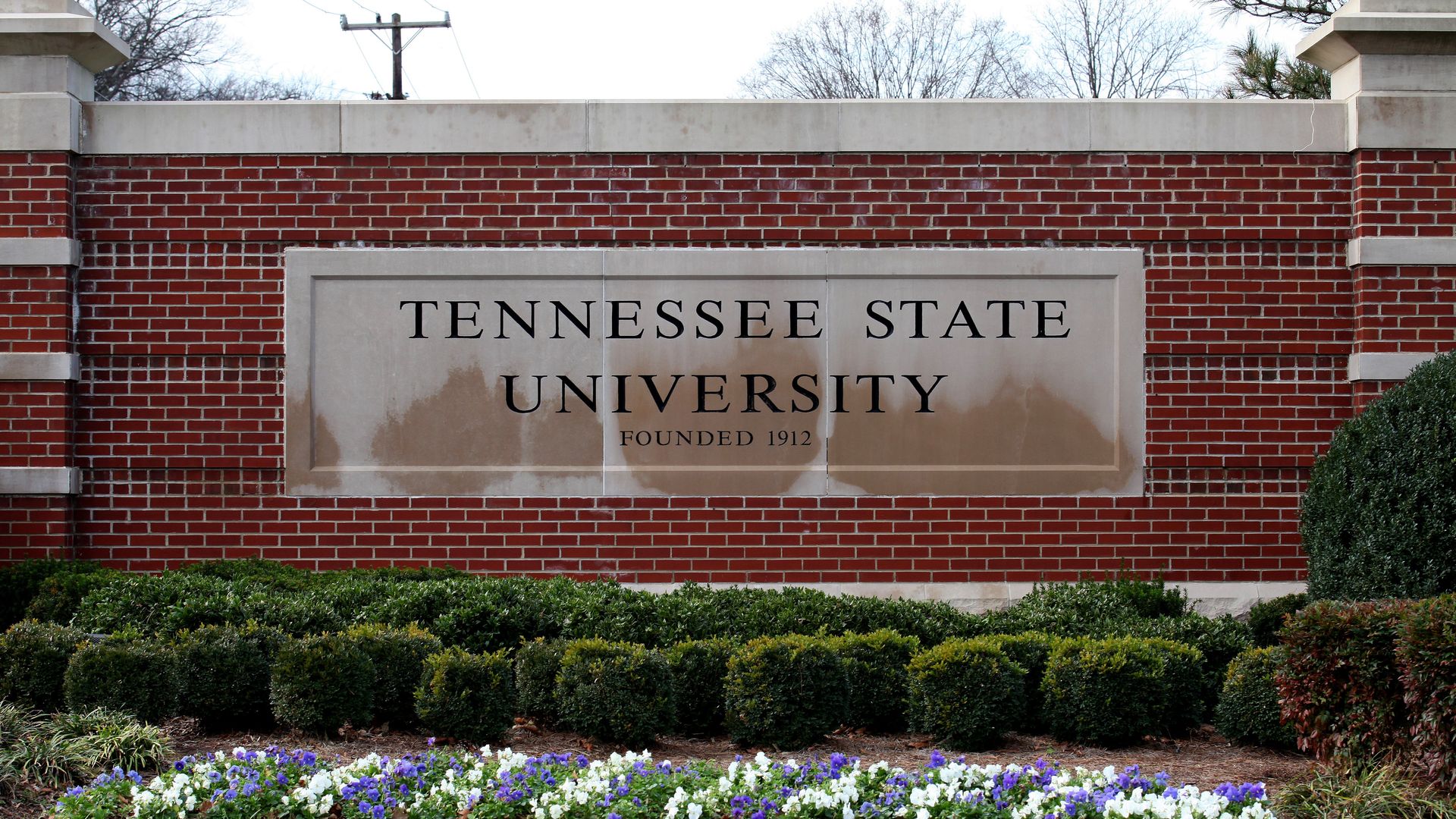
Photo: Raymond Boyd/Getty Images
Tennessee State University spent 2024 on the edge of a financial cliff, but the historically Black institution's new leaders say they are determined to claw their way back to solid ground this year.
Why it matters: Interim president Dwayne Tucker is part of a team of TSU graduates tasked with orchestrating a comeback for the beloved but cash-strapped university.
- It won't be easy.
Catch up quick: TSU needed millions in emergency state funding last year to make payroll and keep the doors open after enrollment plummeted.
- Despite layoffs and cost cutting, officials said that TSU could once again run out of money by May.
State of play: In an interview with Axios last month, Tucker, who served on the board before stepping into his current role, said he is working on a three-year recovery plan.
- More cuts are certain. While Tucker said "everything has to be on the table," he said it was too soon to know if additional layoffs or land sales are needed.
What he's saying: Step one, Tucker said, will be delivering a reality check to the university's most ardent supporters.
- "The challenge right now that I think we need to address quickly and very specifically is a lot of the misinformation that's out there," Tucker said.
Zoom in: One of the most common misconceptions, Tucker said, is that an existing pool of untapped funds could instantly solve TSU's financial crisis.
- The Biden administration reported the state had underfunded TSU by $2.1 billion over the course of decades. Former TSU president Glenda Glover, who left last year under scrutiny, said that underfunding was to blame for the university's shoddy finances.
Yes, but: The reality is more complicated, Tucker said. He said centering the debate on that $2.1 billion "clouds the discussion" about other operational shortcomings — from enrollment policies to financial reporting — that still need to be addressed.
- "It's really a misdirection, in my opinion, to say, 'OK, if we only had those dollars, everything would be well at Tennessee State.' That's not true."
The big picture: Tucker said it was clear that better financial processes and oversight were needed "to ensure we don't get back in the situation again."
- "What I see is a lot of missed opportunities that dollars are going out the back door."
- Tucker said he was particularly interested in revisiting TSU's contracts with private companies.
- TSU's annual leave policy is also on Tucker's list to review. It allows department employees to use the honor system to pay out annual leave balances.
The latest: Last week, Tucker announced an internal audit tied to his long-term planning revealed band director Reginald McDonald hadn't complied with "TSU policies and procedures." McDonald is on leave pending an internal investigation.
- "[T]his difficult decision, and any that come here forward, have at their core a shared commitment to ensuring a bright and stable future for Tennessee State University," Tucker said.
What's next: Tucker is finalizing his long-term financial plan. He'll present it to state leaders on Feb. 13.
The work to restore Tennessee State University's standing is personal for Tucker and the board of trustees, all of whom are alumni.
Zoom out: TSU's legacy as an HBCU is powerful. It was a gateway to higher education and prosperity for Black students who were shut out of other institutions before desegregation and has remained a pillar of the community.
- "There's generation after generation here in town who have been very touched by the opportunity to get an education," Tucker says.
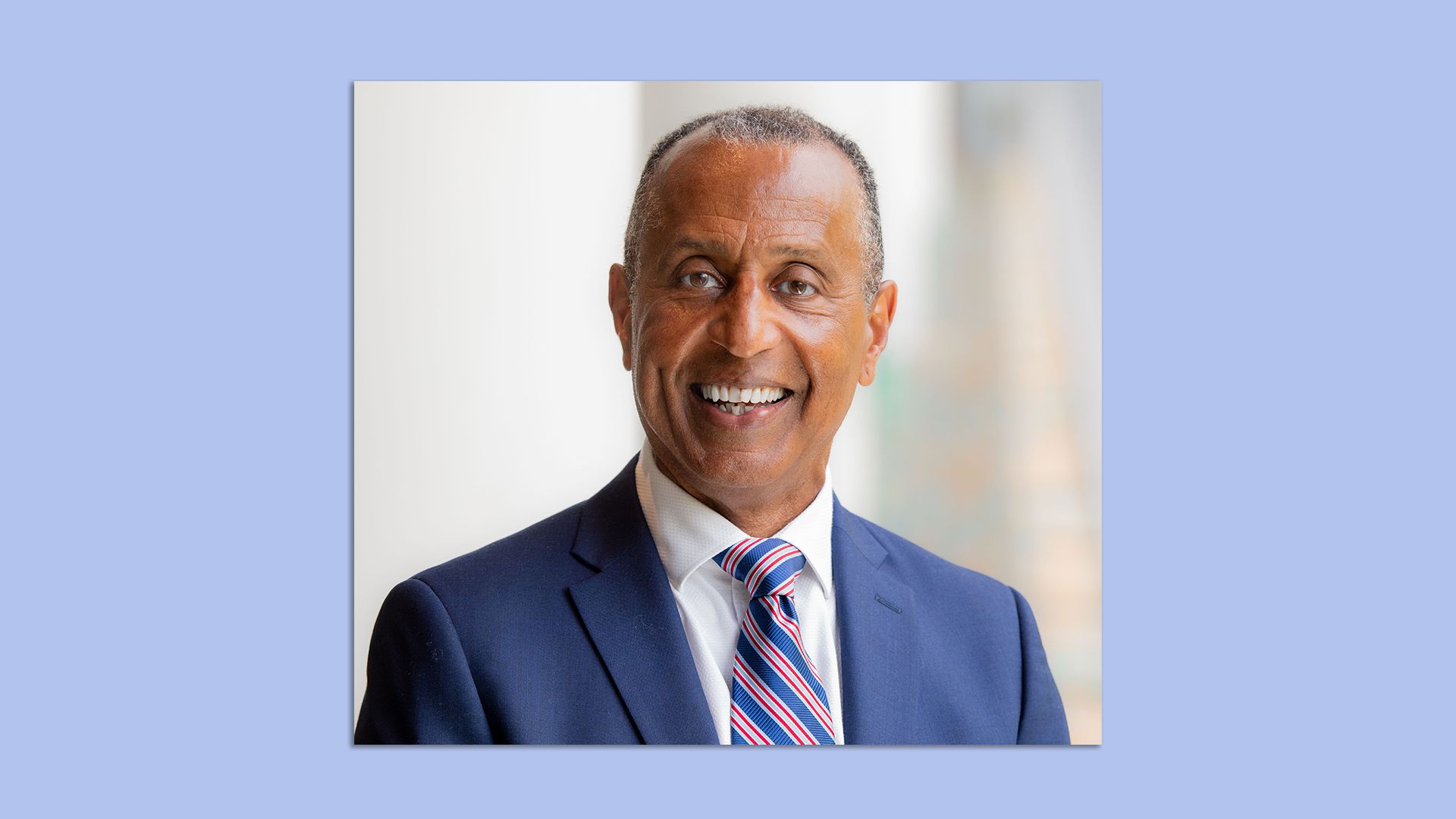
Tucker's personal ties to his TSU professors were life-changing, he said.
- He still gets notes from some of them more than 40 years later.
Tucker said TSU remains a university that lifts students up. And despite the financial tumult, he contends there's still good news to share.
- For instance, the state recently approved the $63 million construction of two new agricultural sciences buildings using state and federal money.
- TSU also got a federal grant to find ways to expand access to affordable housing.
Board chair Dakasha Winton, a senior executive at BlueCross BlueShield of Tennessee, has a niece who is attending TSU now. Their conversations often center on TSU's financial woes.
- Winton says those challenges come hand-in-hand with grit and resourcefulness.
- She says her experience as a TSU student gave her resilience that has served her well.
The bottom line: "In your life, you're going to face some struggles," Winton said in an interview with Axios.
- "TSU is in one of those periods. However, you will not get another education that is going to be akin to what you're going to get at Tennessee State."
More Axios coverage of TSU's long year:
- TSU marching band director removed due to audit findings
- Tennessee State University's enrollment took a nosedive this fall
- TSU failed to honor scholarships as finances crumbled
- TSU board wants to ax its top lawyer and end a $1.7M deal with former president
- State leaders urge layoffs, land sales to shore up TSU budget
- Lawmakers prepare to decide fate of TSU board and Legislature moves to vacate TSU board