Where Indiana sees the most severe weather threats


Add Axios as your preferred source to
see more of our stories on Google.
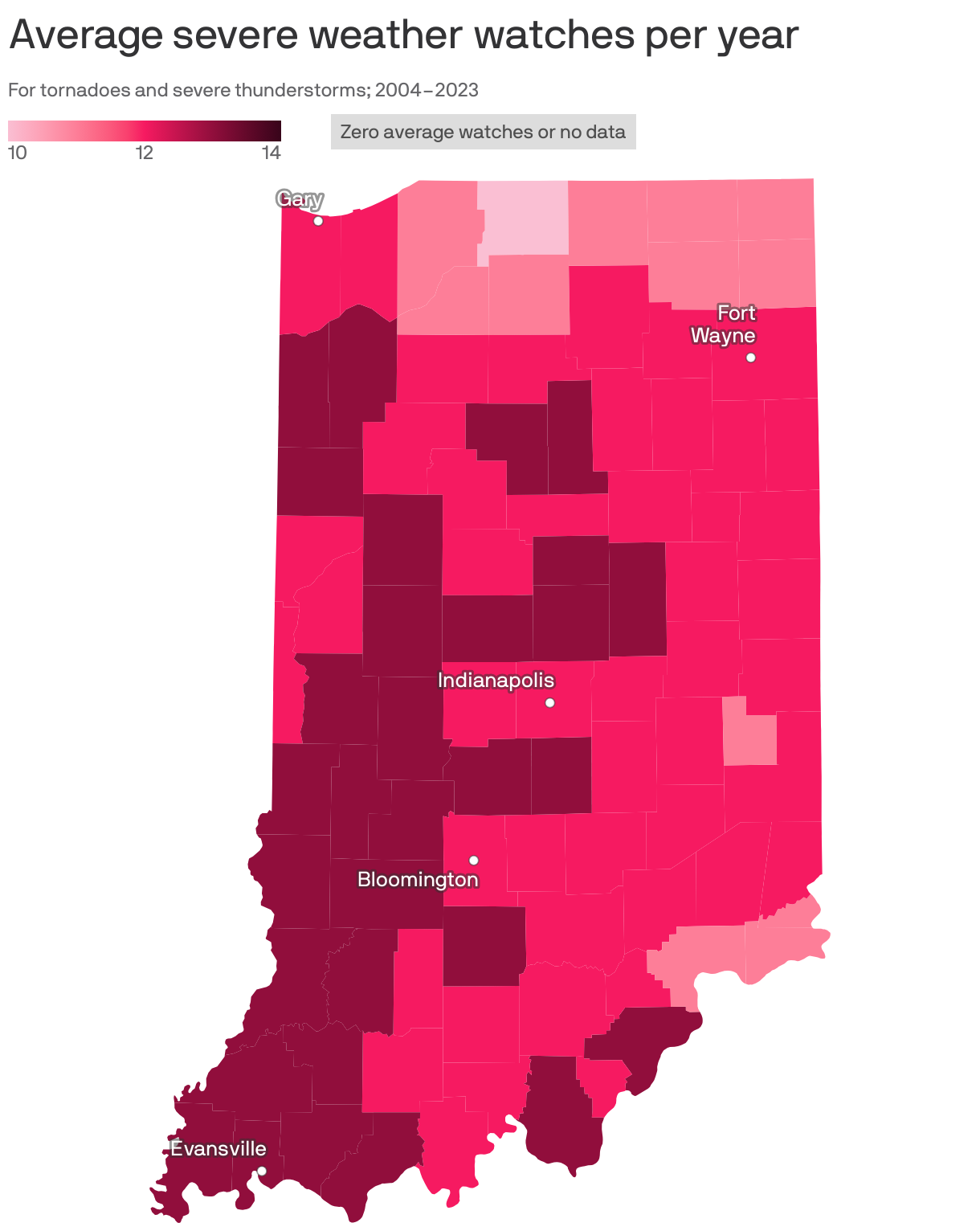
The Indianapolis metro area has averaged 13 severe storm watches annually over the past two decades, according to data from the National Oceanic and Atmospheric Administration.
- That includes watches for thunderstorms and tornadoes.
The big picture: This has been the second-busiest year for tornadoes, behind 2011, as climate change increases the likelihood of severe weather outbreaks.
- Extreme weather is also on the minds of residents across the country as Tropical Storm Debby sends Indiana-based emergency response crews to the Southeast to provide support amid record rainfall.
Plus: Extreme weather is the leading cause of power outages in Indiana.
Driving the news: A recent National Weather Service analysis found that Indy ranked 20th in the number of severe weather watches among metros with at least 500,000 residents.
State of play: The average number of watches from 2004-2023 was higher in parts of Southwestern Indiana than in Central Indiana.
- Counties including Sullivan, Vigo, Posey and Knox had the highest annual average at 13.
- In the Indy area, Hamilton, Johnson and Boone counties also hit 13 while Marion County recorded 12.
Yes, but: None of Indiana's 92 counties averaged under 10 severe weather watches per year.
Zoom out: The metro areas with the most severe storm watches were Oklahoma City, Tulsa and Wichita, which averaged 19, 19 and 18 severe storm watches a year, respectively.
- By county, Comanche County in Oklahoma is the highest with 21 severe thunderstorm or tornado watches reported on average per year.
Be smart: The National Weather Service says knowing the difference between a watch and warning is crucial when it comes to taking action.
- For example, a tornado watch is issued when conditions are favorable for tornadoes, meaning the atmospheric ingredients are present, but there is no imminent danger.
- Tornado warnings mean a tornado has been spotted from the ground or detected by radar, and people within the warning area need to take shelter immediately.
- A tornado emergency is a relatively recent addition to NWS' warning lexicon, and is used when a "severe threat to human life is imminent or ongoing."
What we're watching: How long the nation's current severe weather situation — the extreme heat — is going to last.
- Areas experiencing a long-duration heat wave, like much of the South and parts of the Plains, are likely to continue to sweat under a strong, meandering heat dome.
- Weeks of extreme heat in some areas will pose human health risks, according to the National Weather Service.