Texans approve constitutional amendments for tax breaks, water investments

Add Axios as your preferred source to
see more of our stories on Google.
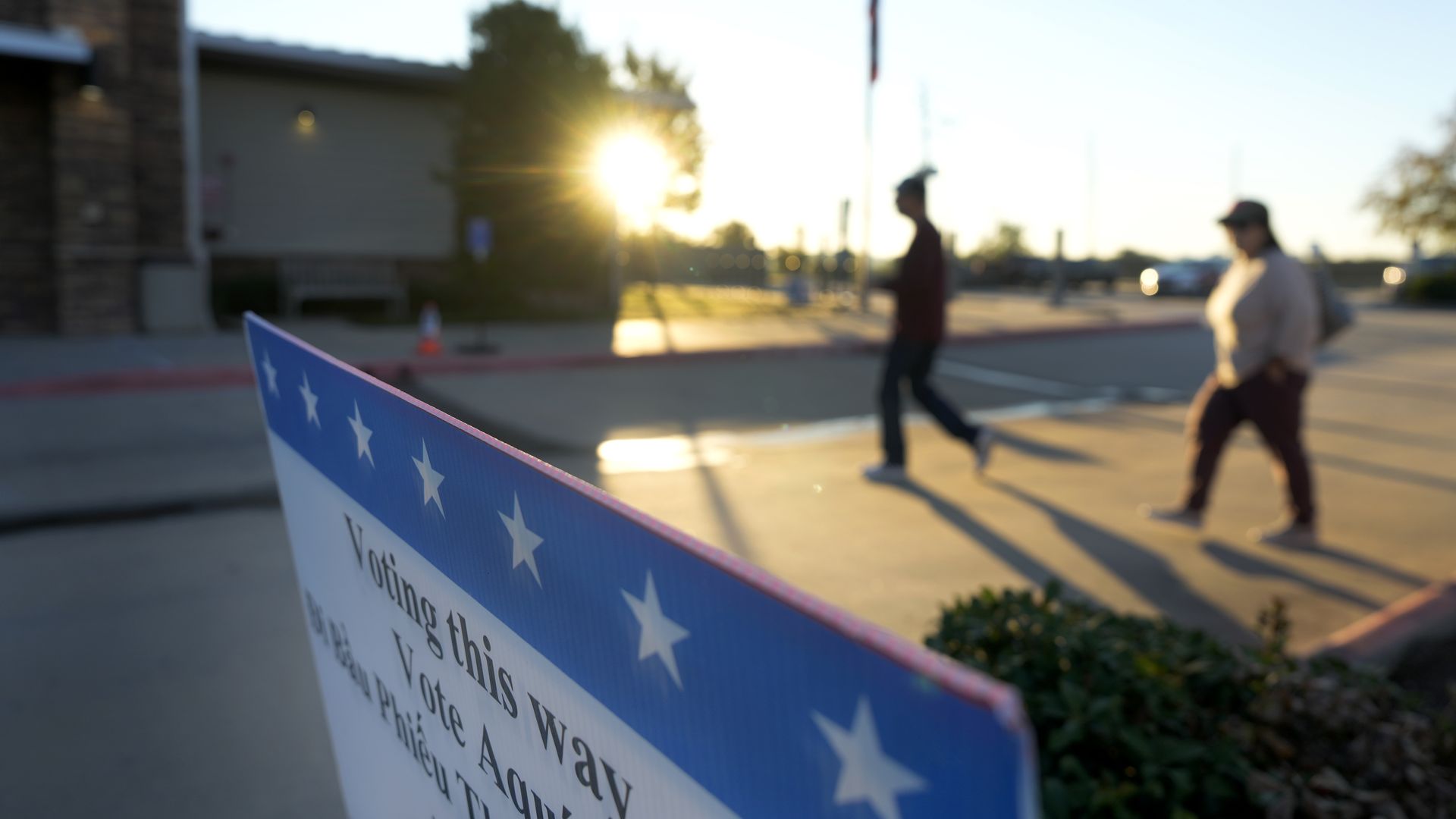
Texans voted on 17 statewide propositions on Election Day. Photo: Melissa Phillip/Houston Chronicle via Getty Images
Texas voters on Tuesday approved all 17 constitutional amendments on the ballot addressing property taxes, the state's water supply, dementia research and other issues.
The big picture: The updates to the Texas Constitution range from enshrining parental rights to prohibiting capital gains and inheritance taxes.
- Several amendments reduce property taxes for some groups.
State of play: Two of the amendments affect the judiciary. One creates stricter bail requirements and another adds to Gov. Greg Abbott's influence on the courts.
Context: Turnout tends to be lower during elections without presidential or congressional candidates.
Zoom in: Five of the propositions codify property tax relief, including a measure that increases the school district homestead exemption to $140,000.
- Voters increased the school district homestead exemption from $40,000 to $100,000 in 2023.
The intrigue: Several of the amendments don't create any immediate changes. Two propositions ban legislators from implementing an inheritance tax or taxes on securities transactions.
- Two others simply add language to the state's constitution. One says only U.S. citizens are allowed to vote and another states parents have the right to decide how to raise their children.
Here are the propositions voters approved:
Proposition 1 will create an endowment for the Texas State Technical College System.
Proposition 2 prohibits the state from imposing a tax on capital gains.
Proposition 3 requires judges to deny bail in certain circumstances for people accused of certain felonies.
Proposition 4 will put $20 billion of sales tax revenue into a fund to increase water sources, improve system infrastructure and fix aging pipes.
Proposition 5 exempts animal feed in a business inventory from property taxes.
Proposition 6 prohibits the state from taxing securities transactions or stock trading.
Proposition 7 gives property tax exemptions to the spouses of military veterans whose death is connected to their service.
Proposition 8 prohibits a tax on the transference of property or an estate after a person dies.
Proposition 9 exempts up to $125,000 of business equipment from taxation by cities, counties and school districts. This replaces the current tax exemption cap of $2,500.
Proposition 10 creates a temporary property tax exemption on homes that were destroyed by a fire.
Proposition 11 increases the school district homestead exemption from $10,000 to $60,000 for homeowners who are disabled or 65 and older.
Proposition 12 changes the makeup of the State Commission on Judicial Conduct, which disciplines judges. Under the plan, the Texas Supreme Court will appoint six judges or justices to the commission and the governor will appoint seven citizens, an increase from five.
Proposition 13 increases the school district homestead exemption for all homeowners from $100,000 to $140,000. The state will have to offset the revenue loss for public schools, estimated to cost about $1.3 billion in 2026.
Proposition 14 pulls $3 billion from Texas general revenue fund to create the Dementia Prevention and Research Fund to pay for studies about dementia, Alzheimer's disease, Parkinson's disease and other related disorders.
Proposition 15 codifies parental rights into the Texas constitution to ensure parents have "the right to make decisions concerning the child's upbringing."
Proposition 16 adds text to the Texas constitution that "persons who are not citizens of the United States" are not allowed to vote.
Proposition 17 exempts the homeowners living in counties along the Mexican border from paying increased property taxes on raised property values due to new border security infrastructure built on the property.