Longer allergy seasons


Add Axios as your preferred source to
see more of our stories on Google.
Feeling crummy? Tree pollen levels are high in Dallas-Fort Worth this week.
The big picture: North Texas is one of the worst regions in the country for people with allergies.
- And the allergy season is only getting longer.
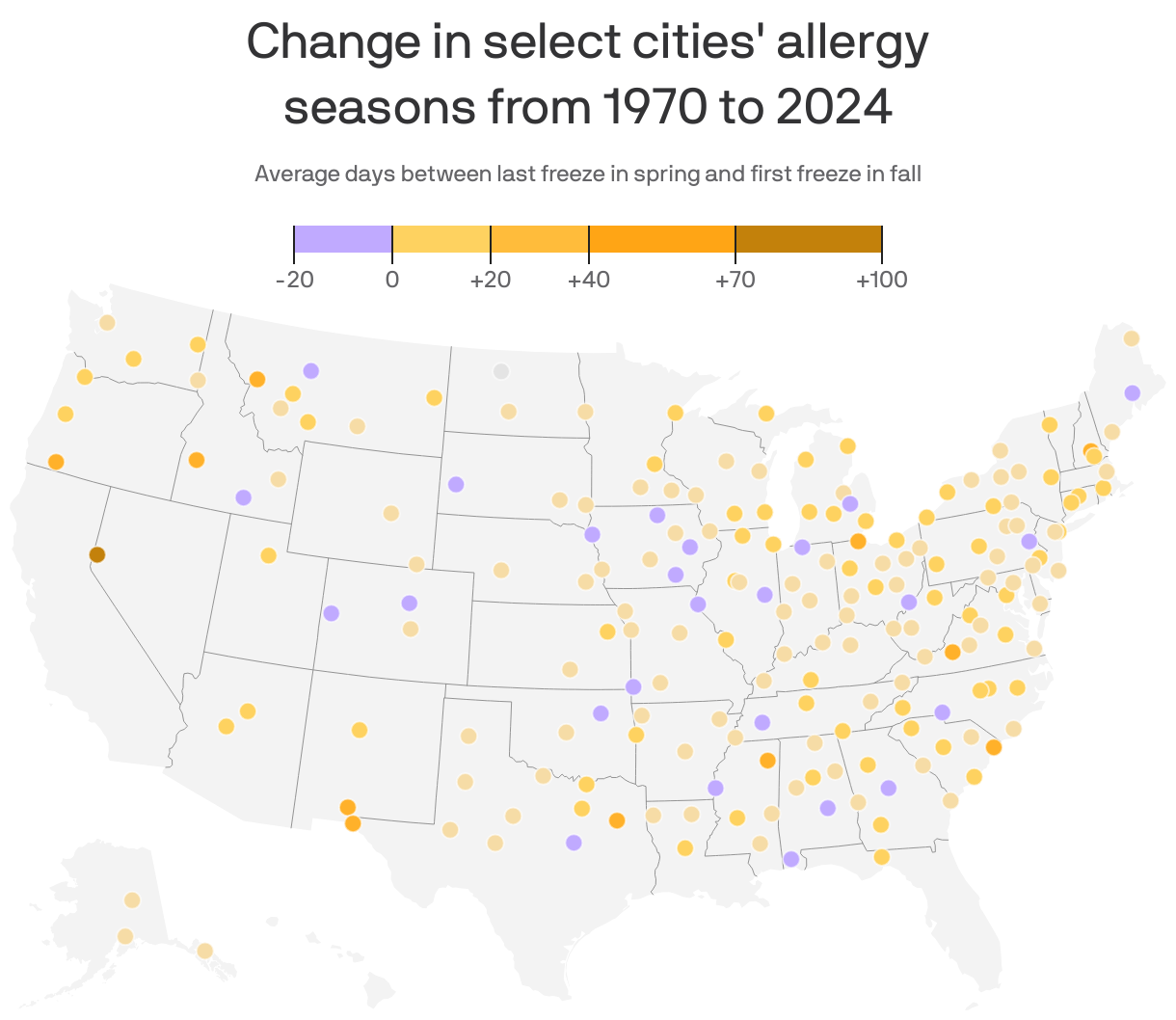
Driving the news: The freeze-free growing season lengthened between 1970 and 2024 in nearly 90% of the 198 cities analyzed by Climate Central, a research and communications group.
- The freeze-free season lengthened by 20 days on average among the cities, including in D-FW.
- The freeze-free period — the number of consecutive days with minimum temperatures above 32°F — is a proxy for allergy season in the report.
Between the lines: "Climate change makes pollen seasons not only longer, but also more intense due to heat-trapping pollution," per Climate Central's report.
Zoom in: Pollen counts were higher in the past month on warmer days.
- Pollen.com shows the allergy index ticking from medium to high toward the end of February as temperatures climbed close to the 80s.
The bottom line: We're faring better than our friends out west in El Paso, where the allergy season has increased by 51 days.