The State Fair of Texas rakes in the dough

Add Axios as your preferred source to
see more of our stories on Google.
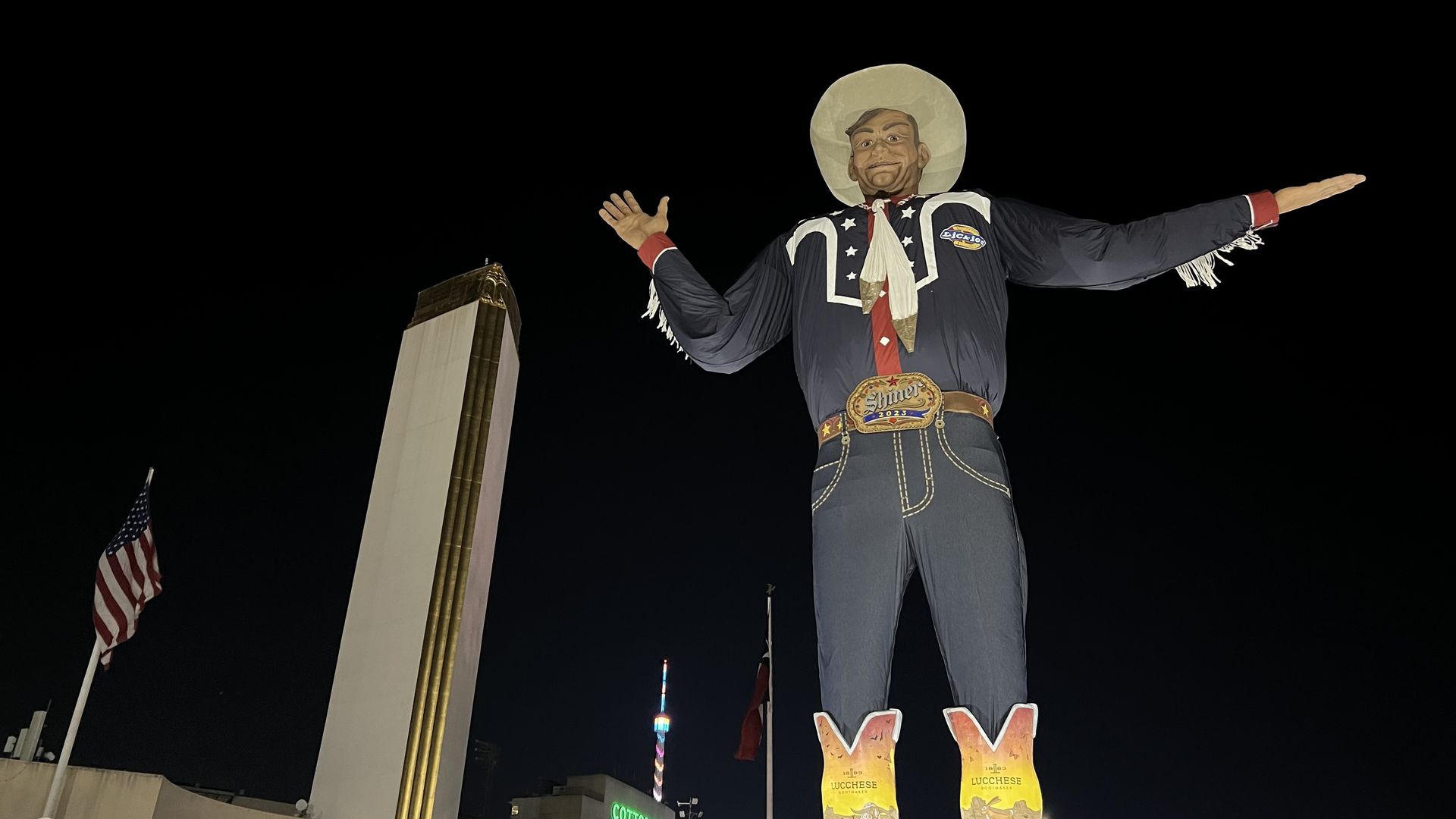
Big Tex is handsome and rich. Photo: Naheed "Fangirl" Rajwani-Dharsi/Axios
More than 2.3 million people went to the State Fair of Texas last year, generating about $422 million in economic activity from visitors and exhibitors in Dallas-Fort Worth, per a new economic study.
Why it matters: The fair is more than fried food, rides and auto shows. It's actually an economic boon for North Texas.
- Plus, your Axios Dallas writers unabashedly love the fair and all its flair.
Driving the news: The three-week extravaganza starts Friday and continues through Oct. 20.
State of play: About the same number of people attend the fair each year, but the event's effect on the North Texas economy has grown in the past decade.
- In 2016, the fair was estimated to have a $307.6 million economic impact on the region, about $100 million less than last year's.
Flashback: The fair increased the cost of coupons, used for rides and food, from 50 cents to $1 in 2021.
By the numbers: About a quarter of fair visitors weren't from the Dallas-Fort Worth area, per an analysis by the University of North Texas Economics Research Group.
- About half a million people from outside North Texas visited the fair last year, including more than 240,000 from out of state. The visitors spent about $135.3 million.
- The fair generated $70.5 million in local, state and federal tax revenue last year. The majority was in federal taxes.
🏈 Meanwhile: The Red River Rivalry — the annual football game between the University of Texas and the University of Oklahoma — is a massive draw to the fair every year.
- The game and the State Fair Classic generate about $62 million in economic impact every year.
If you go: The fair updated its security protocols this year, including implementing a gun ban.