Dallas-Fort Worth's growing population is aging


Add Axios as your preferred source to
see more of our stories on Google.
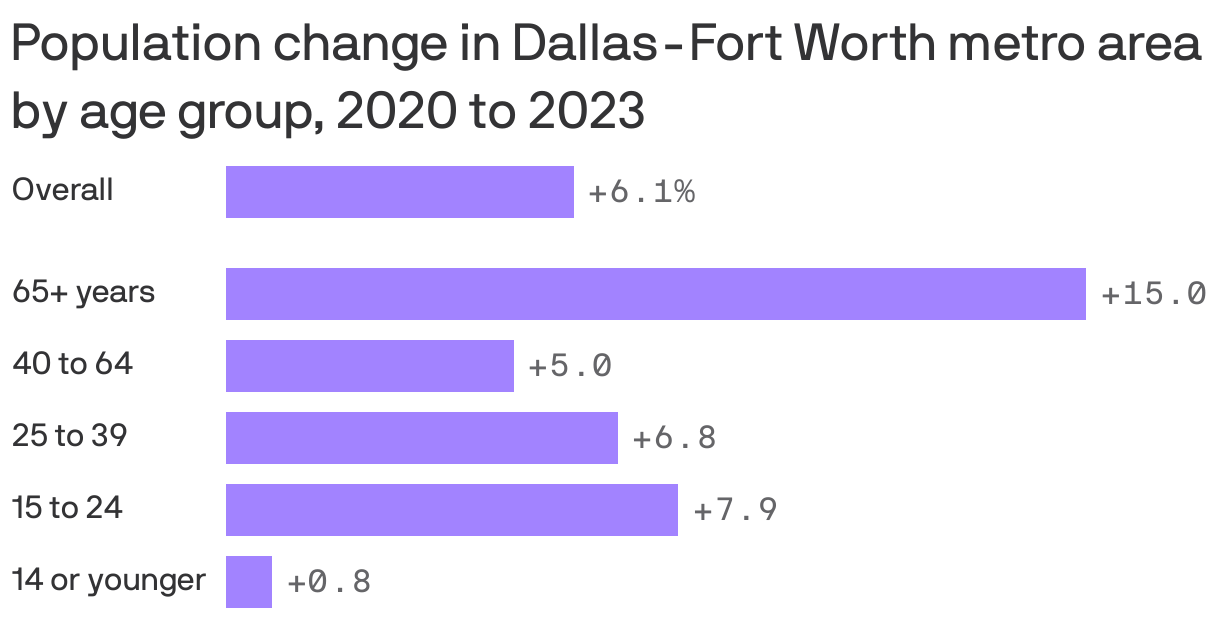
Dallas-Fort Worth added about 318,000 working-age residents between 2020 and 2023, the most of the major U.S. metropolitan areas, per the U.S. Census Bureau.
The big picture: American cities are rapidly aging, and most U.S. metros are seeing drops in the number of younger residents.
- But, the Dallas-area population is growing at all age levels.
Why it matters: An aging American population can drain the economy if people drop out of the workforce to care for elderly relatives.
- The U.S. working-age population, between 15 and 64, grew just 0.2% between 2020 and 2023. The population over 65 grew by 9.4%.
Context: As the Dallas-Fort Worth population has grown, so has the number of people working. Nearly 3.9 million people were employed in D-FW in February 2020. Now there are nearly 4.3 million workers employed in the metro, per the U.S. Bureau of Labor.
- The Dallas and Houston metro areas added the most working-age residents in the country between 2020 and 2022, per recently released Census figures. Houston added about 224,000 workers.
Zoom in: The overall Dallas-area population grew more than 6% between April 2020 and July 2023.
- The number of residents over 65 grew the most at 15% and the population 14 and under grew less than 1%.
Zoom out: The total number of U.S. children dropped 3.3% nationwide, while most U.S. metros saw drastic increases in their elderly populations.