O'Hare airport terminal upgrades lag behind other major U.S. hubs, study finds

Add Axios as your preferred source to
see more of our stories on Google.
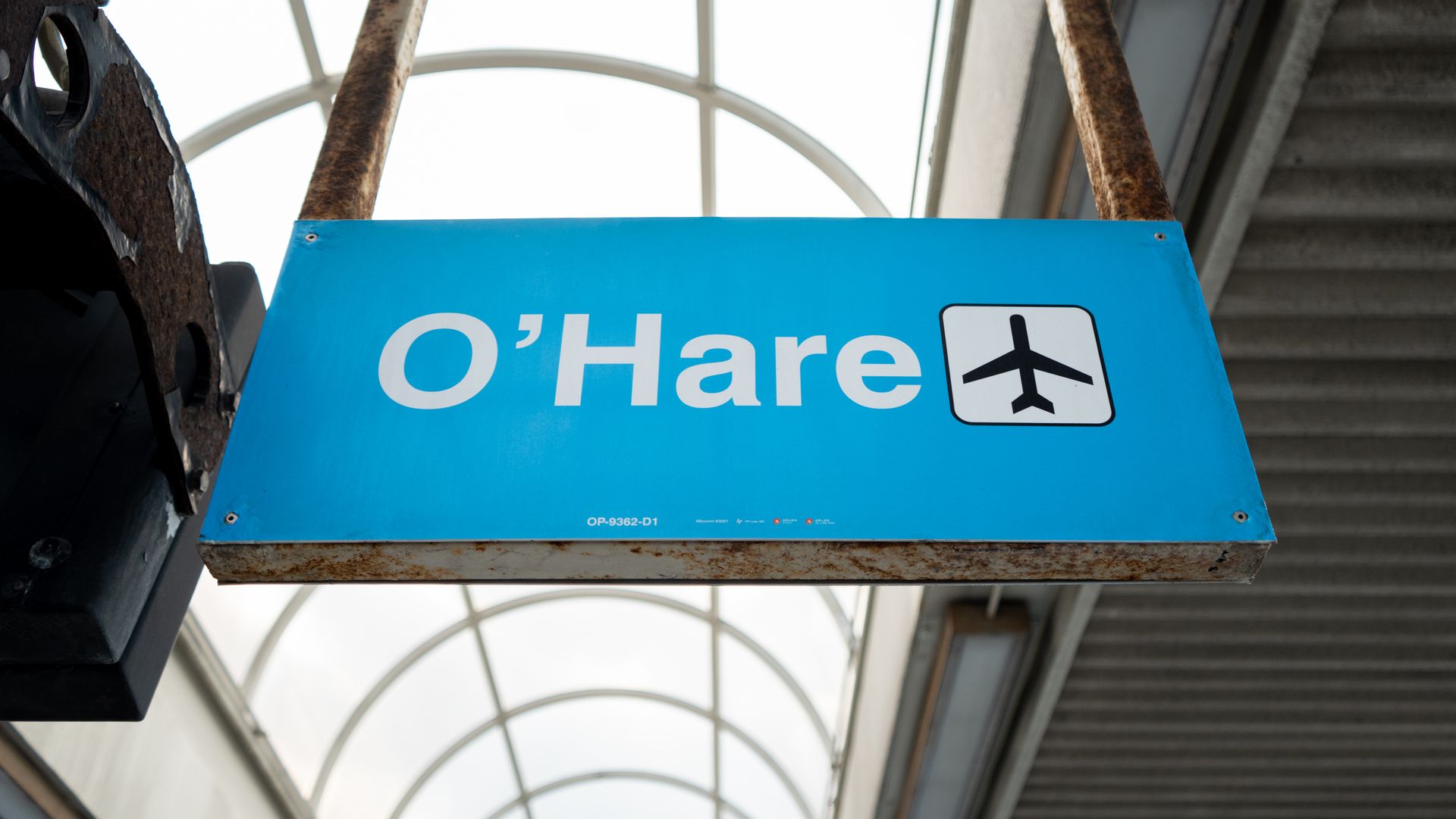
A sign for O'Hare at a CTA Blue Line station. Photo: Marcin Golba/NurPhoto via Getty Images
O'Hare is running out of time to modernize its aging terminals as a new DePaul University study warns that further construction delays could worsen congestion and hurt the airport's global standing.
Why it matters: O'Hare is the only airport among the nation's busiest that hasn't completed a major terminal overhaul meeting the study's criteria in decades.
- O'Hare's last qualifying major terminal project was Terminal 5, which opened in 1993.
The latest: The study from DePaul's Chaddick Institute warns that Chicago faces a difficult seven years as it tries to modernize its aging terminals while accommodating growing passenger traffic.
Context: O'Hare's modernization program calls for new satellite concourses beginning in 2028 and a new Global Terminal in 2033.
- But researchers warn that construction, rising costs and continued passenger growth could increase congestion and threaten the timeline.
By the numbers: Departing planes at O'Hare spent an average of 28 minutes taxiing before takeoff, while arriving planes took nearly 20 minutes to reach their gates, according to the study.
- Since 2023, outbound taxi times have increased 26%, while inbound times have jumped 41%.
Yes, but: City officials have been touting O'Hare's status as the nation's busiest airport, even as the airport struggles with aging terminals, long taxi times and low passenger satisfaction rankings.
- O'Hare is tied with Newark for dead last among the nation's 20 mega airports in J.D. Power's 2026 passenger satisfaction rankings.
What they're saying: "The rapid growth has been a double-edged sword," DePaul transportation expert Joseph Schwieterman tells Axios. "It's created much momentum for improvement, but it's hurt our reputation as an attractive hub."
Zoom in: Schwieterman says Chicago prioritized runway modernization over terminal improvements for years. The pandemic and the challenges of negotiating with two major hub airlines further slowed progress.
The bottom line: "We can't let terminal deadlines slip anymore," Schwieterman says. "We've fallen behind the rest of the world, and we're playing catch-up."