Proposals to make State Street great again

Add Axios as your preferred source to
see more of our stories on Google.
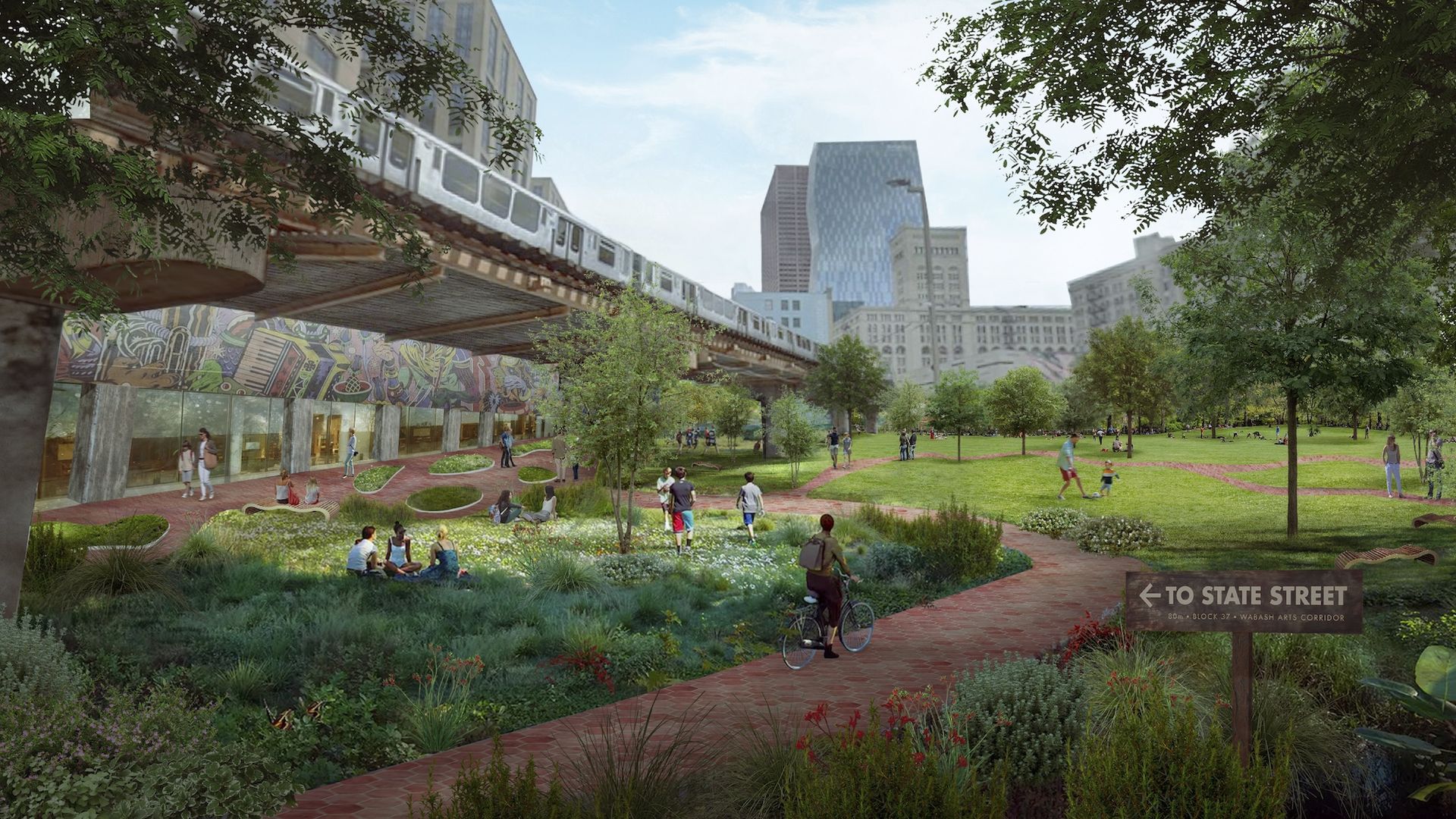
Rendering of Thickness: From Corridor to Urban Field, winner of the 2026 Burnham Prize. Photo: Courtesy of Andrés Moroni Arquitecto
From more green space to interactive installations, three winning proposals reimagine what could make Chicago's State Street "that great street" once again.
Why it matters: The plans could help breathe new life into a part of the Loop that was once a retail, cultural and social attraction.
Driving the news: The Chicago Architectural Club, World Business Chicago and other civic organizations on Wednesday announced the winners of this year's Burnham Prize.
Context: In April, the groups called for ideas for "The Future of State" — ways to make State Street a vibrant, inviting and modern urban center.
Zoom in: The three winning projects take different approaches to best utilize what already exists along State Street, as well as what new infrastructure is needed.
- Thickness: From Corridor to Urban Field focuses on the spaces between the buildings. It would turn parking lots into green space, alleys and the Pedway into spots to meet and drink and build elevated walkways to move through the Loop.
- Unlocking State Street centers on the Chicago Federal Center block, a Mies van der Rohe-designed complex surrounded by Dearborn, Clark and Adams Streets and Jackson Boulevard. The plan would move the security barriers that exist around federal buildings underground to free up streetscapes to be more open and pedestrian-friendly.
- Instructions for Civic Mischief calls for a series of permanent and temporary installations that "lift, cover, fill, perch, and reuse what is already there," the proposal says.
State of play: Chains such as Barnes & Noble, Primark, Uniqlo and Gap have drawn shoppers to State Street in recent years, but more locally owned businesses and unique dining options could make it more desirable for locals.
- New ownership of Block 37 could revitalize the mall from a commuter passageway to a desired retail and dining destination.
- The CTA's reconstruction of the State and Lake station points to the city's commitment to make State Street more accessible.
Flashback: Potter Palmer, Marshall Field and Levi Leiter bringing their businesses to State Street in the 1860s launched its rise as a commercial corridor, eventually lined with major department stores such as Marshall Field's, Carson Pirie Scott, Goldblatt's and Sears.
- The completion of the "L" in 1897 made State Street even more of a destination, until the 1970s and '80s when suburban shopping malls ushered in disinvestment in State Street.
- In 1979, the city converted State Street into a pedestrian and bus-only transit mall but abandoned that in 1996.
The big picture: The COVID-19 pandemic meant fewer downtown workers and commuters, sparking a wave of vacancies, and Chicago still lags behind cities like New York and Miami in return-to-office trends.
The bottom line: Implementing some of the ideas from the Burnham Prize winners could give visitors reasons to stroll along State even if they're not heading to the office or trying to catch the train.
What's next: One of the proposals may be implemented if the Chicago Architectural Club and its partners can secure funding.
- The public can explore all the Burnham Prize submissions and share feedback at the Chicago Architecture Center through Dec. 8.