Chicago advocates push for law protecting birds

Add Axios as your preferred source to
see more of our stories on Google.
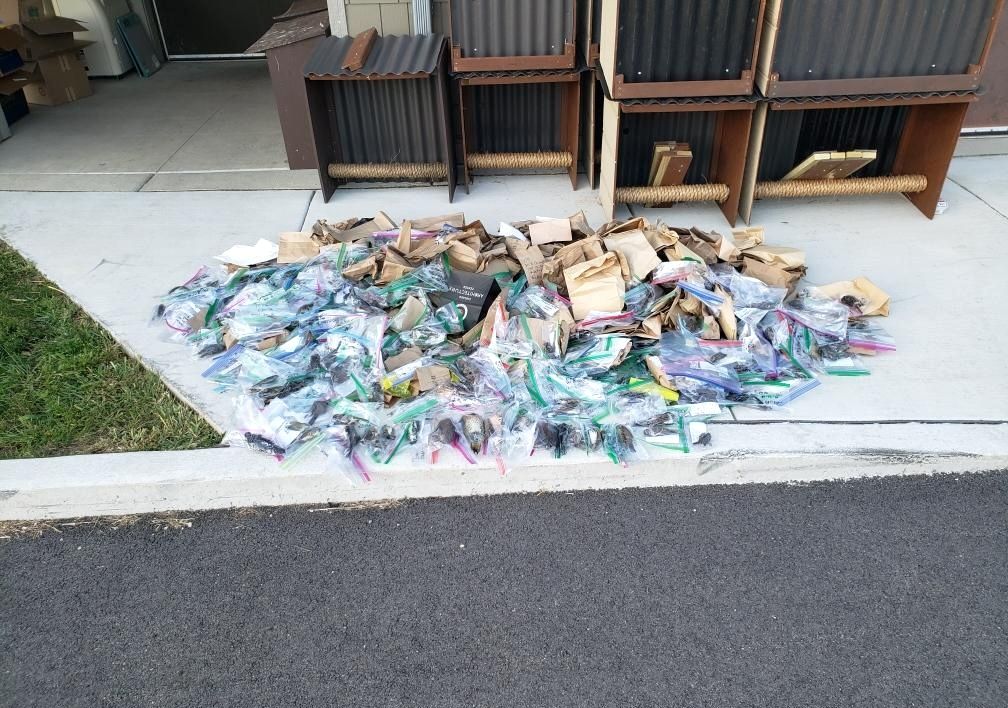
After more than 1,000 birds were killed or injured in collisions over the weekend, advocates are renewing calls for Chicago to enact a bird protection law.
Why it matters: Chicago is considered the most dangerous U.S. city for migratory birds in the spring and the fall. Advocates say an ordinance requiring safer design standards could save thousands of birds.
The latest: More than 5 million birds passed through Chicago last Friday, WTTW reported, and members of Chicago Bird Collision Monitors collected more than 1,000 injured or dead birds.
State of play: Downtown Ald. Brian Hopkins first introduced a bird-friendly design ordinance in 2019.
- Rogers Park Ald. Maria Hadden reintroduced legislation this year, and it now sits in the Zoning Committee.
Zoom in: The Bird-Friendly Building Design Ordinance lays out a framework to design new residential and office buildings with:
- Glass that passes the American Bird Conservancy's threat rating, with a rating under 30 considered safe for birds.
- Transparent or reflective windows that feature some sort of permanent visual markers, such as films or UV patterns.
What they're saying: "There are formulas that have been developed that you just plug in what kind of glass, how much glass you have, and you'll know how much of a threat your building or your window poses to a bird," Chicago Bird Collision Monitors' Annette Prince told Axios last year.
Yes, but: The rules would not apply to single-family homes or two- and three-flats. They also wouldn't apply to smaller renovations; only those that are creating a new facade, for example.
Between the lines: Bird collisions aren't just a skyscraper problem. Most bird strikes happen within the first 100 feet of a building, Prince tells Axios.
How to help: Until there's a law in place, residents and businesses in tall buildings can reduce collision risk by:
- Installing motion sensors or putting lights on a timer.
- Directing outdoor lights downward.
- Scheduling cleaning crews during daylight or early evening hours.
- Drawing curtains or blinds to reduce escaping light.
What's next: Prince and other advocates are working on getting support from all 50 alders to pass the ordinance, she tells Axios.