Chicago ER waits exceed national averages


Add Axios as your preferred source to
see more of our stories on Google.
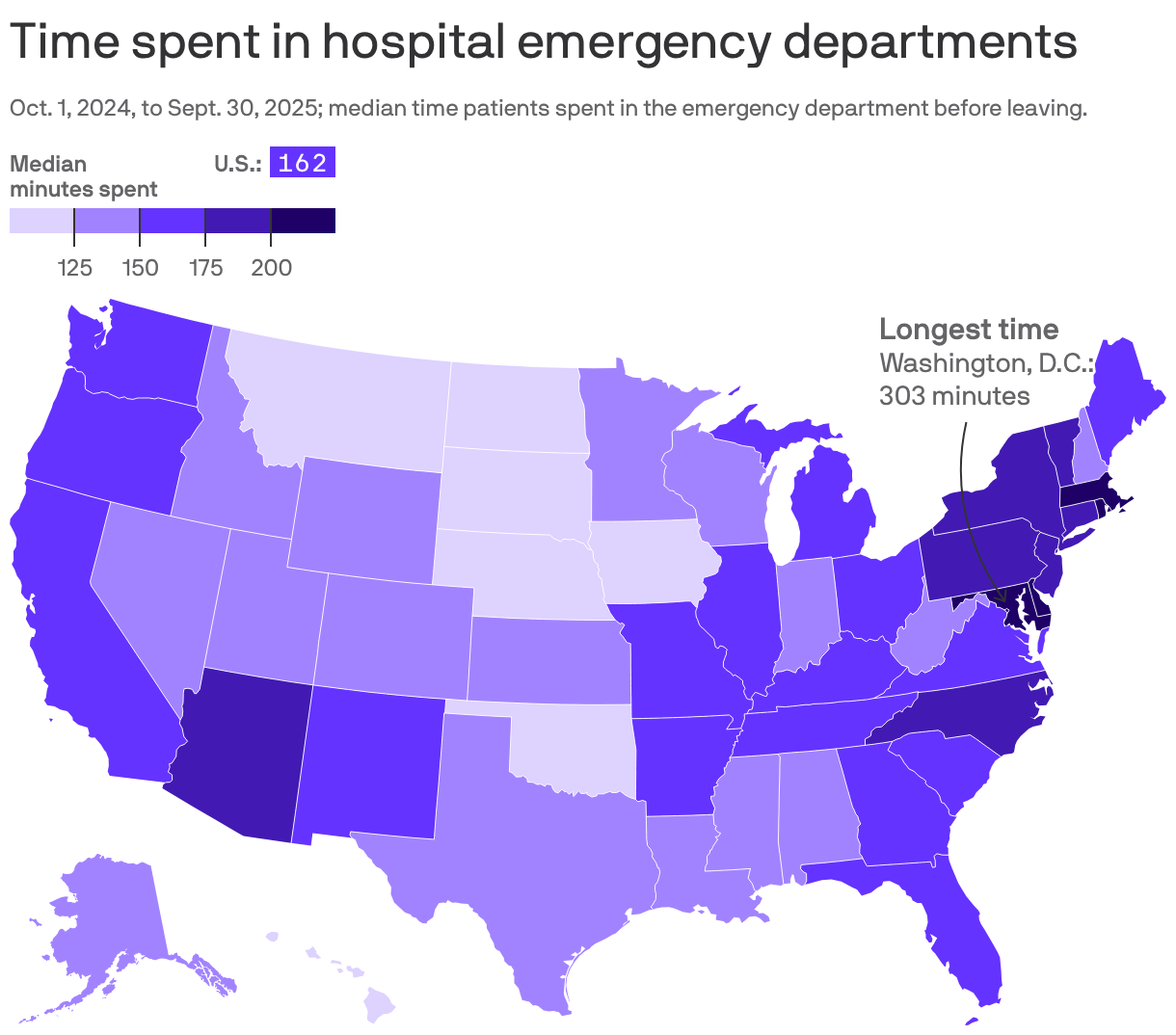
Chicagoans spend more time in the emergency room than the national average. But many patients may have another option.
Why it matters: As we head into fall sick season, knowing whether your symptoms require the ER — or can be treated at urgent care — could save hours and potentially hundreds of dollars.
Driving the news: The median time spent in emergency rooms across the country was 162 minutes during the year ending Sept. 30, 2025, according to the Centers for Medicare & Medicaid Services.
- Zoom in: At two of Chicago's largest hospitals, median ER visits were more than twice the national figure — 358 minutes at Rush University Medical Center and 327 minutes at Northwestern Memorial Hospital.
Yes, but: ERs aren't first-come, first-served. Patients are triaged by severity, meaning someone with a minor condition can wait while doctors treat patients with strokes, major trauma or other emergencies.
What they're saying: "An ER is built to handle anything that comes through the door, including the sickest and most unstable patients," James Leonard tells Axios. Leonard is an ER physician and senior medical director for Midwest Express Clinic.
- "Urgent care is built to handle the large majority of immediate but non-life-threatening problems quickly and efficiently. The two settings complement each other; they are not interchangeable."
The simple rule: If your symptoms are severe, sudden or potentially life-threatening, go to the ER or call 911. If they're minor but need attention today, urgent care may be the better choice.
- Urgent care can handle cold and flu symptoms, sore throats, ear and sinus infections, minor cuts, sprains, UTIs and vomiting or diarrhea without signs of severe dehydration.
State of play: Urgent care generally has a much narrower toolkit. ERs have access to advanced imaging, comprehensive labs, continuous monitoring, resuscitation equipment, blood products, specialists and hospital admission.
Zoom out: Urgent care has become a critical access point in the health care system. More than 15,000 urgent care centers operate nationally, and the Urgent Care Association estimates nearly 90% of Americans live within a 20-minute drive of one.
- Patients increasingly use urgent care for unscheduled health care because it's nearby, walk-in, often open evenings and weekends, and generally faster and less expensive than an ER.
What we're watching: Forthcoming insurance eligibility and cost changes could lead people to put off care until their health reaches a crisis point, sending even more patients to an ER.
Between the lines: Urgent care centers still see seriously ill patients who don't realize the severity of their condition.
- "Urgent care therefore needs an emergency-readiness mindset even though it is not an emergency department," Leonard says, adding that staff need to recognize dangerous symptoms, stabilize patients when necessary and quickly transfer them to an ER.
The bottom line: If you're debating whether to wait until Monday or get checked today, urgent care may be your answer. If you're debating whether something could be an emergency, go to the ER.