Chicago's dementia-friendly neighborhoods create connection

Add Axios as your preferred source to
see more of our stories on Google.
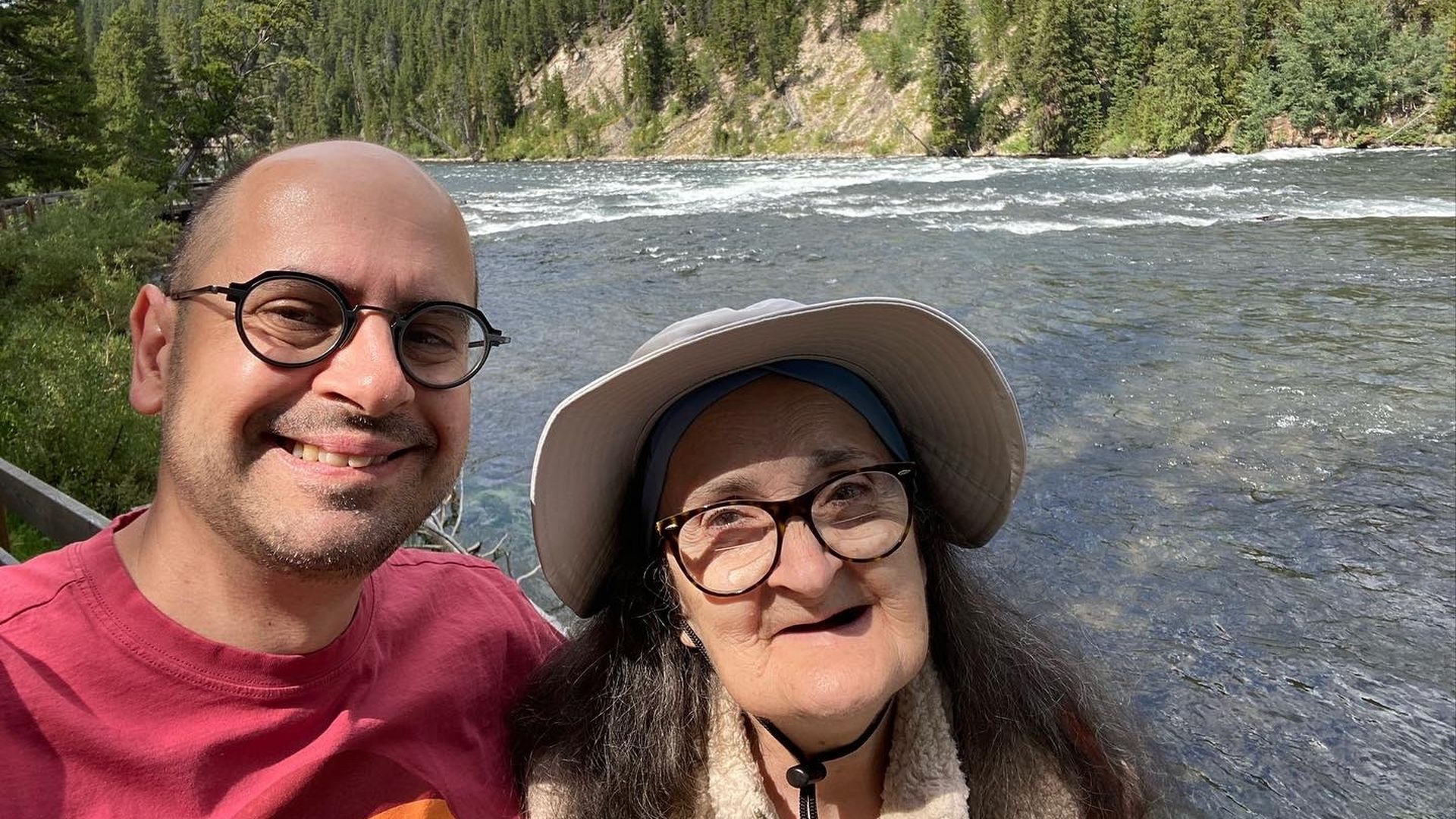
Robert Contino and his mother, Vivian, in Yellowstone in 2019. Photo: Courtesy of Robert Contino
Isolation can shrink the worlds of people with Alzheimer's disease and dementia.
- What if their neighbors knew how to connect with them?
The big picture: That's the idea behind dementia-friendly communities, which aim to help people with Alzheimer's and other forms of dementia stay connected to the places and people around them.
State of play: Once a month, Chicago Methodist Senior Services (CMSS) hosts a Memory Cafe at the Edgewater Library with storytelling themes and entertainment.
- Guests have a safe space to talk while caregivers can exchange resources.
- The next Memory Cafe is "Sports Day" at 11am on Friday.
How it works: Dementia-friendly communities (DFC) invite neighbors to gather and ask: What do people who have Alzheimer's and dementia need from the people living and working around them?
- DFCs ensure local businesses, churches, schools and other spaces know that people living in the neighborhood may need an extra hand with daily activities like grocery shopping.
- Dementia Friendly America has a directory of contacts who can help neighborhoods become DFCs.
What they're saying: Bob Contino knows the need for connection, both for his mother, Vivian, and him as her caregiver. Contino started caring for Vivian in 2019.
- "Many people assume that caregivers are overwhelmed (not wrong) or that additional outreach may be an inconvenience or extra burden," Contino tells Axios.
- "Instead of asking 'how can I help?', try to find a tangible act or personal expression that may be meaningful. Once, a neighbor left a jar of homemade pesto on my doorstep with a kind note. Another planted a rose bush within sight of our front door for Vivian to enjoy."
Reality check: Dementia progresses differently for everyone, so while people mean well when they send articles about new so-called cures, "the reality is not that simple," Contino says.
- "Strategies that worked one day may suddenly and inexplicably fail the next. For me, the best medicine is presence: showing up, interacting, listening, going with the flow, savoring the moments. Plan and pivot."
How to help: Speak slowly and clearly to people with Alzheimer's or dementia, asking one question at a time, CMSS' Jeanne Heid Grubman says.
- Caregivers and community members could also distribute notecards that read, "Hi, I'd like to introduce you to my partner/friend who has some memory issues. And thank you for your patience."
By the numbers: About 250,000 people 65 and older were living with Alzheimer's in Illinois in 2020, according to the Alzheimer's Association.
- 465,000 caregivers help care for people with the disease across the state, providing 668 million hours of unpaid care.
- Nationally, more than 7 million Americans are living with Alzheimer's, and more than 12 million provide unpaid care.
What's next: Dementia Friendly America offers online and in-person classes to learn more about the disease and how to be a good neighbor.
- As Contino notes, "A little understanding goes a long way."