"Oprah Winfrey Show" turns 40: How it transformed Chicago

Add Axios as your preferred source to
see more of our stories on Google.
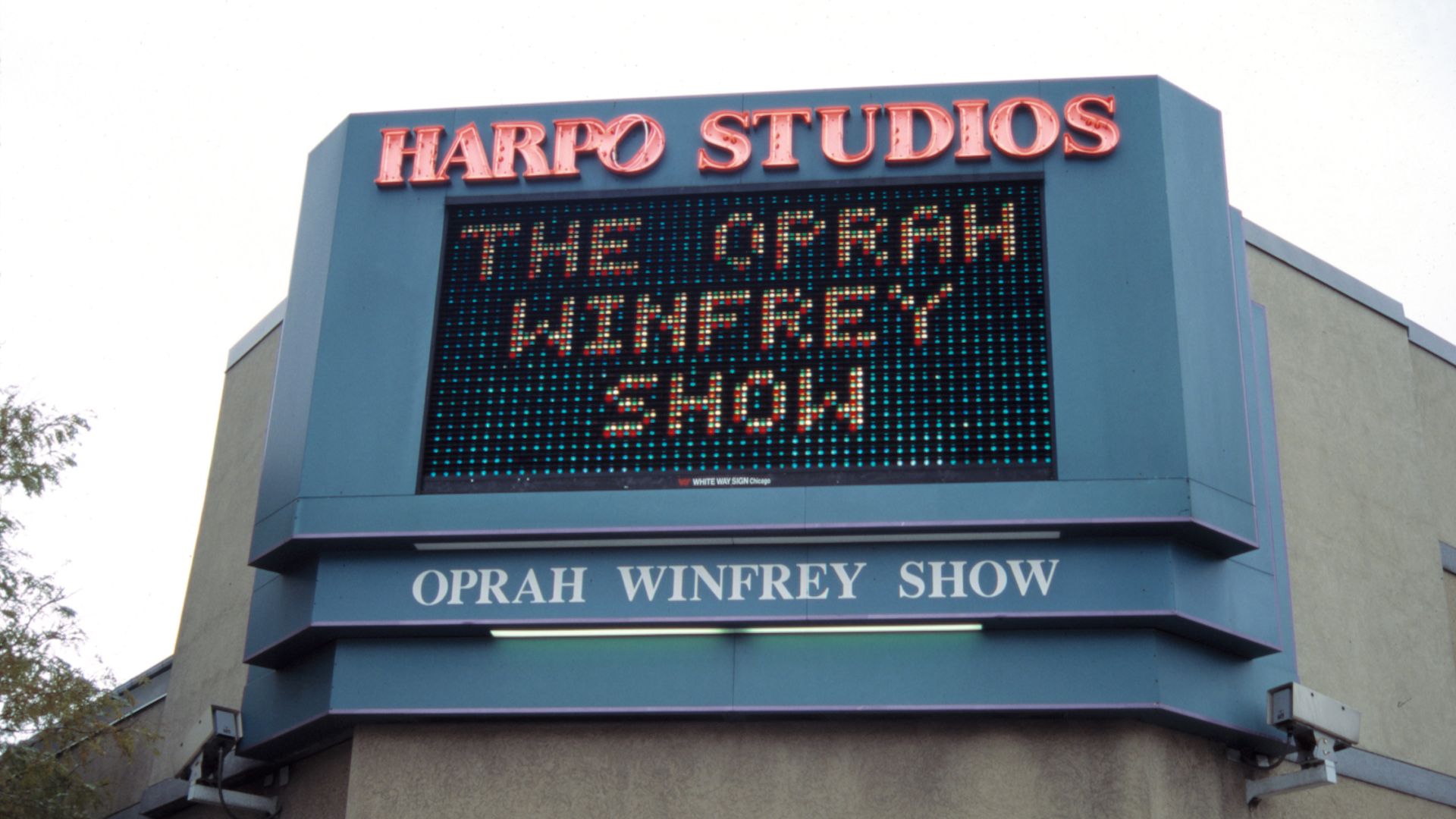
"The Oprah Winfrey Show" at Harpo Studios in the West Loop in 2003. Photo: Walter McBride/Corbis via Getty Images
Oprah Winfrey may no longer work in Chicago, but the impact of her groundbreaking talk show can still be felt across the city — especially in the West Loop.
Why it matters: Long before the West Loop became one of Chicago's hottest neighborhoods, hundreds of television workers were showing up every day to make one of the most-watched shows in America.
Driving the news: Tuesday marks the 40th anniversary of the first national broadcast of "The Oprah Winfrey Show" from Chicago.
Flashback: On Sept. 8, 1986, the show debuted nationally from WLS' studios on State Street. Winfrey had already been hosting the local "A.M. Chicago" from the same studio.
- At the time, Phil Donahue was the king of daytime talk — and Oprah's rapid success would soon turn the two Chicago-bred shows into national rivals.
Zoom in: A couple years later, Harpo moved into its famed West Loop home, a former armory on Carpenter Street.
- The studio didn't just become home to one of the biggest shows on television. It helped transform the neighborhood around it.
The big picture: Harpo turned Chicago into something it rarely gets to be in the entertainment business: a media headquarters rather than just a location shoot.
- It also launched the careers of scores of producers and other media professionals.
What they're saying: "The Oprah Effect was a game changer then, and it remains one today," former Harpo producer Rita Coburn tells Axios. "Her generosity, leadership, and deep sense of fairness made Harpo an extraordinary place to work, and the experience expanded me both personally and professionally."
Zoom out: Before Harpo moved its employees to the West Loop, the neighborhood was filled with warehouses and blighted buildings.
- Remnants of the area's past were everywhere, including nearby Madison Street, once the heart of Chicago's infamous Skid Row.
Yes, but: Harpo's tapings brought a steady stream of visitors, and restaurants, bars and shops followed. Today, the West Loop is one of the city's most popular — and expensive — neighborhoods.
By the numbers: Winfrey employed up to 500 people, which also helped local restaurants like Wishbone and Graziano's to have steady lunch customers.
Reality check: Winfrey ended her show in 2011, and Harpo closed its Chicago studios in 2015, leaving hundreds of employees to relocate to West Hollywood or find work elsewhere.
- The famed studio was demolished in 2016 to make way for the building that now houses McDonald's global headquarters.
Stunning stat: Winfrey bought the 88,000-square-foot main building for $4.75 million in 1988. Harpo sold the campus for $32 million more than 25 years later.
The bottom line: Harpo is gone, but the Oprah effect is still easy to see in Chicago, especially in the neighborhood that grew up around it.