Beluga deaths raise questions about what's next

Add Axios as your preferred source to
see more of our stories on Google.
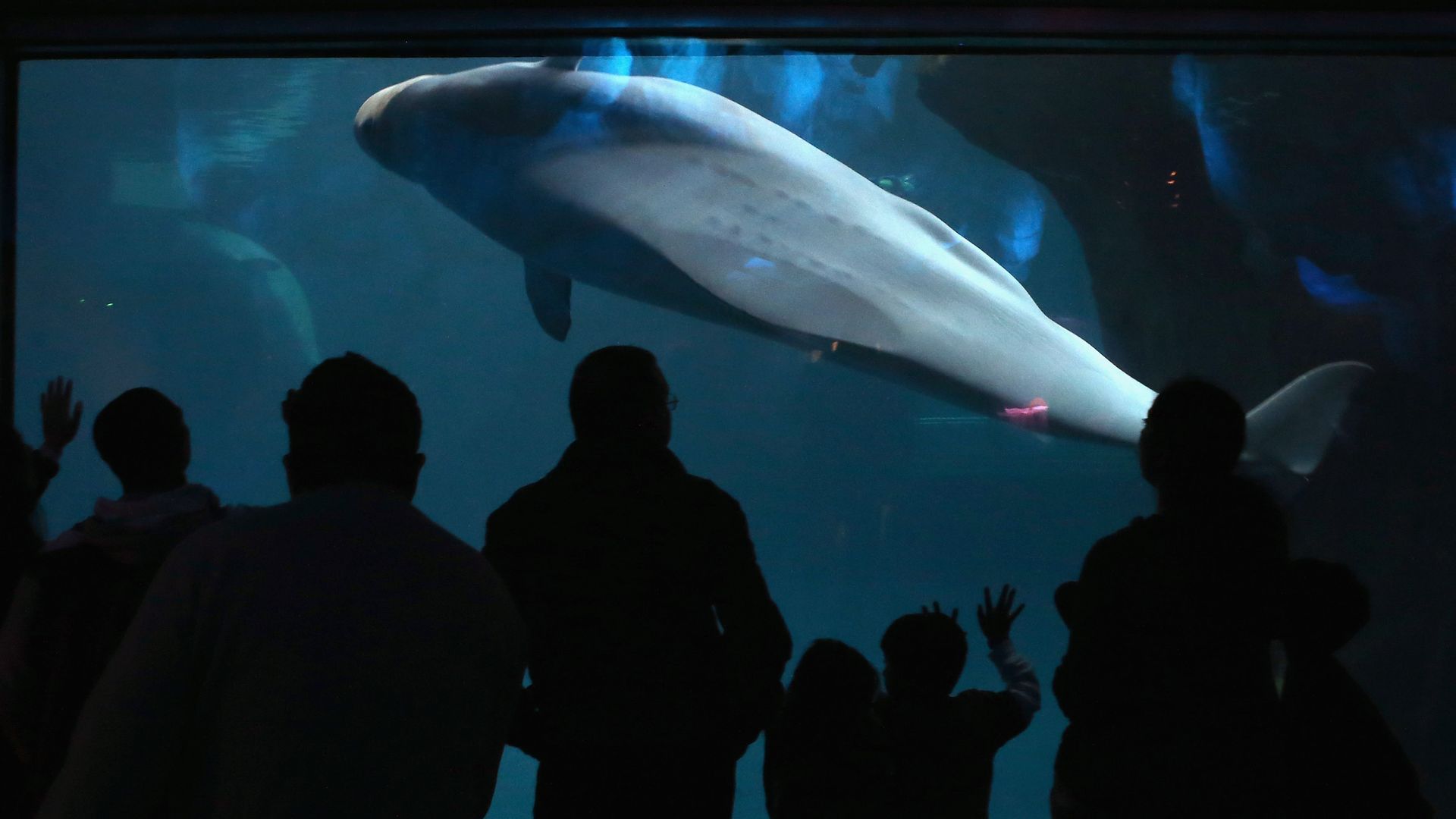
Visitors watch a beluga whale swim at the Shedd Aquarium in 2012. Photo by Scott Olson/Getty Images
The recent beluga whale deaths at Chicago's Shedd Aquarium are renewing animal welfare activists' scrutiny of these facilities.
Why it matters: Animal welfare activists point to the deaths as examples of the dangers of captivity, while aquariums and other marine facilities argue they're best equipped to care for the mammals.
Catch up quick: Last month, 30 beluga whales and four dolphins were rescued from Marineland of Canada, with 10 of the belugas moving to the Shedd.
- The rest of the whales found new homes at the Georgia Aquarium, San Diego and San Antonio SeaWorlds and Spain.
- Canada banned whale and dolphin captivity in 2019, but the whales at Marineland were grandfathered in, the CBC reported.
- Marineland closed in 2024 under financial distress and said it could no longer care for the animals in its care, CBC reported.
The latest: Two of the new Shedd arrivals have died — Peekachu on Aug. 25 and Rain on Sept. 2. Longtime resident Beethoven also died on Sept. 2.
- Beethoven was born in 1992 and was the oldest adult male in the pod and the second-largest beluga at Shedd.
What they're saying: "These losses are hard, made more difficult by the fact that it will take time to get concrete answers about what led to their passings," a Shedd spokesperson told Axios in a statement.
- "Shedd added staff specifically to ensure we had the coverage needed to provide 24/7 observation and care as the rescued belugas arrived," the aquarium posted on its website Friday evening.
The other side: Animal welfare activists have long protested the captivity of whales. World Animal Protection said in a statement, "The years, and in some cases decades, spent in artificial environments can take a toll on these animals. We cannot simply move whales from one tank to another and call that a long-term solution for failing attractions."
- The group continues to call for a global ban on keeping whales and dolphins for entertainment purposes.
State of play: NOAA maintains 18 marine sanctuaries across the U.S. by protecting the biological environments and the animals who live there.
- But, currently there is no seaside sanctuary for previously captive mammals such as whales. Instead, the animals are sent to accredited aquariums and facilities such as the Shedd.
Zoom in: Whales born outside their natural environments cannot just be released into the ocean because they've never acquired the skills to live in the wild.
- For more than a decade, the Whale Sanctuary Project has been building a seaside sanctuary in Nova Scotia for formerly captive animals to receive care and possibly be released.
- The sanctuary will occupy more than 100 acres of water space with depths up to 18 meters.
- It's funded through private donations but has not yet been completed.
What we're watching: Shedd said Friday that "some of the rescued belugas are showing more encouraging signs than others, but several have presented clinical concerns, and their health can change quickly. None are yet where we want them to be from a health standpoint."
- Some of the belugas are eating regularly and others are not.
What's next: The animal care team is awaiting test results for more information about Peekachu, Rain and Beethoven's deaths.