Competing renters' plans work through City Hall


Add Axios as your preferred source to
see more of our stories on Google.
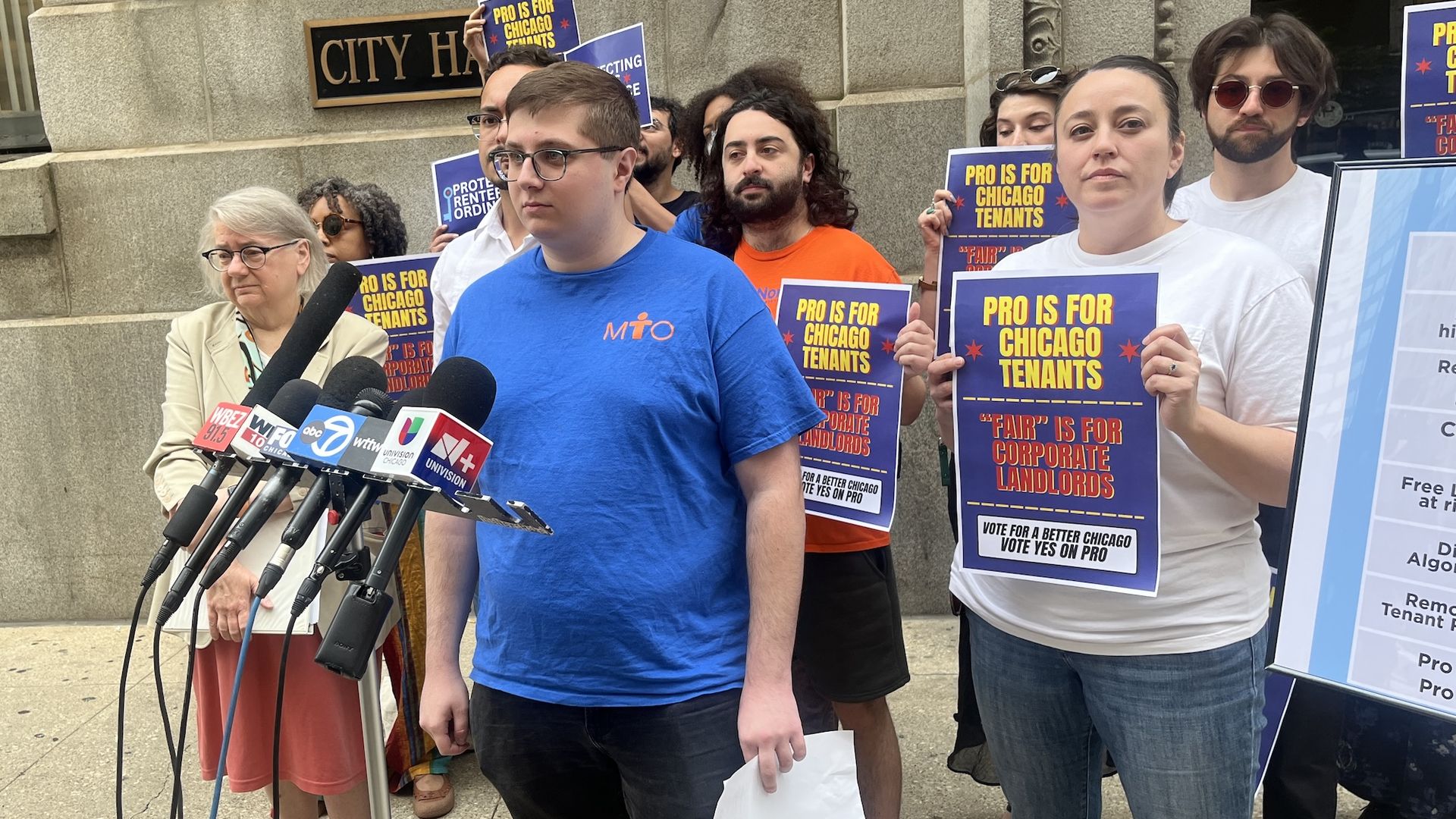
Jonah Karsh from Metropolitan Tenants Organization and other advocates outside City Hall on Monday. Photo: Carrie Shepherd/Axios
Competing renters' rights proposals — one by Mayor Brandon Johnson and one from a group of alders — have become a proxy fight for renters vs. landlords.
Why it matters: Alders who oppose Johnson's Protecting Renters Ordinance (PRO) argue it could raise rents, while housing advocates say the alders' Fair and Accountable Illinois Rental (FAIR) Ordinance could increase evictions.
Catch up quick: In late June, Johnson unveiled PRO, noting that 54% of Chicago households rent and 40% of them spend more than 30% of their income on housing. PRO would add new fees for landlords and would cap many on renters.
- On Wednesday, alders who call themselves the Budget Accountability Caucus unveiled FAIR, which largely mirrors PRO but would scale back some fees on landlords and benefits to renters.
Between the lines: The two competing ordinances reflect the ongoing battles between Johnson and moderate to conservative alders in the BAC who defeated the mayor's budget last year.


Friction point: While tenant advocates Monday noted language in FAIR that appears to repeal current renter protections, FAIR co-sponsor Ald. Nicole Lee tells Axios, "In no way are we looking to roll anything back from [current rental law]. Our intention is to strengthen it."
- She says her caucus already identified one "drafting error" and doesn't see the current version as "being the final document."
Both plans would cap security deposits at one month's rent, allow renters to deduct the cost of repairs they perform, require landlords to disclose algorithmic pricing, and prohibit retaliation and lockouts.
Yes, but: PRO would require landlords to provide just cause and relocation payments when they end a tenancy; FAIR would not.
- FAIR would create a three-tiered system that would separate "mom and pop" landlords from corporate owners and would offer incentives for creating new housing. PRO would include fees that would fund enforcement of the ordinance.
What they're saying: Lee says FAIR strikes a "balance between making sure that we have protections for renters, and that there aren't mechanisms that discourage development in the city," which, she says, could drive higher rents.
- We need to "put forward strategies … to build things quicker," Zoning Committee Chair Ald. Gilbert Villegas said. "The mayor talks about cutting the red tape but introduces policies which, in some cases, are duct tape."
The other side: "Building housing and protecting tenants are not competing goals," Ald. Anthony Quezada, a PRO supporter, said at Monday's press conference. "We can strengthen tenant rights while also advancing policies that help us build more housing. The people struggling with rising rents today need stability now. They need fairness now."
- Quezada said more than 58% of his Logan Square, Avondale and Hermosa constituents are renters.
Mayor's view: Johnson said last week that FAIR took "98 percent, essentially, of what I proposed, copied and pasted, but took out key components to protect renters."
- He also said FAIR sponsors "did not spend any time with residents or stakeholders."
Zoom in: Tenant rights groups also point to a new class of landlords as a point of contention between the two ordinances. Owner-occupied buildings with six or fewer units would be largely exempt from PRO regulations.
- But FAIR would expand that smallest landlord classification to anyone owning 12 or fewer units, with no owner-occupancy requirement.
What's next: Villegas tells Axios he intends to meet with "renters and housing providers" before calling the FAIR ordinance for a hearing in his Zoning Committee this summer.