How to make a "clean room" during wildfire season

Add Axios as your preferred source to
see more of our stories on Google.
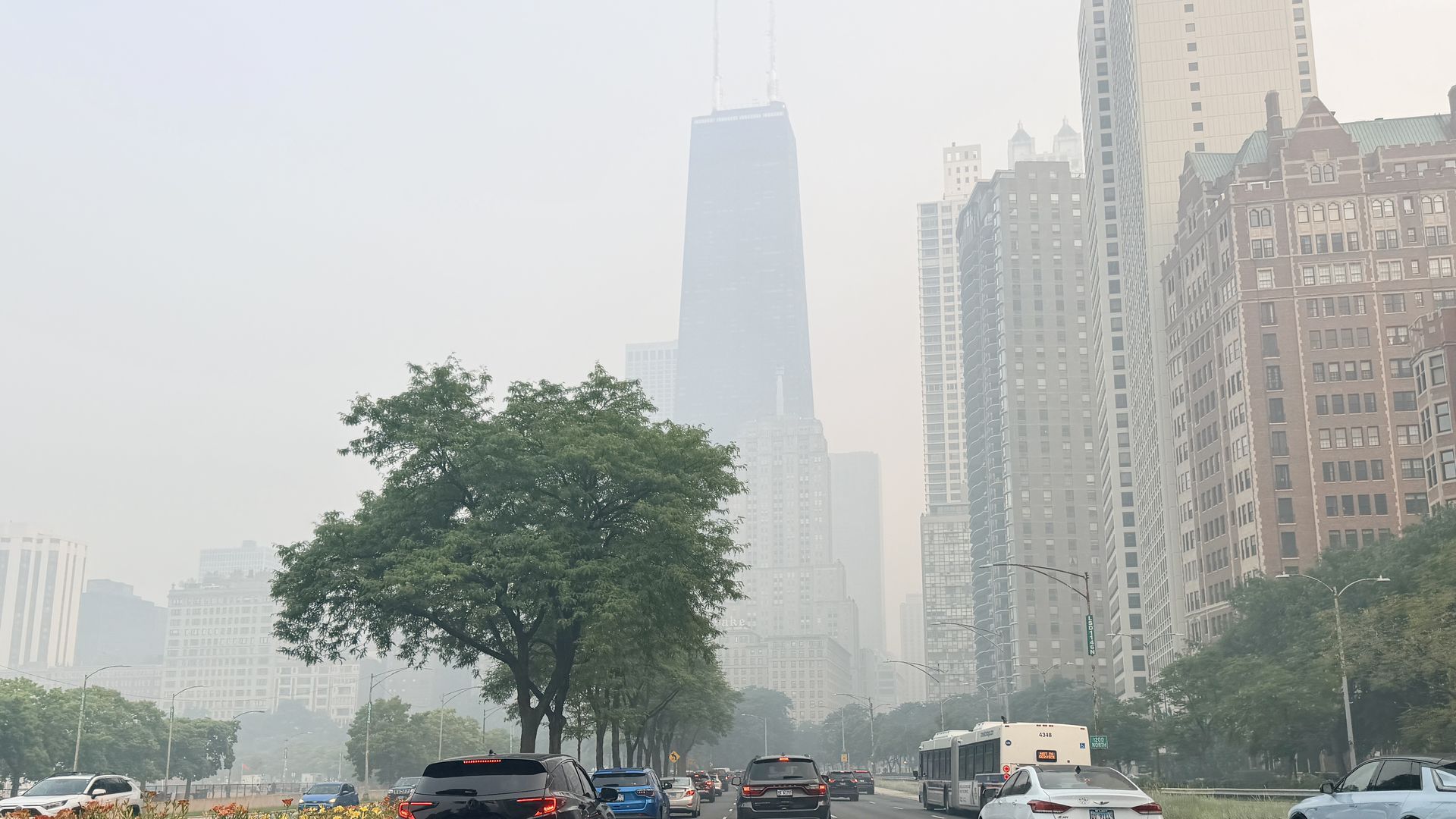
Wildfire smoke shrouded the Hancock Thursday night. Photo: Monica Eng/Axios
In this second consecutive summer of dangerous wildfire smoke, you may already know to wear a mask, reduce outdoor exposure and check AQI levels, but do you know how to create a "clean room" in your house?
Why it matters: Even fairly well-sealed homes can end up with dirty air during these times of "unhealthy" to "very unhealthy" air quality levels, which may dissipate this weekend but are expected to spike again next week.
- Clean rooms can create a haven in your home with better air for all during periods of heightened risk.
The intrigue: Young people may think they're less vulnerable but — along with the elderly, pregnant people and people with breathing complications — they face some of the biggest respiratory risks.
- "Lungs keep growing until about 20-25," the Respiratory Health Association's Brian Urbaszewski tells Axios. "So anything in those critical years that can harm and stunt lung development can create problems in a person's later years."
- Plus, kids breathe more air per pound of body weight than adults, the American Lung Association notes.
Clean room tips: The EPA recommends choosing a room that can fit everyone in the household, with more pointers below.
- Consider a bedroom with an attached bathroom "because you can close it off from the rest of the house and keep the door closed for long periods of time."
- The room "should be free from activities that create particles such as cooking or smoking, and the doors and windows should be kept closed."
- During these periods, avoid frying, broiling, smoking, using aerosols, candles and vacuuming without a HEPA filter in any part of the home.
- Use a "portable air cleaner that is the right size for the clean room and run it continuously on the highest fan setting." ComEd offers rebates for air purifiers of up to $50.
- You can even create a DIY filter from these models.
- If you have central air, check and change your filter frequently during these periods.
- "When the air quality improves, even temporarily, air out the clean room by opening windows," or using the fresh air intake on your HVAC system. Ventilate kitchens and bathrooms with the stove hoods and exhaust fans.
The exceptions: While closing windows generally helps, Urbaszewski warns that, for those without AC, the current heat could be more dangerous than breathing the outside air. He suggests people without AC seek cooling centers or alternate accommodations.
- He also suggests checking to see if your AC system is drawing in outside air.
The bottom line: As these dangerous events become more frequent, we're going to have to learn new protocols and how to settle down in a "clean room" for a while with friends and board games or just a good book.